US Becomes First Country Ever to Skip Its UN Human Rights Review
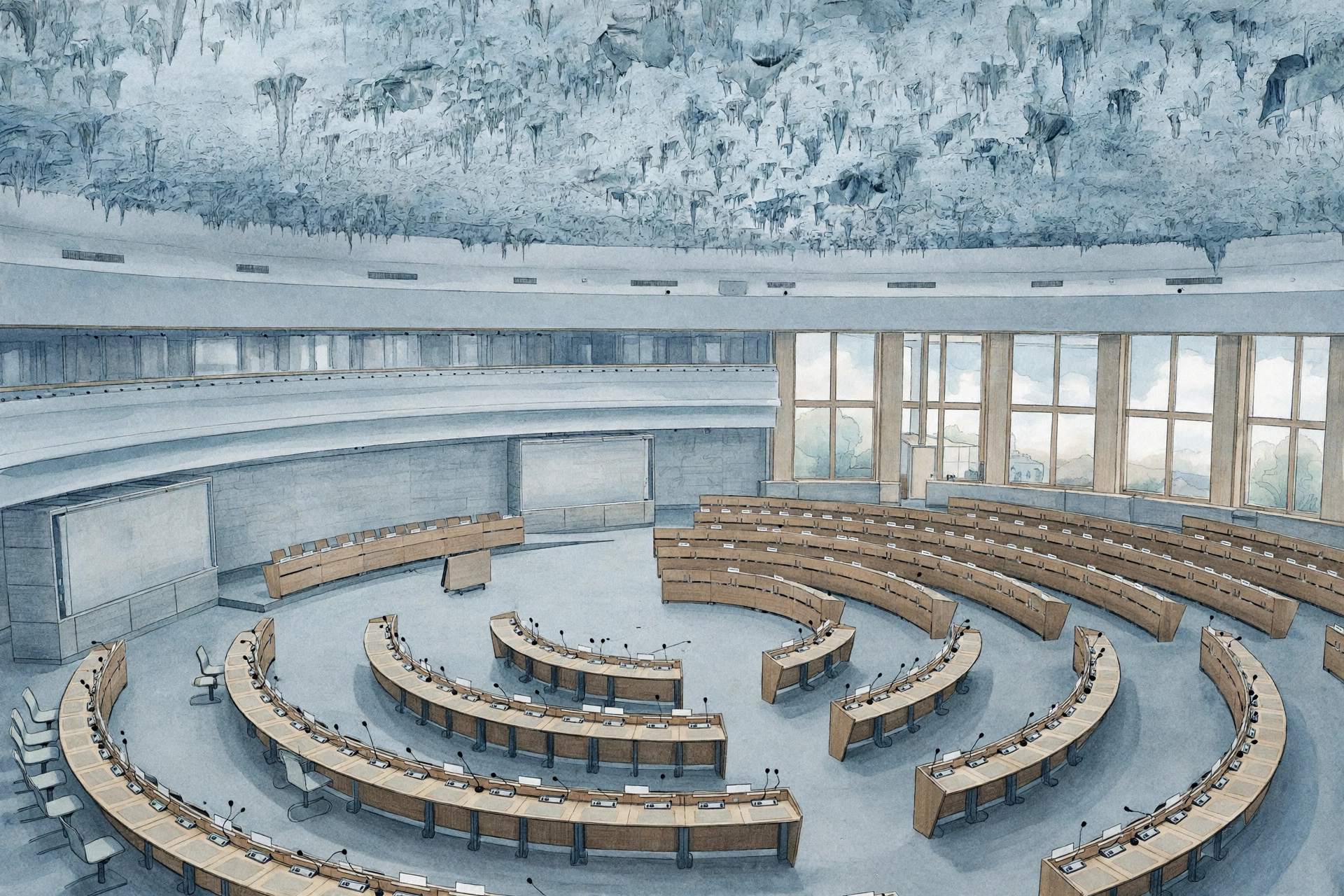
GENEVA — The United States left its seat empty at the United Nations on Tuesday, becoming the first country in the 20-year history of the Human Rights Council’s flagship review process to refuse to take part at all.
Washington did not send a delegation to Geneva for its scheduled Universal Periodic Review, in which every UN member state presents its human rights record and answers questions from other governments. With no American officials present, the review could not go ahead. The United States had already skipped its appointment a year ago: the review originally scheduled for November 2025 was pushed back to Tuesday in the hope that Washington would take part. It did not.
The Council’s 47 member states adopted a decision without a vote recording Washington’s “continued non-cooperation” and postponed the review until January, in the hope that the Trump administration might still change its mind. The review has now been rescheduled for the working group’s session of 18 to 29 January 2027.
What the Universal Periodic Review is
The Universal Periodic Review, known as the UPR, is the Human Rights Council’s flagship mechanism. Established in 2006, it subjects all 193 UN member states to scrutiny of their human rights records in cycles lasting roughly four to five years. Every state is expected to take part, and in two decades no country had ever refused outright — until now.
“In the twenty years since the UPR was established, not a single country has so shamelessly refused to participate in this universal process,” said Phil Lynch, executive director of the International Service for Human Rights. “It is deeply regrettable that the US, whose former First Lady Eleanor Roosevelt was one of the great champions of the Universal Declaration of Human Rights, has become the first to do so.”
Amnesty International said the United States now had “the shameful distinction of becoming the first country to avoid participating in all stages” of the review, noting that the Council had given Washington an extra year to take part and it still failed to show up.
Why Washington walked away
The snub follows the Trump administration’s decision last year to pull the United States out of the Human Rights Council altogether, accusing it of an anti-US and anti-Israel bias and alleging that it did not uphold the very values it promotes.
In a statement issued before Tuesday’s decision, the State Department said: “We give no credibility to the agency.” It went on: “This irredeemable body makes a mockery of human rights through consistent failures to uphold its own ‘values’ as it pushes anti-American rhetoric,” alleging the Council’s “persistent failure to condemn the most egregious human rights violators.”
The State Department has taken a hard line on diplomacy in recent days — it also expelled Lebanon’s consul general in Detroit last week after social media posts praising a 1983 bombing.
The break is also a reversal. In President Trump’s first term, the United States submitted its report and went through the review, and the Biden administration rejoined the Council in 2021, pledging to reform it from within.
The reaction
The European Union, a key US ally, spoke for the Council’s supporters after Tuesday’s decision. “The EU regrets any situation in which full engagement with the mechanism does not occur, including the decision by the United States again not to participate in their review today,” said Simone van der Post, a Dutch envoy speaking on behalf of EU council members. “All states are subject to the scrutiny of their human rights situation by the international community,” she added.
Rights groups were blunter. Lynch said the US record on “migration, LGBT rights, racial discrimination and civic freedoms, like the right to protest,” together with wars in the Middle East and what he called extrajudicial executions in the Pacific and Caribbean, merited the close scrutiny the UPR allows. “What has Washington got to hide?” he asked.
Jamil Dakwar, director of the American Civil Liberties Union’s human rights programme, said: “The administration is saying to the world, ‘we don’t care about whether you would review us or not, we’re going to continue to violate human rights unabashed’.”
Critics of the snub warn that the walkout could encourage other countries to follow suit.
What happens next
The Council’s January session is now the next test. Civil society organisations have urged Council states and the UN High Commissioner for Human Rights to schedule a dedicated debate on US non-cooperation at the Council’s 64th session in March 2027 and to place greater direct scrutiny on the American record, including a UN report on the human rights situation in the country.
The ACLU and its allies have separately called on the UN human rights chief to present an update on rights in the United States early next year.
Whether Washington takes part in January remains an open question. The administration has given no sign of softening its position, and the State Department did not immediately respond to a request for comment from the Associated Press.
Meanwhile, Washington is pressing ahead with US-brokered peace talks in Abu Dhabi between Russia and Ukraine, a reminder that the administration’s disengagement from the Geneva body has not extended to every international forum.
Frequently Asked Questions
What is the Universal Periodic Review?
It is the UN Human Rights Council’s peer-review process, established in 2006. All 193 UN member states take turns presenting their human rights records, answering questions from other governments and receiving recommendations, in cycles of roughly four to five years.
Has any country skipped its review before?
No. The United States is the first country ever to refuse to participate in the process at all, including all of its stages. Even governments facing severe criticism have normally appeared.
What did the US say about the Council?
The State Department said it gives “no credibility to the agency” and called the Council an “irredeemable body” that “makes a mockery of human rights”, accusing it of anti-American rhetoric and of failing to condemn the worst human rights violators.