Congo Ebola Outbreak Passes 11,000 Cases as Death Toll Hits 5,387
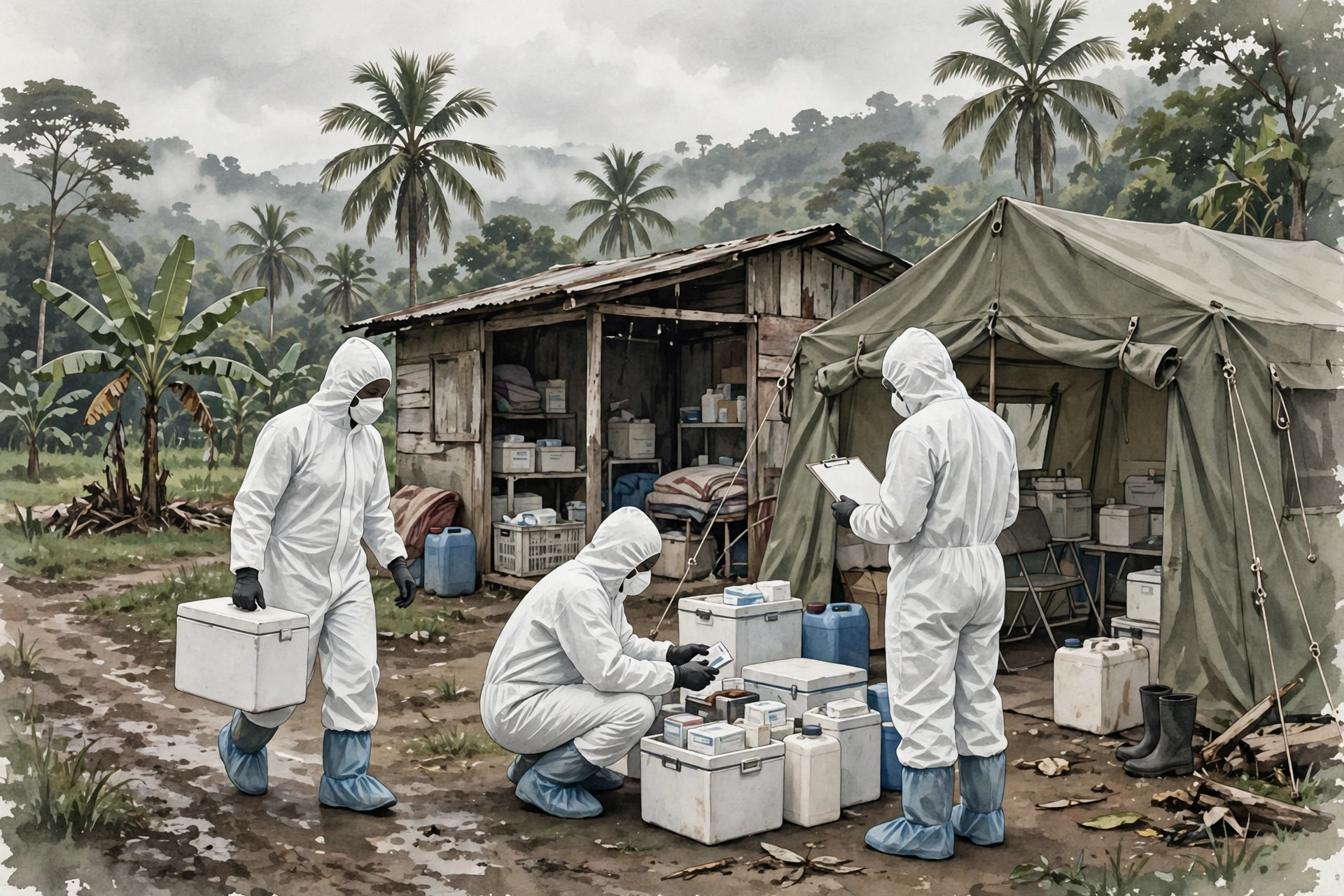
The Ebola outbreak in the Democratic Republic of Congo has passed 11,000 confirmed cases, government data showed on Tuesday, making it the deadliest in the country’s history and the second-largest ever recorded.
Health ministry figures put confirmed infections at 11,042, with 5,387 deaths — a case fatality rate of about 48.8 per cent, meaning nearly half of those known to have caught the virus have died. The latest national figures cover cases reported up to 9 November.
The outbreak is caused by the rare Bundibugyo species of the Ebola virus. It was declared in mid-May after cases were identified in Ituri province, in the country’s east, and the World Health Organization declared it a public health emergency of international concern two days later.
A grim milestone
Only the 2014–2016 epidemic in West Africa, which infected more than 28,600 people and killed more than 11,000, has been larger. The Congolese outbreak has now overtaken every previous epidemic in the DRC itself, including the 2018–2020 outbreak in the east of the country.
Ituri remains the epicentre, accounting for 7,485 cases and 3,532 deaths, followed by Nord-Kivu with 2,593 cases and 1,422 deaths. In all, eight of the DRC’s 26 provinces have reported cases.
The Associated Press reported that the figures make it the deadliest Ebola outbreak recorded in the DRC and the second-largest documented globally. The WHO’s most recent situation report, published on 6 November using data as of 3 November, counted 10,668 confirmed cases and 5,198 deaths across 67 health zones, with 2,881 recoveries. Many of the dead never reached a treatment centre: of 482 deaths recorded since the WHO’s previous update, 307 occurred in communities and 175 in treatment centres.
No approved vaccine for this strain
Unlike the Zaire species of Ebola, for which the licensed Ervebo vaccine exists, there is no approved vaccine or specific treatment for Bundibugyo, which kills roughly half of those it infects.
In early November, the WHO approved clinical trials of two candidate vaccines, with results expected in early 2027. A Phase 2/3 platform trial, named Tumaini, began on 23 October in Bunia, the capital of Ituri province, to test the candidates.
Until trial results are available, containment rests on the established measures: isolating cases, tracing contacts, safe burials and community engagement — all of which are harder to sustain where health services are thin and trust in the authorities is low.
Conflict is hampering the response
Health officials say delayed detection, armed conflict and overstretched health services have allowed the virus to spread faster than in previous outbreaks. Violence and attacks on health workers have repeatedly disrupted containment work, and a militant raid in Cantine forced Ebola patients to flee a treatment site.
The outbreak now has the widest geographic spread of any Ebola epidemic on the continent, with cases reported in East, Central and West Africa, according to Reuters.
What it means beyond Congo
US health officials say no cases from this outbreak have been confirmed in the United States, and the CDC says the overall risk to the American public and travellers remains low. Travellers bound for the United States from affected areas face CDC attestation requirements introduced earlier this month.
American health agencies are separately watching a measles resurgence at home, where cases have passed 5,000 this year and a regional panel is reviewing whether the US still meets the criteria for measles elimination.
Health officials say the next milestone to watch is the WHO’s revised risk assessment, while the Tumaini vaccine trial continues in Bunia. For now, the official figures are still rising — and with many deaths occurring outside treatment centres, the true toll may be higher than the confirmed count.
