Houthis Strike Saudi East-West Pipeline as Riyadh Downs More Missiles
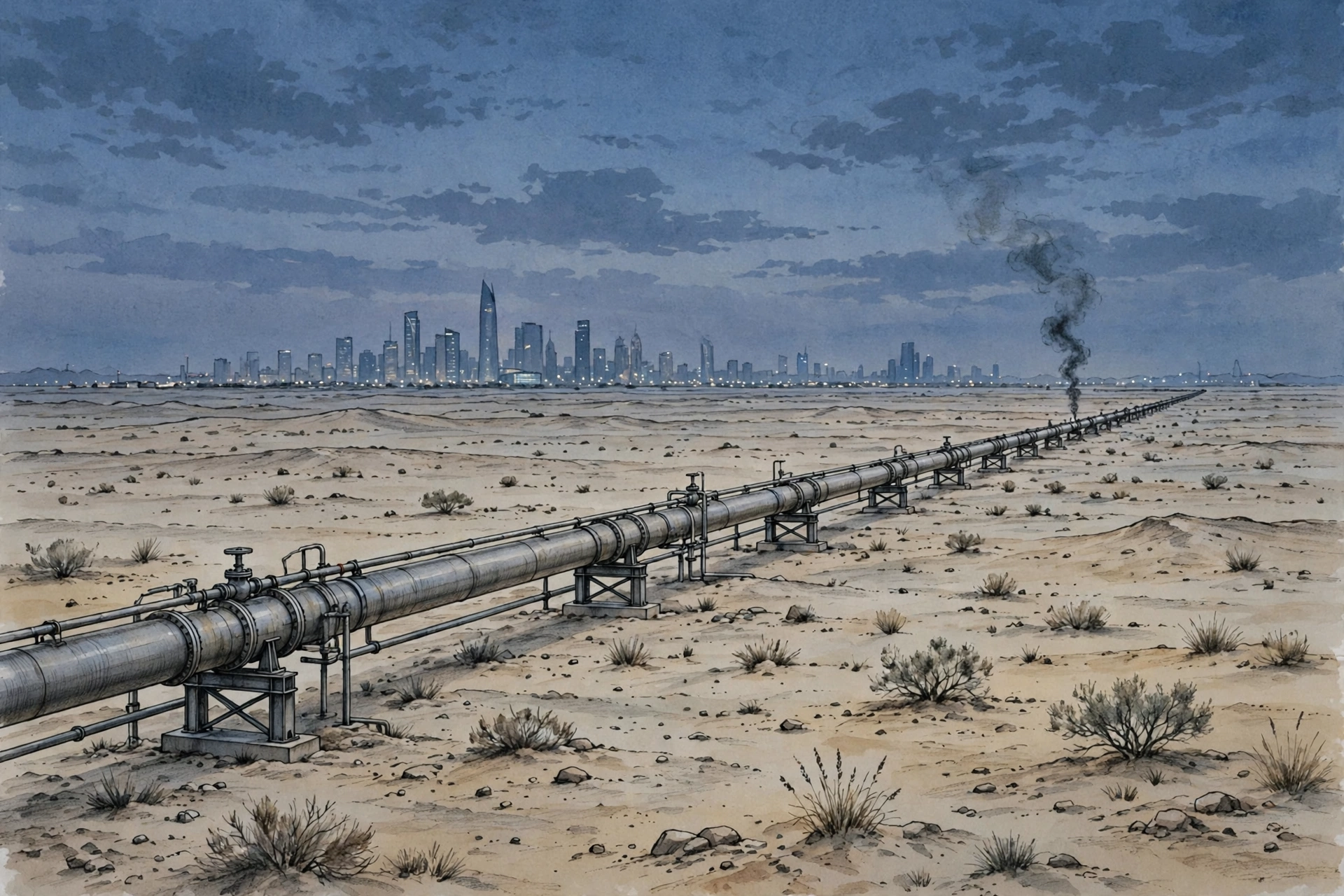
Saudi Arabia says its East-West oil pipeline was attacked on Monday in the Medina region, causing a limited fire that was quickly extinguished, in the latest strike on the kingdom’s energy infrastructure as fighting with Yemen’s Houthis intensifies.
An official at the Saudi Energy Ministry told the state-run Saudi Press Agency that the pipeline was targeted in the west of the country and that no injuries or fatalities were reported. “Pipeline operations were unaffected,” the official said, according to the agency.
Limited fire, no disruption
The East-West pipeline, also known as the Petroline, carries crude from Saudi Arabia’s Gulf oilfields to the Red Sea port of Yanbu, allowing the world’s largest crude exporter to ship oil without passing through the Strait of Hormuz. That route has taken on added significance as Iran seeks to choke off Gulf energy shipments through the strait during the conflict.
It is not the first time the corridor has been hit. Drone strikes targeted its pumping stations in September, and a further attack that month forced a temporary shutdown. Monday’s strike caused only a limited fire, officials said, and the line kept running.
Brent crude fell by more than 4% after state media reported the attack, according to market reports, as traders weighed the risk to one of the world’s most important export routes.
Missiles over Riyadh
The pipeline attack was followed on Tuesday by more incoming fire. The Saudi-led coalition said it had intercepted two missiles fired towards the capital, Riyadh, and another aimed at the kingdom’s southern region. Coalition spokesman Major General Turki al-Maliki blamed the Iran-backed Houthis for the launches.
Residents of Riyadh heard explosions and received emergency alerts, and debris from an intercepted missile damaged an Aramco administrative building in the capital’s financial district earlier in the week. Saudi warplanes retaliated on Tuesday morning against targets in Sanaa, including a gas station and a Yemen Oil Company building, according to the Houthi-affiliated SABA news agency.
The sequence echoes the weekend’s attacks, when the Aramco Tower in Riyadh was damaged by falling debris on Sunday after air defences intercepted missiles aimed at the capital. The Houthis claimed responsibility for that attack, and have stepped up strikes on Aramco facilities in recent weeks, including the oil giant’s headquarters in Dhahran.
A widening campaign
The strikes on Saudi Arabia are part of a broader escalation that has drawn in the United States and its regional partners. Washington has been pressing for a diplomatic end to the war with Iran, and President Donald Trump said on Monday that a renewed American military campaign against Iran was “quite unlikely” and “doesn’t seem to be necessary”, while adding that the United States was ready to resume strikes if needed.
Qatar’s prime minister, Sheikh Mohammed bin Abdulrahman Al Thani, described his talks with Trump and Vice President JD Vance about Iran as “positive”, after earlier rounds of talks with Qatar’s prime minister helped bring the warring sides towards negotiations.
The Houthis, who control much of northern Yemen, have framed their attacks as part of the wider regional war. The Saudi-led coalition, which backs Yemen’s internationally recognised government, has answered with air strikes on Houthi-held territory, including the retaliatory raids on Sanaa on Tuesday.
Why the pipeline matters
The East-West pipeline is one of the few ways Gulf producers can move oil to market without using the Strait of Hormuz, the narrow waterway between Iran and Oman through which a large share of the world’s seaborne oil passes. Iran’s claims about tankers near the Strait of Hormuz have already rattled shipping markets in recent days, and any sustained threat to the overland alternative would leave exporters with fewer options.
For now, Saudi officials have stressed that the damage is limited and exports are flowing normally. But with missiles reaching Riyadh, fires breaking out along the pipeline, and retaliatory strikes hitting Sanaa, the confrontation is widening beyond the front lines in Yemen — and the energy infrastructure both sides rely on is increasingly in the firing line.