US Expels Lebanon’s Detroit Consul Over Posts Praising 1983 Marine Barracks Bombing
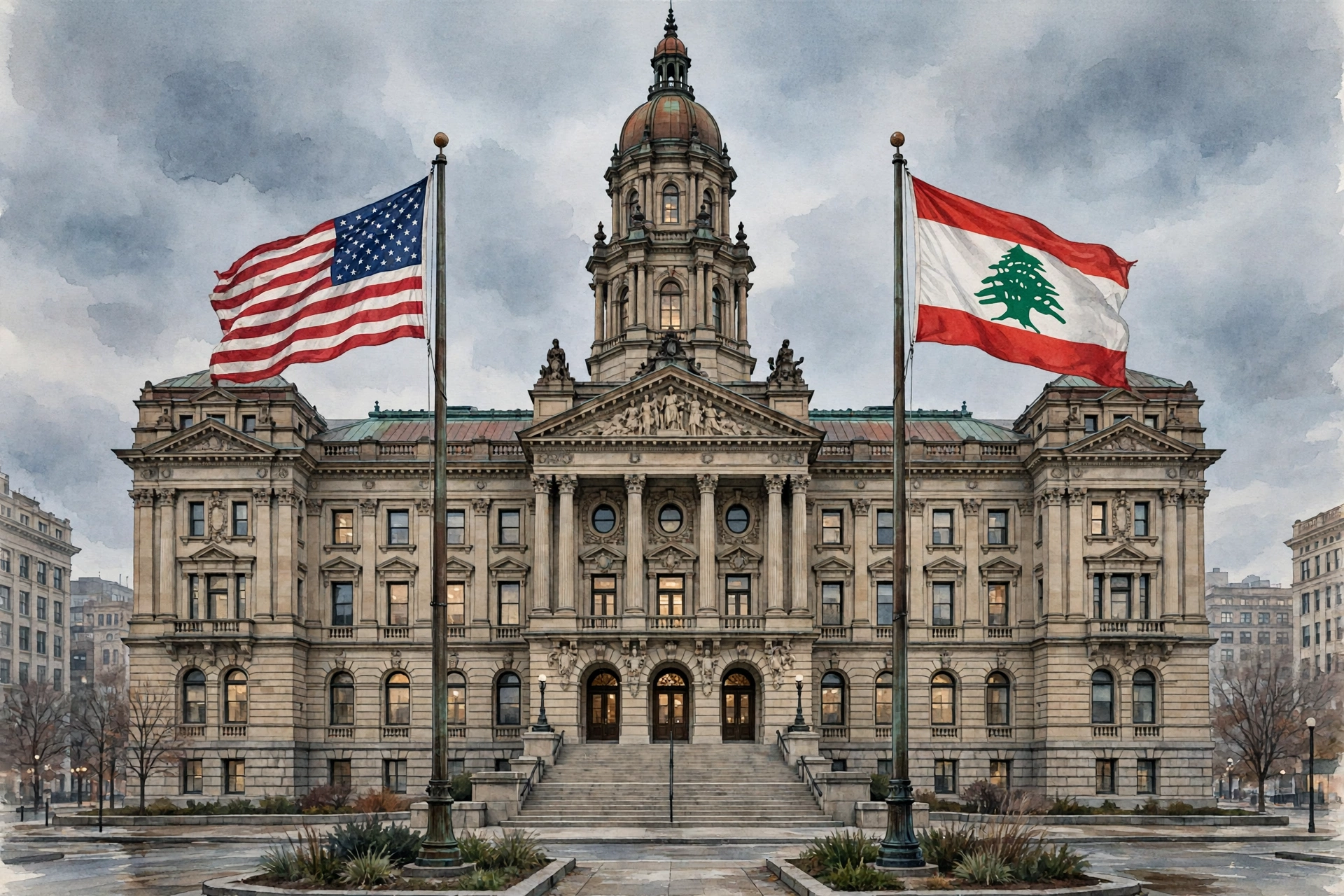
The United States has expelled Lebanon’s consul general in Detroit, Ibrahim Charara, after social media posts attributed to him praised the 1983 bombing of the US Marine barracks in Beirut, in which 241 American service members were killed.
The State Department declared Charara persona non grata and ordered him to leave the country within 48 hours, Lebanese media reported over the weekend. The State Department later confirmed the decision, saying in a statement: “The Lebanese consul in Detroit has been designated persona non grata. Terrorists murdered Americans and our colleagues in the bombings of the US embassy compounds in Beirut in 1983 and 1984, and we will never forget them. Anyone in the US who celebrates or justifies terrorist attacks has no place in our country.”
Secretary of State Marco Rubio authorised the order, according to reports of the decision. Charara, who was appointed consul general in Detroit on 25 September 2025, was expected to fly back to Lebanon by Sunday 8 November.
The posts at the centre of the case
The posts were first surfaced by a Washington Free Beacon report published on 2 November. In posts from 2021, Charara was reported to have described the 1983 bombing as an act of “heroic resistance” that ended the “American military occupation” of Lebanon with a single strike.
A second post from 2021 praised a drone attack on American soldiers at the Al-Tanf base in Syria, writing: “From the Marines barracks in Beirut to the Al-Tanf base, we will reject the occupier and defeat him.”
The posts date to a period when Charara was serving as a diplomat in Egypt, before his posting to Detroit. The Free Beacon report also noted his attendance at an Arab American community event in Dearborn, Michigan, in late October that backed Abdul El-Sayed and other Democratic candidates ahead of the 3 November midterm elections. El-Sayed went on to win Michigan’s US Senate seat.
Some outlets spell the diplomat’s surname Sharara. The spelling Charara is used here, matching the report that first surfaced the posts.
A swift expulsion, confirmed by Washington
Lebanon’s embassy in Washington told the Beirut daily Annahar on Saturday that the State Department had formally notified it of the decision. Lebanese Foreign Ministry sources told the Saudi-owned newspaper Asharq Al-Awsat that Charara had been given 48 hours to leave the country.
Neither the State Department nor Charara had commented publicly by Saturday evening, but the department’s confirmation followed, as reported by the International Business Times.
The expulsion comes amid strained relations between Washington and Tehran and a series of recent US moves in the region, including moving US aircraft out of RAF Mildenhall in Britain after a threat linked to Iran.
Charara disputes the posts
A source close to Charara told the Lebanese broadcaster LBCI that the posts had been published through an old social media account that was hacked several years ago. An aide told L’Orient Today that hackers had breached the account about seven years ago and that Charara did not write the posts attributed to him.
Those claims have not been verified. Under diplomatic law, they do not need to be for the expulsion to stand: a host country may declare a diplomat persona non grata at any time and without giving reasons.
The Lebanese Embassy in Washington said it was examining Charara’s posts after the Free Beacon’s initial report and indicated that any support for the bombing was unacceptable.
What the law allows
Article 9 of the 1961 Vienna Convention on Diplomatic Relations allows a receiving state to declare any member of a diplomatic mission persona non grata at any time, without having to explain its decision. Consuls fall under a parallel rule in Article 23 of the 1963 Vienna Convention on Consular Relations.
The declaration does not require a hearing, a criminal charge or proof of wrongdoing. Once a diplomat is declared persona non grata, the sending state is expected to recall the person or end their functions. Expulsions of this kind are a standard diplomatic tool, used by governments of all political stripes when a foreign official’s presence is judged unacceptable.
The 1983 bombing
On 23 October 1983, during the Lebanese civil war, suicide bombers drove explosives-laden trucks into buildings housing US Marines and French troops at Beirut International Airport. The bombing of the US Marine barracks killed 241 American service members. A separate attack on the French barracks killed 58 French soldiers, and six civilians also died.
A group calling itself Islamic Jihad claimed responsibility for the attacks. Washington blames Hezbollah, which the United States designates a terrorist organisation. Hezbollah has never claimed or denied responsibility for the bombing. A US federal court judgment in 2003 held Iran liable for directing the plot.
The attack remains the deadliest single day for the US Marine Corps since the Second World War, and its anniversary is marked each year by the families of the fallen and by veterans’ groups.
Frequently asked questions
Why was Lebanon’s Detroit consul expelled?
The State Department declared Ibrahim Charara persona non grata over 2021 social media posts attributed to him that praised the 1983 bombing of the US Marine barracks in Beirut, which killed 241 American service members. He was given 48 hours to leave the United States.
What does persona non grata mean?
It is a formal declaration by a host country that a foreign diplomat is no longer acceptable. Under the Vienna Convention, the host state does not have to give reasons, and the sending state is expected to recall the diplomat.
Did Charara deny writing the posts?
A source close to him told Lebanese broadcaster LBCI that the posts came from an old social media account that was hacked several years ago. That claim has not been verified, and it does not affect the expulsion, which requires no proof of authorship under diplomatic law.