ULA Vulcan Rocket Fails Minutes After Launch, Destroying 40 Amazon Leo Satellites
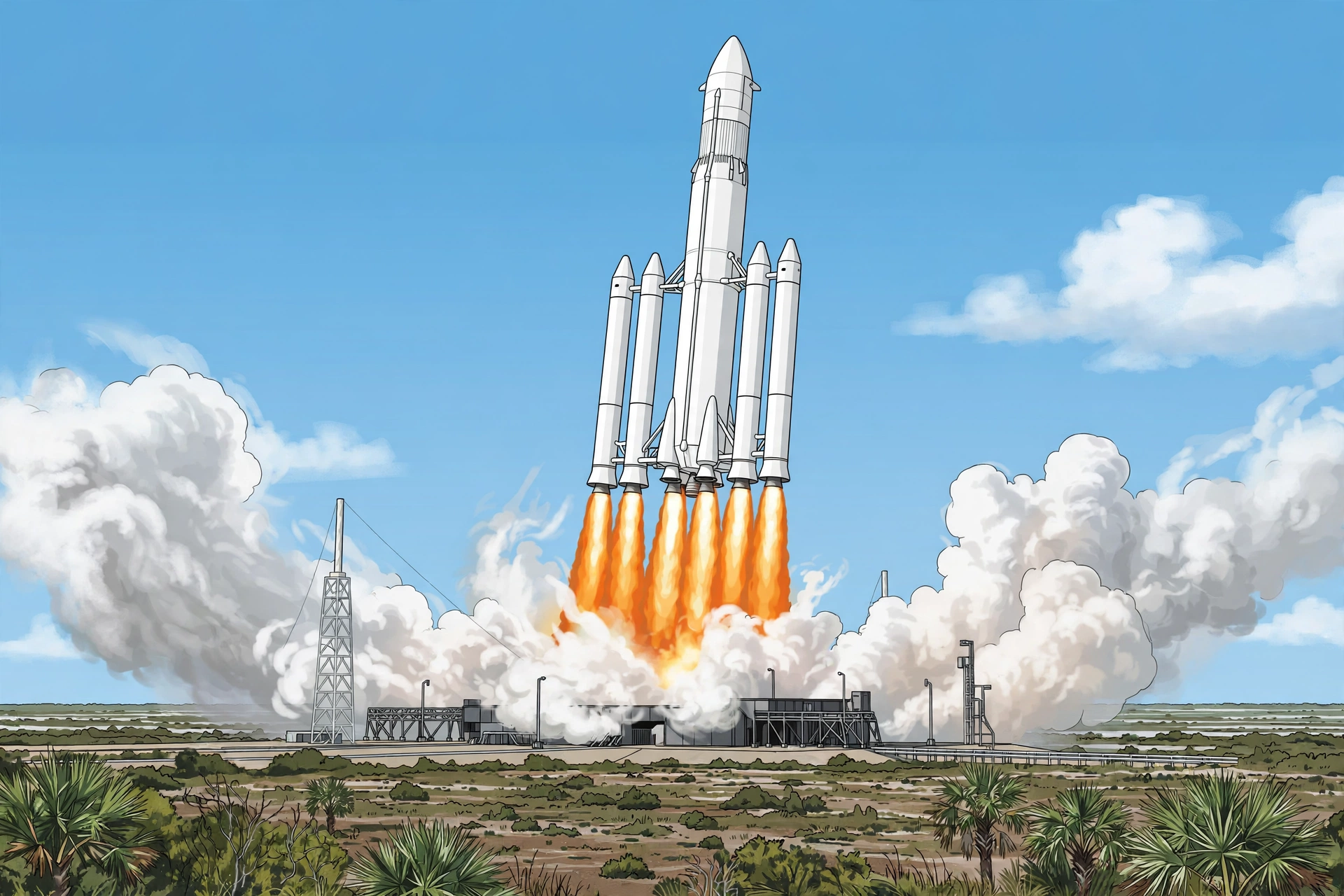
A United Launch Alliance Vulcan rocket failed about 10 minutes after lifting off from Cape Canaveral on Sunday, destroying a payload of 40 satellites for Amazon’s Leo internet network in the company’s first mission failure.
The 214-foot rocket lifted off from Space Launch Complex 41 at Cape Canaveral Space Force Station in Florida at 12.40pm Eastern time, powered by six solid rocket boosters and two methane-burning BE-4 engines producing 3.8 million pounds of thrust. About 50 minutes later, ULA confirmed the mission was lost.
“Based on data received by our Launch Director, we confirm that the Vulcan vehicle launched from Space Launch Complex 41 suffered an anomaly 10 minutes into the flight and failed to deliver the Amazon mission to orbit,” ULA said in a statement.
Reuters reported that the failure doomed the payload and marked the launch company’s first mission failure in its two-decade history. The cause was not immediately clear.
Ten minutes into the flight
The countdown itself had not gone smoothly. Launch controllers called a hold at the T-minus 20-second mark because of an unexplained technical issue with the rocket, and it is not yet known whether that problem played any role in the failure that followed.
Once under way, the flight appeared normal at first. The six solid rocket boosters peeled away from the Vulcan first stage about one minute and 35 seconds into the flight. But roughly 10 minutes after liftoff, during the climb to space, something went wrong and the mission could not be saved.
ULA, a joint venture of Boeing and Lockheed Martin, said it would work closely with its customer and other appropriate organisations to find the cause, determine the appropriate corrective action and return to flight as quickly as possible. NASA Administrator Jared Isaacman promised assistance if needed, according to Spaceflight Now.
A first failure in 20 years
The loss is a major setback for ULA, which has built its reputation on reliability. It was the first outright failure of a United Launch Alliance rocket since the company was formed in 2006, and only the fifth flight of its new Vulcan heavy-lift rocket.
It was also the first Vulcan launch in nine months. ULA and booster supplier Northrop Grumman had spent that time working to resolve problems with the nozzles used by the strap-on solid-fuel boosters that marred two earlier flights.
Sunday’s mission, known as Leo 1, was the first of 38 Vulcan flights Amazon has bought to launch its Leo satellites, which are designed to compete head-to-head with Elon Musk’s Starlink and other space-based internet providers. Losing the first batch is a costly blow to that schedule, and to ULA’s launch manifest, with no return-to-flight date yet announced.
A weekend of contrasts in American spaceflight
The failure came a day after a very different outcome on the other side of the Gulf coast. SpaceX caught its Starship upper stage in the arms of its launch tower on Saturday, the first time a spacecraft returning from orbit has been caught that way, after Flight 15 lifted off on Friday from Starbase in Texas and spent about 22 and a half hours in space.
Together, the two flights sum up a volatile weekend for American launch providers: a historic recovery for one company, and a first-ever failure for another.
The Vulcan loss also lands amid the administration’s push to return astronauts to the Moon by 2028, an effort that depends on a busy and reliable American launch manifest, with several providers flying regular missions.
What happens next
ULA has not said what went wrong, and an investigation will now examine flight data to identify the fault before any corrective action can be set. Until that work is done, the timing of Vulcan’s next flight, and of Amazon’s next Leo launch, remains uncertain.
For Amazon, the loss of 40 satellites is an early test of a constellation programme that needs dozens of launches to reach service. For ULA, it is the first real test of how the company recovers from failure after two decades in which its rockets had never been lost outright.