U.S. Measles Cases Hit 4,852 in 2026 as America Nears Loss of Elimination Status
The United States has confirmed 4,852 measles cases so far in 2026, according to Centers for Disease Control and Prevention (CDC) data through October 29, published on October 30. The total is more than double the 2,289 cases recorded in all of 2025, and it puts the country on course to lose a public health standing it has held for a quarter of a century: measles elimination status, first declared in 2000.
The latest weekly update added 264 cases, a 5.8% rise on the previous week. That increase was faster than the 4.0% rise reported a week earlier, interrupting what had briefly looked like a slowdown. Public health experts caution that a single week does not settle a trend, because reporting delays and batches of state data can move the numbers, but the direction over the year is unmistakable: measles is spreading widely, and it is spreading mainly where vaccination coverage has fallen.
The latest numbers
Hospitalizations have risen to 511, about 11% of confirmed cases, up from 479 in the previous weekly update. Cases among children younger than 5 have reached 812, up from 766 a week earlier. Children ages 5 to 19 account for 2,010 cases, and adults 20 and older account for 1,996. Cases have been reported by 47 jurisdictions, with 18 additional cases involving international visitors.
About 96% of 2026 cases were in people who were unvaccinated or whose vaccination status was unknown, up from 93% in 2025, according to CDC figures summarized by Reuters. The CDC counts three measles deaths nationally this year, a figure it notes may change. The scale of the outbreak is already the largest in a single year since elimination was declared, and expert projections cited in recent coverage put the final 2026 total at 6,000 to 6,500 cases if current trends continue.
Pennsylvania is the hardest-hit state
No state has been hit harder than Pennsylvania, where state health officials have reported 1,398 confirmed cases, 265 hospitalizations, and cases spread across 43 of the state’s 67 counties. Lebanon County was the original point of origin for the state’s outbreak, according to state figures cited in recent reporting.
Pennsylvania’s own death count differs from the CDC’s national tally: the state health department has reported five measles-related deaths this year, while the CDC lists three nationally. The two counts use different attribution criteria, and the CDC has noted its figure is subject to change. The discrepancy is a reminder that state and federal surveillance systems do not always count a death in the same way, even when they are describing the same outbreak.
Vaccination demand has risen sharply in Pennsylvania. Providers there gave more than 56,000 MMR doses in September and more than 23,000 in the first two weeks of October, compared with about 25,000 in a typical month, according to a state health department update. Protection takes time to build, however, and people already exposed may still fall ill in the weeks ahead.
Why elimination status is at stake
Measles elimination does not mean no cases ever occur. Under the Pan American Health Organization (PAHO) definition, it means endemic transmission — continuous spread within a country — has been interrupted for at least 12 consecutive months, alongside high population immunity, a functioning surveillance system, and a robust response capacity.
PAHO originally planned to review the U.S. status in April 2026, then postponed the review to November as outbreak data kept accumulating. Its measles elimination commission now meets November 10 to 13 to review countries’ status, including that of the United States. Dr. Amesh Adalja of the Johns Hopkins Center for Health Security has said the U.S. has “effectively lost elimination status” and that the November review will make that formal.
Losing the status would be more than symbolic. Measles would be reclassified as endemic, meaning it circulates continuously in the U.S. population rather than arriving mainly through international importation. That change can affect how outbreak response is funded, how other countries issue travel advice for visitors to the United States, and how future public health measures are judged. Canada lost its own elimination status in November 2025.
Coverage figures help explain how the country reached this point. Reported kindergarten MMR coverage for the 2025–2026 school year was 92.4%, down from 95% in 2017–2018, with non-medical exemption rates at a record 4.2%. National averages also hide local gaps: in communities where exemptions cluster, coverage can fall well below the national figure, creating exactly the conditions in which measles — one of the most contagious viruses known, able to linger in the air for up to two hours after an infected person leaves a room — can keep spreading.
Who is most at risk, and what protection looks like
The groups at greatest risk of severe illness include babies under 12 months, unvaccinated young children, pregnant people who are not immune, and anyone with a weakened immune system. Infants under 12 months are too young for routine MMR vaccination and depend on the immunity of the people around them. About 16% of children under 5 with measles had been hospitalized this year, according to CDC data through October 22.
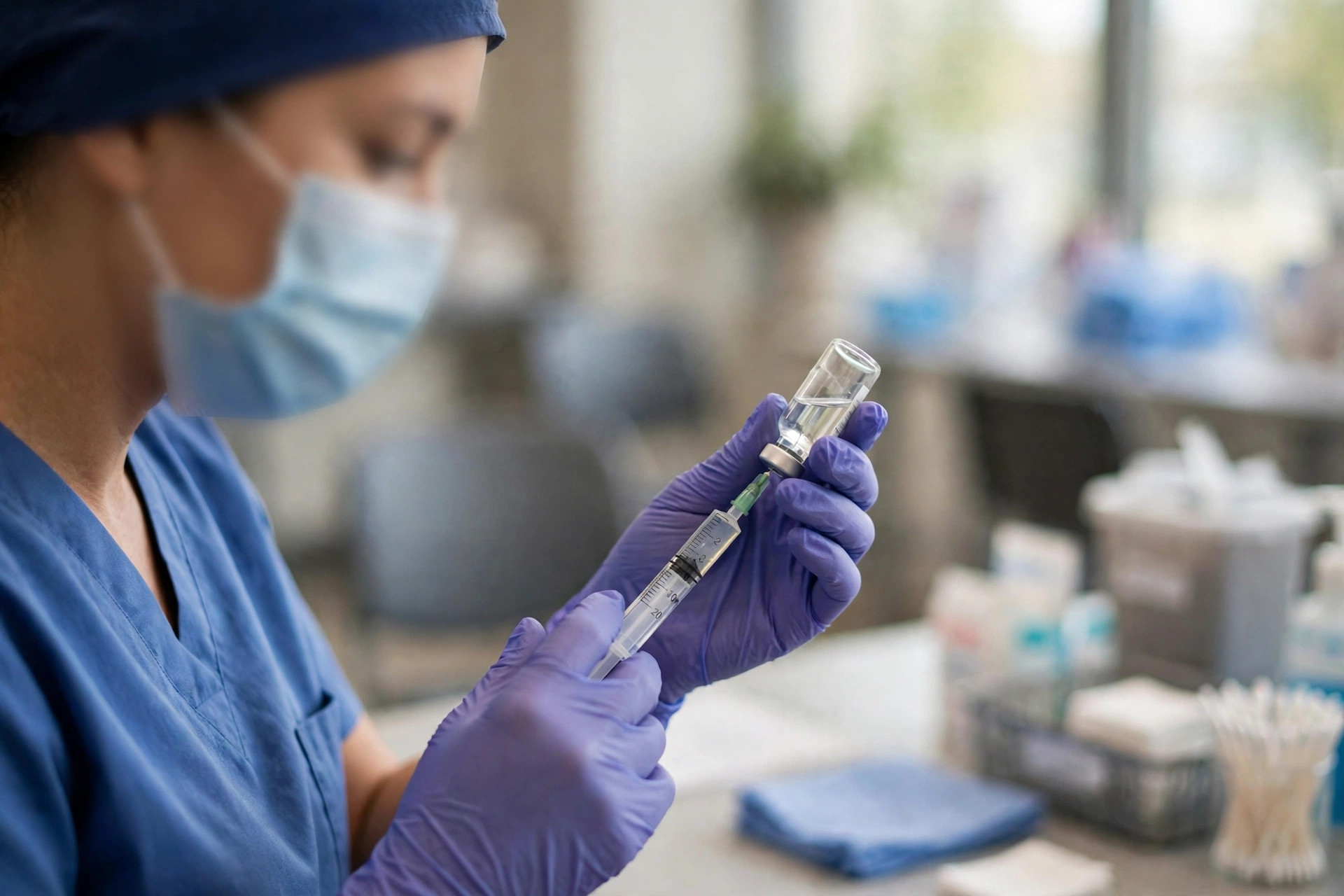
Two doses of the MMR vaccine are about 97% effective at preventing measles, and one dose is about 93% effective, according to the CDC. Children typically receive the first dose at 12 to 15 months and the second at 4 to 6 years. The CDC recommends that infants 6 through 11 months old get an early dose before international travel.
Early symptoms include high fever, cough, runny nose, and red, watery eyes, followed by a rash that usually starts on the face and spreads downward. People can spread the virus from four days before to four days after the rash appears, often before they know they have measles. Anyone with possible symptoms should call a clinic or emergency department before arriving, so staff can protect other patients. A child who has trouble breathing, has a seizure, is unusually sleepy, or shows signs of dehydration needs emergency care.
People who think they were exposed should contact a clinician quickly. An MMR dose within 72 hours of exposure may prevent illness or make it milder, and people at high risk of severe disease may be given immune globulin within six days.
What happens next
The next CDC update is expected November 6, and the PAHO review follows days later. Thanksgiving travel and indoor gatherings will then bring together relatives of different ages, including newborns and grandparents, which makes the coming weeks a practical moment for families to check that everyone eligible is up to date on MMR vaccination — especially before visiting areas with active outbreaks.
The 2026 outbreak did not arrive suddenly. It is the result of years of falling coverage in some communities, a virus that spreads through the air, and a surveillance system now counting its highest annual total in more than three decades. Whether the formal ruling in November confirms what many experts already believe, the numbers themselves tell the story: measles, once eliminated in the United States, is back as a domestic threat.
Frequently asked questions
How many measles cases has the U.S. confirmed in 2026?
The CDC reported 4,852 confirmed cases through October 29, 2026, published October 30 — more than double the 2,289 cases recorded in all of 2025.
Is the outbreak speeding up?
Weekly growth rose to 5.8% from 4.0% the previous week, but one week is not enough to confirm a new trend because testing and reporting delays can affect weekly counts.
How many people have been hospitalized or died?
The CDC reports 511 hospitalizations, about 11% of cases, and three measles deaths nationally, a figure it says may change. Pennsylvania’s health department separately reports five measles-related deaths in the state, using different attribution criteria.
Which state has the most cases?
Pennsylvania, with 1,398 cases according to state health department figures cited October 30, spread across 43 of its 67 counties.
How well does the MMR vaccine work?
Two doses are about 97% effective at preventing measles, and one dose is about 93% effective, according to the CDC. Children typically receive doses at 12 to 15 months and 4 to 6 years.
What should I do after a possible measles exposure?
Contact a clinician right away, and call ahead before visiting a clinic. An MMR dose within 72 hours may help, and high-risk people may receive immune globulin within six days.
Sources: CDC measles case data through October 29, 2026, as summarized by Reuters and reported by Medical Daily; Tech Times; ETHealthworld. Readers should check the CDC’s current guidance for the latest case counts and vaccination recommendations.
External references: Medical Daily: U.S. Measles Cases Reach 4,852 | Tech Times: US Measles Outbreak Hits 4,852 as PAHO Prepares to Strip Elimination Status | ETHealthworld: Surge in US Measles Cases