NASA Asks Private Companies to Rescue the Hubble Telescope Before It Falls
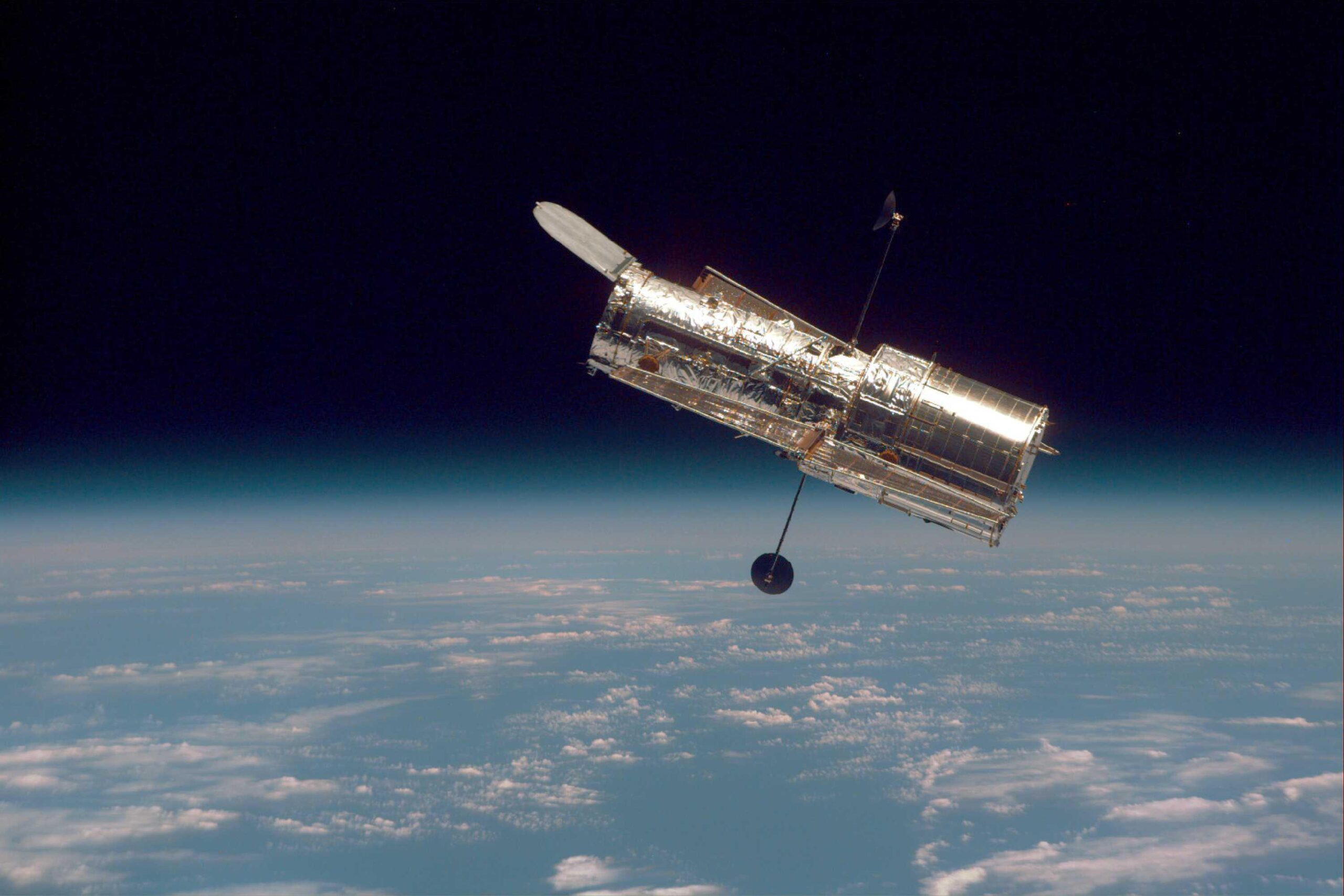
NASA has asked private space companies to come up with a plan to save the Hubble Space Telescope, the observatory that has shaped how Americans see the universe for more than 35 years. The agency issued a Request for Information on October 29, 2026, inviting industry to propose a mission to lift Hubble to a higher orbit, service it, or bring it down in a safe, controlled way when its work is done.
The call is not a contract, and NASA has not promised to buy a rescue flight. It is a formal step to find out who could actually do the job, what it would cost, and whether a mission could fly in time. Responses are due by 3 p.m. Eastern on Monday, November 30, 2026.
“Hubble still has important science ahead of it, and we should be looking at every reasonable opportunity to keep it delivering for as long as possible,” NASA Administrator Jared Isaacman said in the agency’s announcement. “If there are innovative and cost-effective ways to extend the life of an asset already on orbit, we owe it to the American taxpayer and the scientific community to explore them.”
Why Hubble is slowly falling
Hubble has no engine of its own. Like every spacecraft in low Earth orbit, it is dragged down little by little by the thin upper atmosphere. Nothing has raised its orbit since Space Shuttle Columbia last did so in 2002, and the final shuttle servicing visit in 2009 replaced parts but did not give it a boost.
Over those 24 years, Hubble has drifted from about 362 miles (583 kilometers) above Earth to roughly 292 miles (470 kilometers) today. NASA’s analysis now predicts the telescope is likely to re-enter the atmosphere in the 2033 to 2034 timeframe if nothing is done, which is why the agency says any rescue or disposal mission would need to take place by 2032.
Forecasts can shift with solar activity, which heats and expands the upper atmosphere and increases drag. But the direction of travel is not in doubt: left alone, Hubble will eventually fall back to Earth in an uncontrolled re-entry.
Three options on the table
NASA’s request covers three very different kinds of mission. A company could develop a servicing vehicle that captures Hubble and boosts it to at least 373 miles (600 kilometers), a height that would likely keep it in orbit for at least another 25 years. It could fly a servicing mission to improve the telescope’s performance and make it more resilient. Or it could guide Hubble to a controlled re-entry or another safe disposal at the end of its mission.
Whichever option a company proposes, one condition is strict: the mission must not harm the telescope. The company would supply its own launch vehicle, servicing spacecraft and mission operations, and a crew if its plan requires one. NASA’s Goddard Space Flight Center, which manages Hubble, would provide technical information, access to its Hubble experts, and coordinated operations for rendezvous, capture, boost, servicing or re-entry.
A second chance after the SpaceX study
This is not the first time a commercial Hubble rescue has been explored. In 2022, NASA and SpaceX signed an unfunded agreement to study whether a Crew Dragon capsule could boost Hubble, with Isaacman’s Polaris Program involved in the concept. In 2024, NASA decided not to pursue that reboost at the time, citing risks to the telescope, including concern about contamination of its sensitive ultraviolet mirrors.
The landscape has changed since then. Nicky Fox, associate administrator of NASA’s Science Mission Directorate, said commercial industry has “rapidly evolved in recent years to offer new capabilities for in-space satellite capture and servicing.” The new request is deliberately broad, inviting robotics companies and other firms beyond the traditional human-spaceflight players to show what they can do.
Isaacman’s own history adds a notable twist. Before becoming NASA administrator, he proposed a Polaris Hubble reboost mission using a SpaceX Dragon capsule. Now, as administrator, he is running an open process in which any qualified company can compete, and no winner has been chosen.
What Hubble still does for science
Hubble launched in April 1990 aboard Space Shuttle Discovery and has operated for more than three decades as a joint project of NASA and the European Space Agency. The Space Telescope Science Institute in Baltimore conducts its science operations, while Goddard manages the mission.
The telescope continues to make discoveries, from distant galaxies to the expansion of the cosmos, and demand for its observing time still far exceeds supply. Its visible-light and ultraviolet views complement the infrared vision of the James Webb Space Telescope, so losing it early would leave a gap before successor missions are ready.
What happens next
Companies have until November 30 to respond with details of their capabilities, their earliest possible service date, and what they would need from NASA. No budget or price has been announced, and a formal request for proposals could follow if the responses are promising — although no date has been set. Either way, the clock is now public: Hubble has about six years before a rescue mission must fly, and the companies that want to save it have one month to make their case.
Frequently Asked Questions
Why is Hubble falling out of orbit?
Hubble has no propulsion system, so atmospheric drag slowly lowers its orbit. It has not been boosted since 2002, falling from about 362 miles to roughly 292 miles above Earth.
When will Hubble re-enter Earth’s atmosphere?
NASA analysis predicts a likely re-entry in the 2033 to 2034 timeframe without intervention, which is why any rescue or controlled disposal mission would need to fly by 2032.
What is NASA asking companies to do?
NASA’s October 29, 2026 Request for Information seeks proposals to boost Hubble to at least 373 miles (600 kilometers), service it to improve its capabilities, or guide it to a safe, controlled re-entry.
Has NASA already chosen a company to rescue Hubble?
No. The request is a fact-finding step, not a contract. NASA has not committed funding, selected a servicer, or set a mission budget.
Why not just let Hubble burn up on its own?
At about 13 metric tons, Hubble is large enough that some debris could survive an uncontrolled re-entry. A controlled disposal would reduce that risk, while a successful reboost could extend its science life by decades.
Sources: NASA Science, “NASA Explores Potential Commercial Servicing for Hubble Telescope” (October 30, 2026); Gizmodo, “NASA’s Begging the Commercial Space Industry to Save the Doomed Hubble Telescope” (October 31, 2026); TS2 Tech, “NASA Seeks Plans to Service Hubble and Boost It to 600 Kilometres” (October 30, 2026). Further reading: NASA’s announcement, Gizmodo’s report, and TS2 Tech’s analysis.