Debris Damages Aramco Tower as Saudi Arabia Intercepts Houthi Missiles
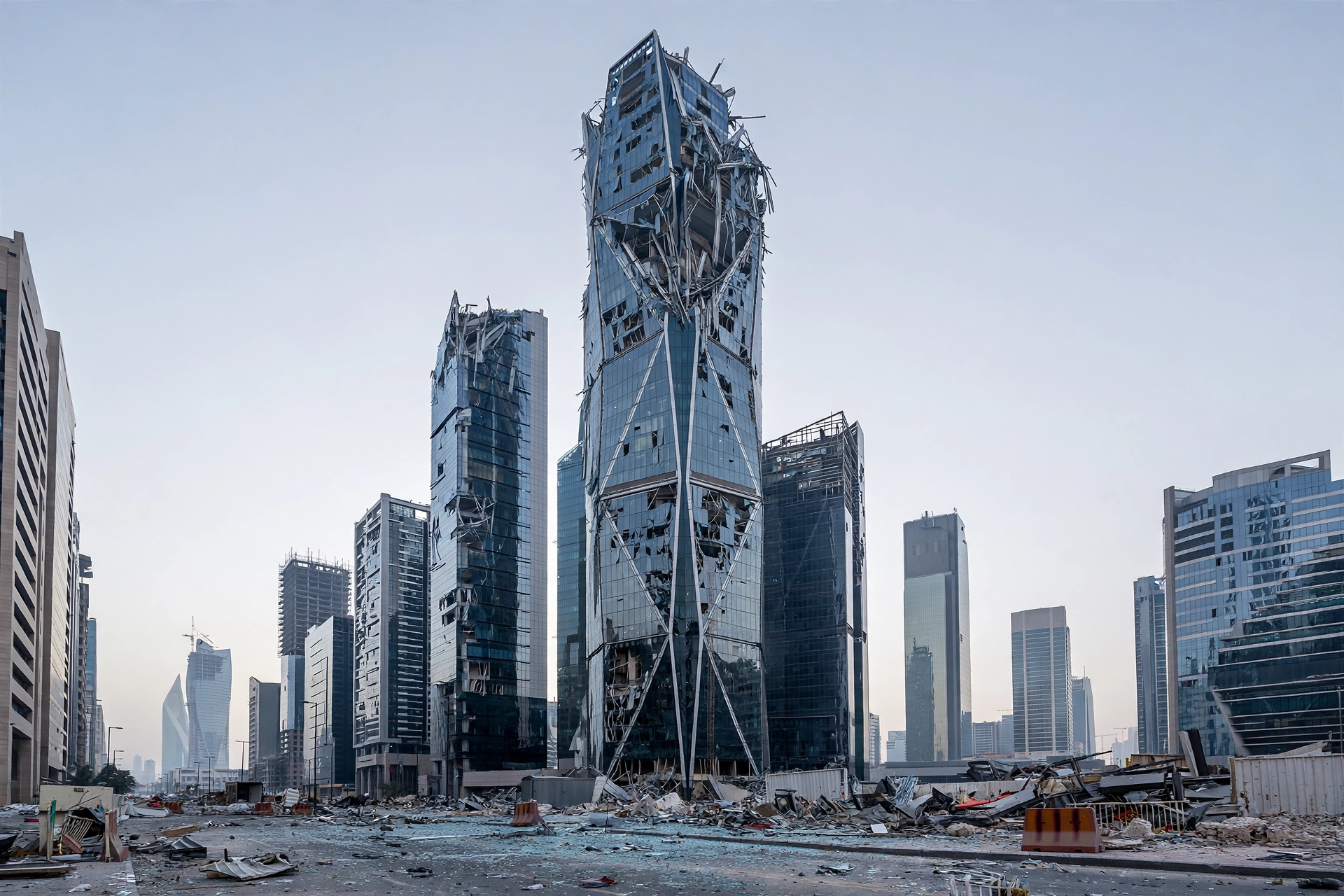
Falling debris damaged an administrative tower belonging to Saudi Aramco in Riyadh on Sunday after Saudi air defences intercepted missiles aimed at the capital and other parts of the kingdom, Saudi officials said. No one was injured.
Residents of the Saudi capital heard loud explosions early on Sunday morning, and the civil defence authorities issued alerts for Riyadh and Najran province before lifting them shortly afterwards. The Saudi-led coalition later said its air defences had intercepted two ballistic missiles fired towards Riyadh, and then two cruise missiles and a drone in the capital and the kingdom’s southern region.
Damage in the financial district
The one piece of physical damage confirmed so far is at the Aramco Tower in the King Abdullah Financial District, one of the tallest buildings in the Saudi capital and home to offices of the state oil giant. A Reuters witness saw blown-out windows across several floors of the tower.
Saudi Arabia’s Energy Ministry, in a statement carried by the state-run Saudi Press Agency, described an “attempted attack” on the Aramco building. It said falling shrapnel caused minor damage and that there were no injuries or fatalities. Aramco itself did not immediately comment.
The ministry’s careful wording matters. Saudi officials attributed the damage to debris from intercepted missiles rather than a direct hit, and the building is an administrative office tower, not an oil production facility. Nothing in the initial accounts pointed to any interruption to energy operations.
What the coalition says it intercepted
The Saudi-led coalition, which has been fighting Yemen’s Houthis for years, accused the Iran-aligned group of launching the ballistic missiles. Coalition spokesman Maj. Gen. Turki al-Maliki said air defences intercepted and destroyed the two ballistic missiles heading for Riyadh, and later two cruise missiles and a drone in Riyadh and the southern region.
There was no immediate claim of responsibility from the Houthis. The group has previously claimed missile and drone attacks on Saudi targets, and the two sides’ accounts of Sunday’s events diverged sharply, with Houthi spokesmen claiming a wider set of strikes than the coalition acknowledged.
According to Arab News, the coalition has reported at least 15 ballistic and cruise missiles and drones intercepted or destroyed across the kingdom so far this month, a measure of how frequent the exchanges have become.
A wider pattern of Gulf tension
Sunday’s incident did not come out of nowhere. It followed reported strikes near the Yemeni capital, Sanaa, on Saturday, and an attack in October that caused extensive damage to Aramco’s headquarters, according to reports at the time.
The episode also lands in the middle of a tense standoff across the Gulf. The United States has been enforcing a blockade on Iran, and its aircraft recently disabled a cargo ship that Washington said repeatedly defied blockade warnings. Tehran, for its part, has said it will keep developing its missile programme: Iran lifted its self-imposed limit on missile range only this weekend, according to the Revolutionary Guard. The region has also seen a run of tanker incidents near the Strait of Hormuz, the narrow waterway through which a large share of the world’s seaborne oil passes.
For American consumers, the stakes are visible at the pump. Fuel prices have already climbed sharply this autumn as supply shocks linked to the wider conflict pushed up the cost of petrol and diesel, and any threat to Gulf energy infrastructure tends to feed straight into crude markets.
What happens next
Saudi authorities said they were responding to the damage and that the immediate danger had passed. The questions now are whether the Houthis claim the attack, whether the exchanges escalate further, and whether oil markets react when trading resumes.
For now, the strongest independently corroborated finding from Sunday is narrow: an Aramco office building in Riyadh sustained damage, and no one was hurt. The interception claims, the casualty assessment and the explanation involving shrapnel all come from Saudi authorities, and neither the Associated Press nor Reuters reported independently establishing the full flight paths or interception sequence. As with the other incidents in this fast-moving standoff, the first accounts may be revised as more evidence emerges.