US Troops in Europe Fall to Two-Year Low as Pentagon Nears Cut Decision
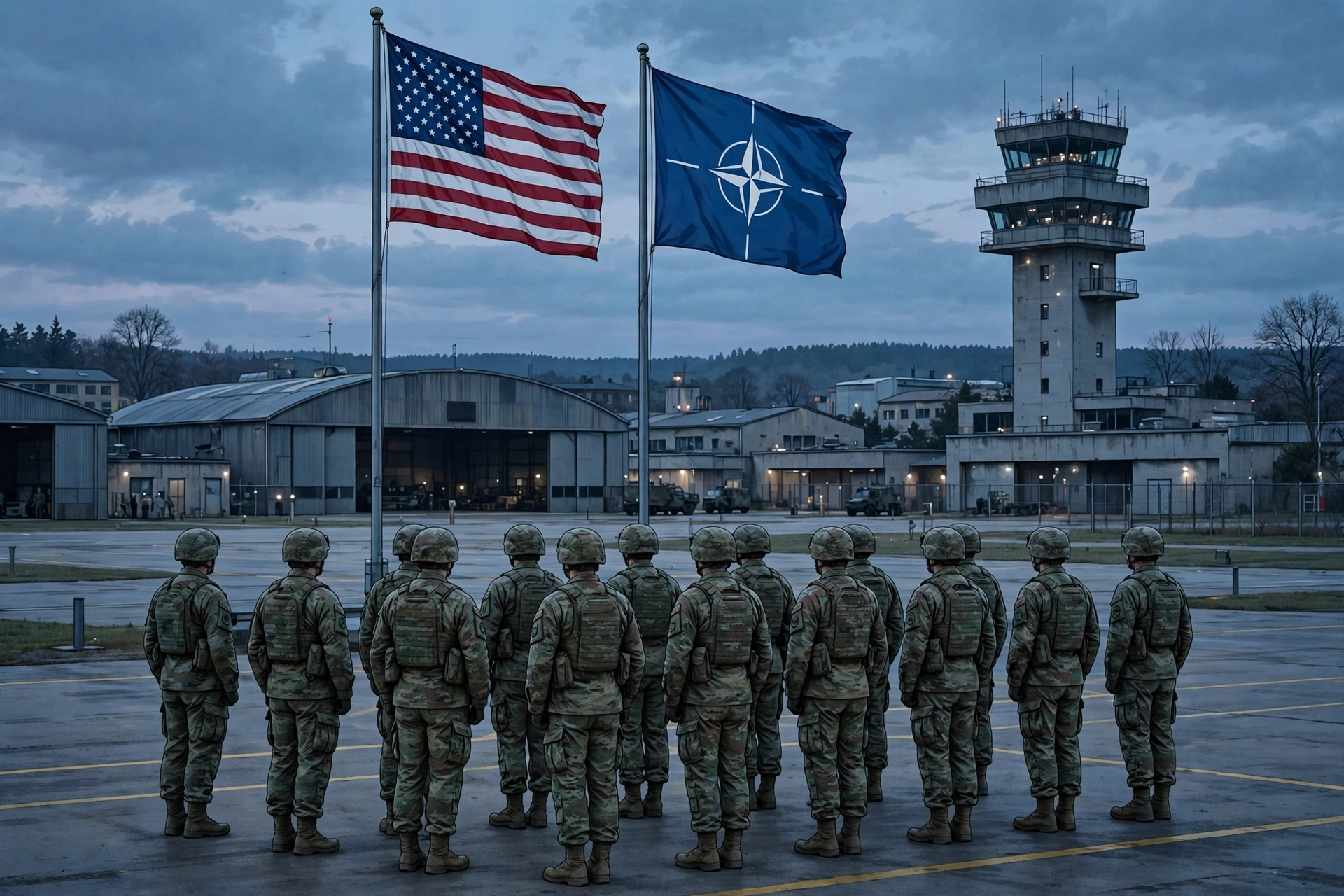
The number of American troops in Europe has fallen to its lowest level in two years, according to a new inspector general review, leaving United States forces close to a floor set by Congress just as the Pentagon weighs further cuts.
About 78,000 American military personnel were assigned to United States European Command as of 30 September, down from roughly 90,000 at the start of fiscal 2025, the report found. The decline means force levels have “neared the congressionally-mandated floor of 76,000,” the oversight report said.
A floor Congress wrote into law
The fiscal 2026 National Defense Authorization Act bars the Pentagon from reducing troop levels in European Command’s area of responsibility below 76,000 for more than 45 days without meeting a series of requirements. The defence secretary and the head of European Command must each independently certify to Congress that a cut serves United States national security interests, that NATO allies have been consulted and that the department has assessed the threat from Russia. The Pentagon must then wait 60 days after submitting those assessments before carrying out the reduction.
Representative Don Bacon, a Nebraska Republican and retired Air Force brigadier general, said in September that a large drawdown had “little support” in Congress, adding that “some folks in Pentagon seem oblivious to current Russian aggression.”
What drove the decline
The report attributes much of the fall to the end of two rotational brigade missions over the past year. After Russia’s full-scale invasion of Ukraine in 2022, the Army expanded its European presence to five brigade combat teams, including three rotational brigades, and troop levels at one point topped 100,000.
In May, the Pentagon also announced it would withdraw about 5,000 troops from Germany over six to 12 months, cancelling a planned armoured brigade rotation to Poland and a long-planned long-range fires battalion deployment to Germany. One option under discussion would shift a multidomain task force in Germany to South Korea, though military officials have not fully detailed how the May announcement will be carried out.
United States Army Europe and Africa told inspectors that the reductions to its rotational posture, alongside cuts to permanent forces, “have affected its mission operations and readiness.” The report also noted additional cuts in contractor support.
A smaller cut than feared — for now
For months, European allies have braced for sweeping reductions as the Trump administration pushes NATO members to take on more of their own security burden. But the final cut could be far smaller than first feared. Bloomberg reported on Saturday that the final tally could be as few as 5,000 troops, against earlier estimates of as many as 25,000. Most of the cuts would fall on Germany, which hosts the largest American contingent in Europe, about 37,000 troops, while countries along NATO’s eastern flank could see an increased United States presence.
Undersecretary of Defense for Policy Elbridge Colby has delivered his force-posture findings to Defense Secretary Pete Hegseth, who is expected to present options to President Donald Trump soon. A final decision is expected in December.
The review also comes as bases in Europe have served as a staging ground for US operations in the Middle East, including against Iran. The United States ambassador to NATO, Matthew Whitaker, said in September that two major operations against Iran underscored how “we get a lot out of our European basing,” and told a security forum in Germany this month that he did not anticipate substantial changes to European Command’s mission.
The debate comes as the military faces scrutiny elsewhere in the region, after a whistleblower said warnings were ignored before a drone strike that killed six US soldiers in Kuwait.
What happens next
The inspector general’s report makes no recommendation on whether any particular troop level should be maintained. But the figures set up a collision between the administration’s push to shift forces towards the Indo-Pacific and the legal guardrails Congress built around the European presence.
General Christopher Cavoli, the head of European Command, told the House Armed Services Committee in April that the force then stood at about 80,000 and that it was his advice “to maintain that force posture as it is now.”
What happens next turns on the review now sitting with Hegseth. Any cut that took levels below 76,000 for more than 45 days would trigger the certification and waiting requirements — and a fresh debate in Congress over how far the American footprint in Europe should shrink.