Satellites Catch Istanbul Landfill Leaking Methane as Turkey Hosts COP31
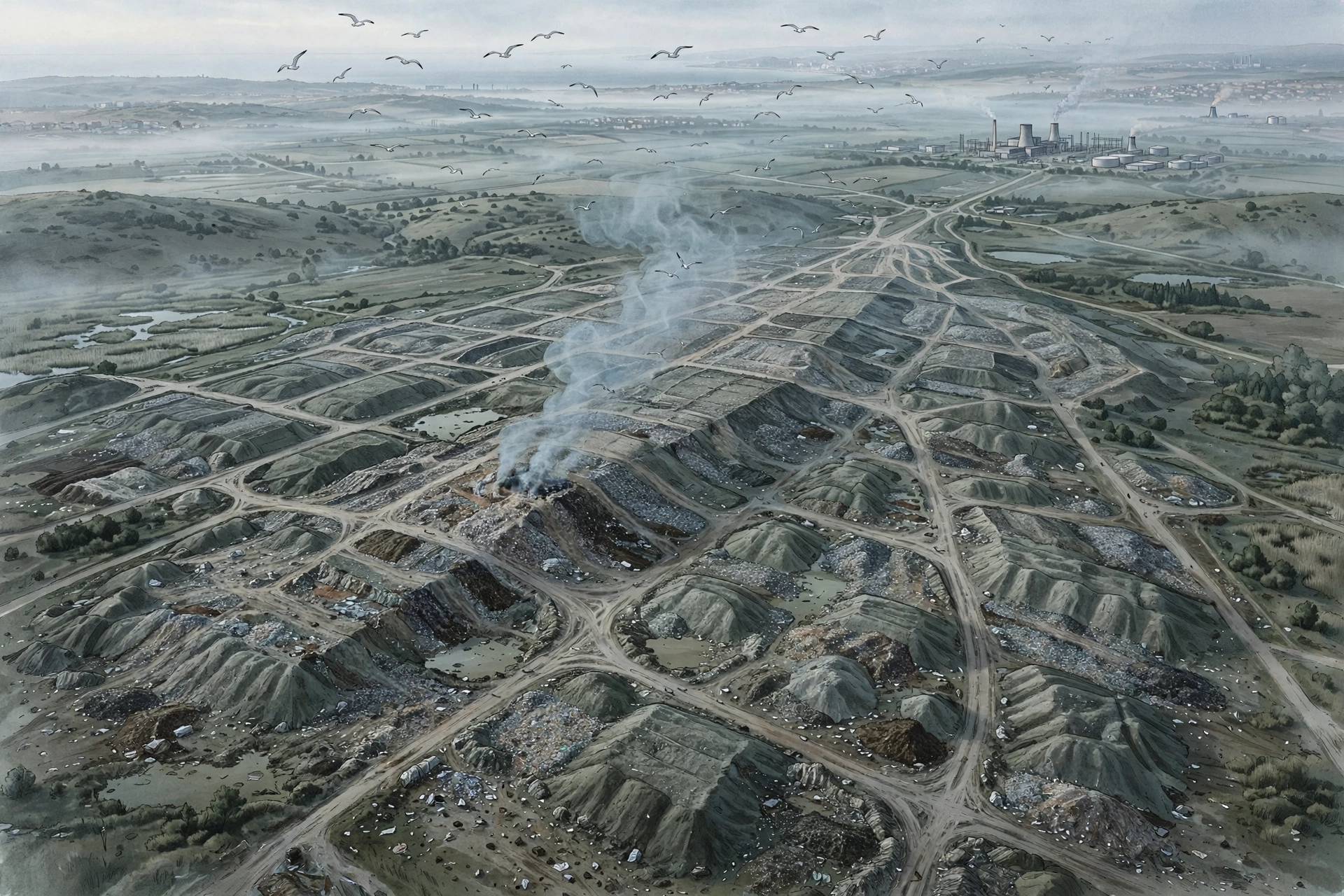
A landfill west of Istanbul is leaking methane at a rate that places it among the world’s largest recorded landfill emitters, satellite data show, just as Turkey prepares to host the COP31 climate summit in Antalya.
The Seymen landfill, which takes household waste from a city of 16 million people, released methane at an average detected rate of about 7.4 metric tons an hour, UCLA researchers found. That puts it just below the highest-emitting landfill on a global list from 2025.
Using public data from the Carbon Mapper Tanager-1 satellite, from January 2025 to May 2026, the analysis identified 70 methane plumes across Turkey’s 10 highest-emitting waste sites, with average detected rates from 841 kilograms to 7.4 metric tons an hour. Three were around Istanbul; others were near Ankara, Izmir and Antalya.
Why methane matters
Methane is the biggest cause of climate change after carbon dioxide, and it is more than 80 times more potent than CO2 in its first 20 years in the atmosphere. Sharp cuts could therefore slow warming relatively quickly — which is why Turkey has made methane reduction a priority for the summit.
Turkey is the world’s fifth-biggest emitter of methane from solid waste, behind China, the United States, Russia and Brazil, according to non-profit emissions tracker Climate TRACE. Methane emissions from waste in Turkey rose nearly 25 percent in the decade to 2024, against a global rise of 6.5 percent, according to World Bank data. The country’s waste emissions have remained around 21 million tons of CO2 equivalent a year since 2020.
The United States sits second in that ranking, so the problem is not Turkey’s alone — and the analysis is American research, using a US non-profit’s satellite data.
A capture system that does not capture enough
At Seymen, municipal operator ISTAC collects gas produced as buried organic material decomposes, while an energy company burns the gas to generate electricity at a plant opened in 2020. The facility produces about 22,000 megawatt-hours of electricity a month, Reuters reported. The site takes some 8,500 tons of household waste a day, of Istanbul’s 20,000-ton daily total.
But the readings show the capture system is missing a great deal — and gas capture is widespread at Turkey’s larger landfills, so collection systems alone do not prevent large releases.
Turkish officials dispute how representative the readings are. ISTAC official Aysen Erdincler said emissions at Seymen typically ranged between 4 and 6 tons per hour, and that a one-day reading of 12 tons per hour had raised the average. ISTAC head Fatih Ugur said about 30 hectares had been left uncovered that day during work on methane-collection pipes. Erdincler said leaks at the site were usually around 25 percent.
Turkey’s Environment Ministry said the data were not continuous measurements and could not establish annual emissions. It cited the government’s Zero Waste Initiative, saying the national waste recovery rate had risen to 37.53 percent in 2025 from 13 percent in 2017.
Tia Scarpelli, waste sector lead for emissions-monitoring non-profit Carbon Mapper, said cutting landfill methane means diverting organic material before it reaches dumps and improving capture. Because Turkey’s largest detected emissions were concentrated at a few sites, addressing those landfills could deliver disproportionate gains.
“There is this huge mitigation potential by just addressing the largest landfills to reduce their national emissions,” she said. “What stands out is how big its emissions are and how persistently large they are.”
Turkey absent from the methane pledge
The findings land awkwardly for the summit’s host. In 2021, the Global Methane Pledge was launched at COP26, seeking a collective 30 percent cut from 2020 levels by 2030. Turkey is not listed among the pledge’s participants.
Selim Yildirim, chief climate policy researcher at Ankara-based non-profit D84, said Turkey could still join the pledge during COP31, but that would not guarantee results. “The issue is whether you can effectively turn it into action and implement it,” he said, adding that regulation must push operators to capture and reuse methane.
The smell at 4 a.m.
In Seymen, about 5 kilometres from the landfill, residents have another concern — the smell. Methane itself is odourless, but decomposing waste also releases pungent compounds that drift through windows left open against the summer heat, said Soner Duz, a 46-year-old barber.
“Around four or five in the morning, the smell suddenly comes,” he said. “It wakes you up.”
What to watch at COP31
COP31 opens on Monday, November 9, and runs to November 20 at the Antalya Expo Center. Murat Kurum is the summit’s nominated president, Chris Bowen of Australia leads negotiations, and a World Leaders Summit runs November 11 and 12.
The summit arrives at a sobering moment: the world has already missed the 1.5C limit set by the Paris Agreement — even as Revolution Wind is now fully operational off the New England coast.
Whether Turkey signs the methane pledge in Antalya or not, the satellites will keep watching. The data they have already returned suggest the host country’s biggest climate problem may be buried in its own back yard.