Russia Fires 36 Ballistic Missiles at Kyiv Days Before Abu Dhabi Talks
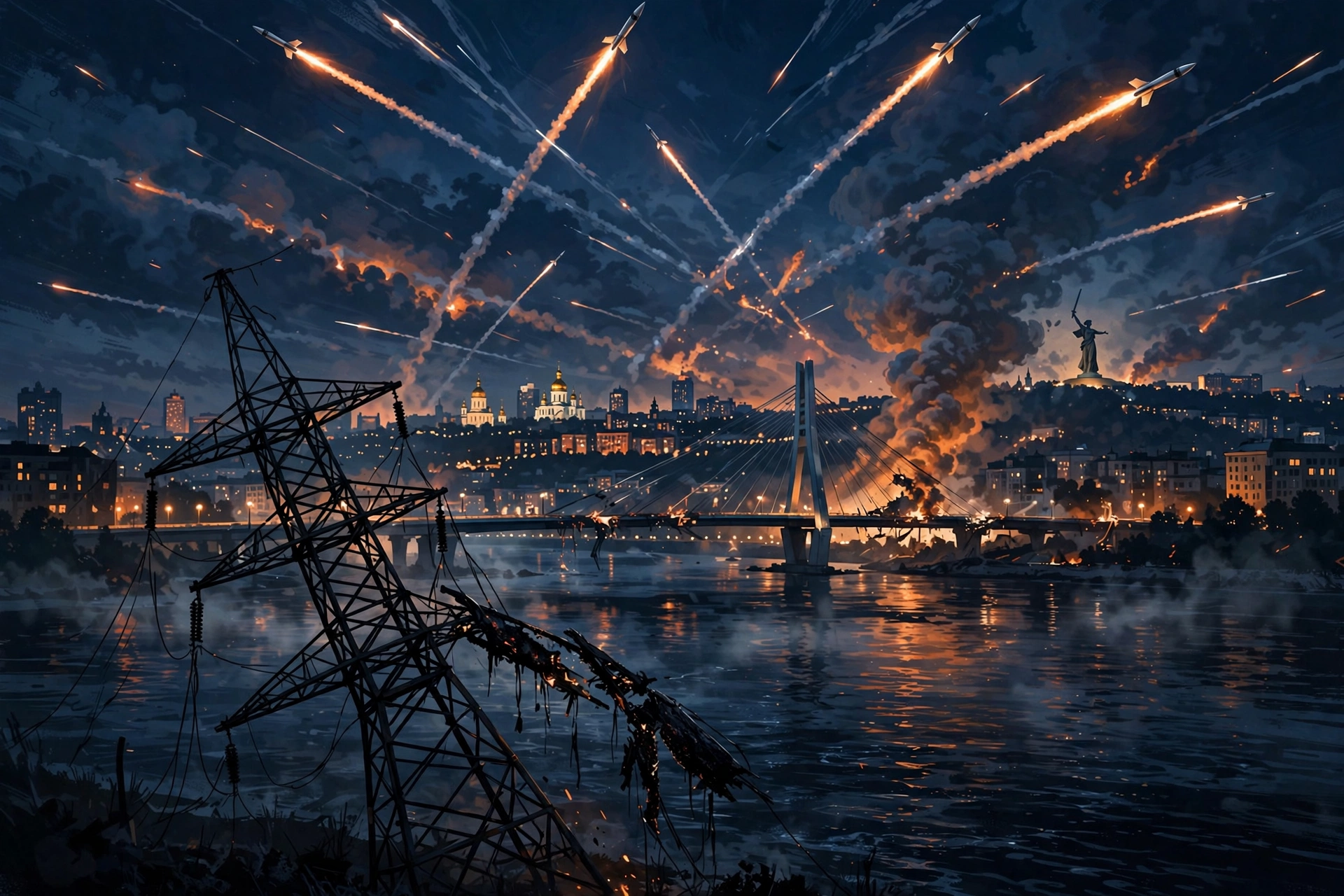
Russia fired 36 ballistic missiles at Kyiv and the surrounding region overnight on 6–7 November, along with 172 drones across Ukraine, in one of the heaviest barrages of the war — just three days before US-brokered peace talks are due to open in Abu Dhabi.
At least nine people were wounded across Ukraine, including a child, President Volodymyr Zelenskyy said. No deaths had been reported in Kyiv as of Saturday morning, though officials said the toll could change as rescue work continued. The Associated Press reported that the missiles damaged homes and commercial properties and triggered new power and water outages across the capital.
Zelenskyy said Russia was using the eve of negotiations to send a message. “Russia is preparing for trilateral talks by launching ballistic missiles at Ukraine’s critical infrastructure,” he said in a statement on Saturday.
Only four of 36 missiles intercepted
Ukrainian air defences shot down only four of the 36 ballistic missiles, Zelenskyy said, blaming a shortage of interceptors for the US-made Patriot systems that form Ukraine’s main defence against fast-moving ballistic weapons. Ukraine’s air force said 149 of the 172 drones were brought down.
The low interception rate underlined a problem Kyiv has raised for months: Patriot interceptors are scarce, and Russia has increasingly mixed ballistic missiles with large drone swarms to overwhelm defences. The attack came in three waves through the night, with the first missiles reported shortly before 11 p.m. on Friday and further strikes around 1 a.m. and 3 a.m.
“Explosions in the Kyiv suburbs. The enemy is hitting infrastructure with ballistic missiles,” Klitschko wrote on Telegram as the first wave arrived.
Power grid and Northern Bridge hit
Ukraine’s Energy Ministry said the strikes damaged power lines carrying electricity from the Rivne and Khmelnytskyi nuclear power plants to Kyiv and the central regions, causing blackouts in five regions: Kyiv, Zhytomyr, Kharkiv, Donetsk and Dnipropetrovsk. Kyiv faced disruptions to heating and water supply, Klitschko said, and the northern city of Chernihiv was left completely without power.
The capital’s Northern Bridge, also known as the Pivnichnyi Bridge, was hit and closed to traffic in both directions after its road surface, trolleybus wires and a power line were damaged. Zelenskyy said six ballistic missiles were fired at the bridge and four struck it.
A two-storey kindergarten building in the Solomianskyi district was partly destroyed, and apartment buildings were damaged. Five people were wounded in the capital, including a 14-year-old, according to city officials.
The attack followed a warning from Zelenskyy in his nightly address on Friday, when he said Ukrainian intelligence showed Russia preparing new strikes on energy facilities, bridges across the Dnipro and civilian infrastructure. It was the second major assault on the energy system in days: on 3 November, Russia launched 289 drones, 17 ballistic missiles and 59 cruise missiles across nine regions.
North Korean missiles, Kyiv says
Zelenskyy said preliminary findings from examinations of impact sites showed that Russia used North Korean-made KN-23 ballistic missiles against a key energy facility. “According to preliminary findings, at one of the key energy facilities that was damaged, the Russians used KN-23 missiles manufactured and supplied by North Korea,” he said on Saturday, adding that technical assessments were still under way.
The KN-23, known in North Korea as the Hwasong-11A, is a solid-fuel short-range ballistic missile with a top range of about 690 kilometres, according to the Center for Strategic and International Studies. Russia began firing KN-23 missiles at Ukraine in early 2024.
Russia’s Defence Ministry said its forces had struck military-industrial, energy and transport sites in and around Kyiv, and claimed the Northern Bridge was used to transport weapons and military equipment. Moscow has not commented on the North Korean missile claim.
Talks in Abu Dhabi on Tuesday
The barrage landed three days before negotiators from Russia, Ukraine and the United States are due to meet in US-brokered talks in Abu Dhabi on 10–11 November, the fourth round of talks mediated by the administration of President Donald Trump. Russia has named its delegation for the meeting, and the talks are the first trilateral session since February.
Ukraine struck back on the same night, with fires reported at the Saratov oil refinery and at a military electronics plant in Oryol. The exchange showed both sides still pressing military advantage even as diplomats prepare to meet, and it left Kyiv heading into winter with its power grid under strain.
Whether the talks can produce even a limited pause in strikes on energy infrastructure is now the first test facing negotiators in Abu Dhabi — and for Kyiv, the answer matters before the cold sets in.