No Blackout Coming: What Today’s Nationwide Emergency Alert Test Really Is
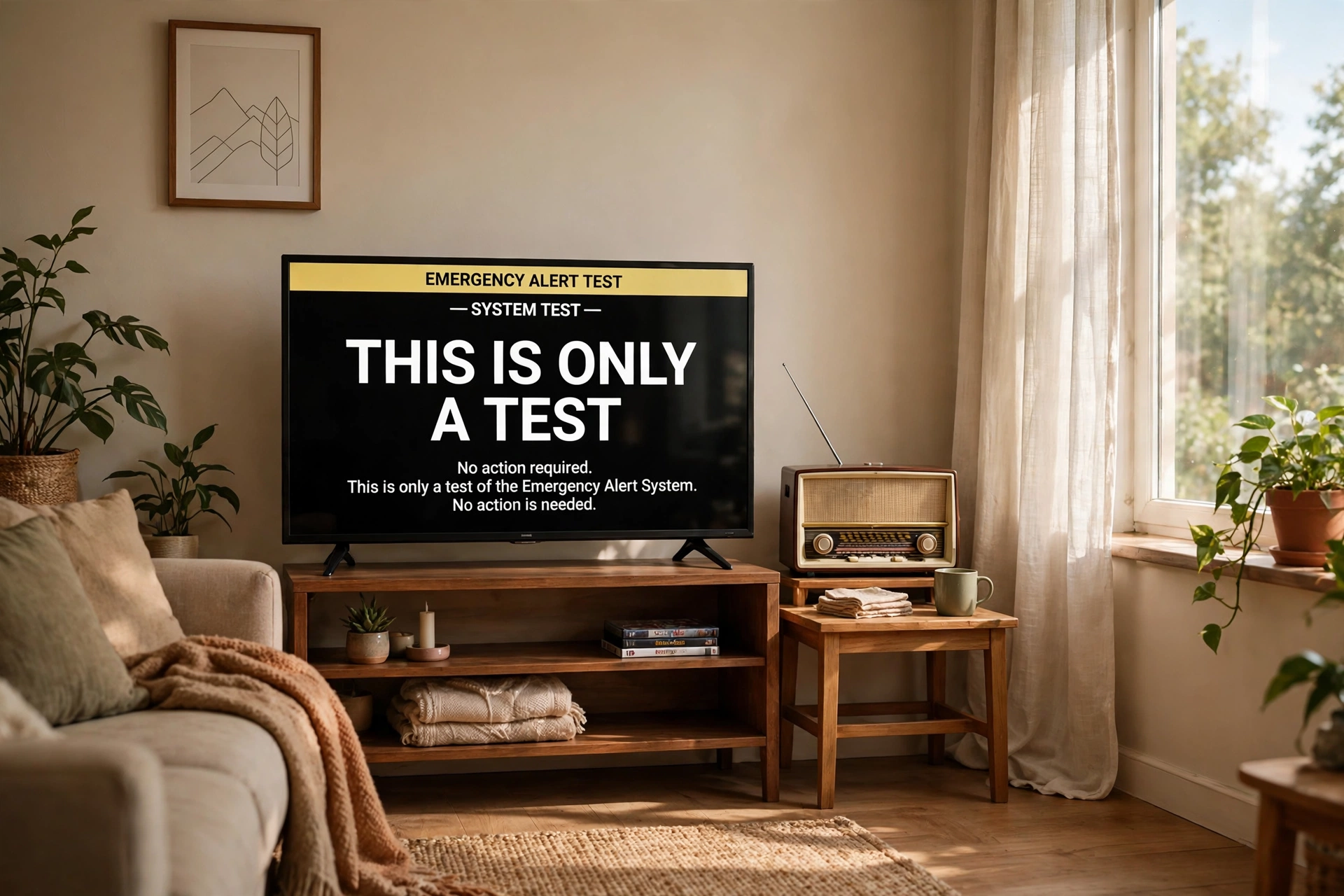
If your television or radio suddenly interrupts itself this afternoon, do not panic — and do not believe the videos telling you the lights are about to go out for 90 days.
At about 2:20 p.m. Eastern Time on Tuesday, November 17, the Federal Emergency Management Agency will run a nationwide test of the Emergency Alert System. Programming on broadcast radio and television, cable, satellite radio and television, and wireline video providers will pause for about a minute while a test message plays. Then normal programming resumes.
The message will say: “This is a nationwide test of the Emergency Alert System, issued by the Federal Emergency Management Agency, covering the United States from 2:20 to 2:50 hours ET. This is only a test. No action is required by the public.” It will be sent in English and Spanish.
That is the whole event. There is no power cut, no shutdown and no emergency.
Where the blackout rumour came from
In the days before the test, viral videos and posts on social media warned that November 17 would bring a nationwide blackout lasting as long as 90 days, with some versions tying the claim to the alert test itself.
No federal agency has announced any such shutdown, and no FEMA or FCC material connects the test to the power grid in any way. The test was announced publicly months in advance — the FCC published its notice on September 16 — and its stated purpose is to check that the national alert system works before it is actually needed.
The confusion is understandable in one respect: the last nationwide test, in October 2023, also sent a Wireless Emergency Alert to mobile phones. This time it will not. FEMA says plainly that the test “will not be sent to mobile phones.” So if your phone stays quiet at 2:20 p.m., nothing is broken — that is the plan.
What to expect, and when
The test goes out at the same moment across the country, so the local time depends on your time zone. With daylight saving time ended on November 1, the whole country is on standard time: 2:20 p.m. Eastern, 1:20 p.m. Central, 12:20 p.m. Mountain and 11:20 a.m. Pacific.
Stations relay the alert as it reaches them, so it may land a minute or two after 2:20 p.m. in some places. The alert itself is valid for a 30-minute window, from 2:20 to 2:50 p.m. Eastern — that is the technical validity period, not the length of the interruption, which is about a minute.
If a real emergency or significant weather event forces a postponement, the backup date is Thursday, December 3, 2026. Broadcasters must then file their test reports with the FCC within 48 hours.
Why the test happens at all
Federal law requires FEMA to run a nationwide test of the public alert and warning system at least once every three years. The point is to find technical or operational problems on a quiet Tuesday afternoon rather than during a real emergency, when the system has to work first time.
The Emergency Alert System is part of IPAWS, the Integrated Public Alert and Warning System, which FEMA runs in coordination with the FCC. Thousands of radio, television, cable, satellite and wireline providers take part.
The test comes on a busy news day in Washington, where the Supreme Court declined to hear a Maryland gun case on Monday and a Pentagon review of US troop levels in Europe is nearing a decision. But the alert test itself is routine — the kind of scheduled check the government has run for years, announced in advance and over in about a minute.
So when the tones sound this afternoon, the correct response is none at all. Your television will return to its programme, your radio to its station, and your lights will stay on.
Sources: FEMA’s test page and the FCC public notice.