Florida Dengue Outbreak Reaches 524 Cases, Worst in State Since 2009
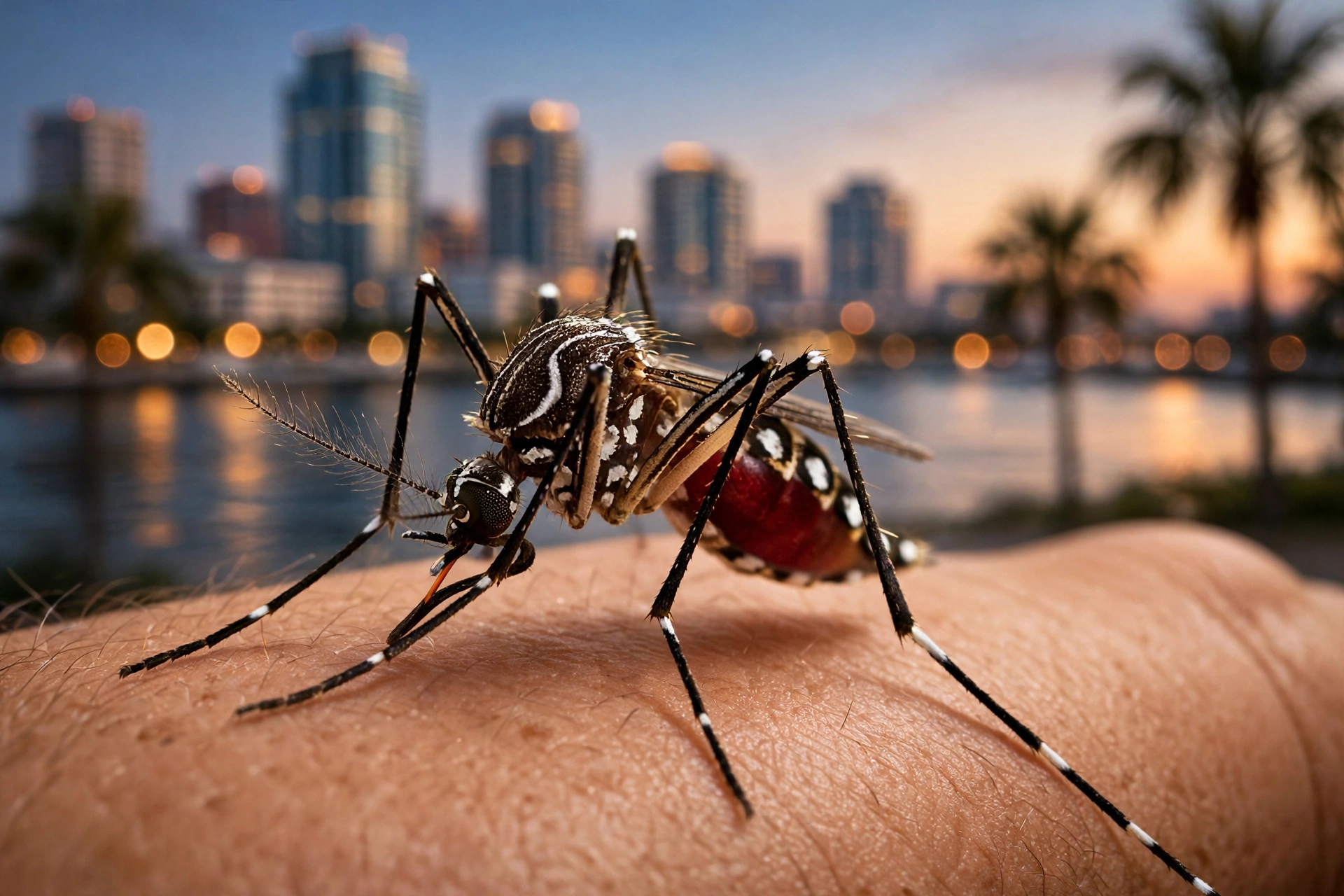
Florida’s dengue outbreak has become the worst in the state since the disease returned in 2009, with 524 locally acquired cases recorded in 2026 as of 31 October, according to the Florida Department of Health. The figure, reported on 12 November, is more than eight times the 62 locally acquired cases documented in all of 2025, and well above the previous recent high of 199 cases in 2023.
The outbreak is the largest in the continental United States in decades. The previous record was in Hawaii, with 264 locally acquired cases over six months in 2015 and 2016. Florida has now passed that total by a wide margin.
A record year, centred on Tampa Bay
The outbreak is overwhelmingly a Tampa Bay story. Hillsborough County, home to Tampa, has recorded 407 locally acquired cases, and the wider Tampa Bay area accounts for about 95 per cent of the state total. Pinellas County had 67 cases in the count through 24 October, and local spread has now been reported in 12 Florida counties.
The state has also recorded 382 travel-associated cases in 2026 as of 31 October. The fact that locally acquired cases now exceed travel cases marks a shift: dengue, long seen in Florida mainly as an imported illness, is now spreading from mosquito to person within the state itself.
There are signs the pace may be easing: Hillsborough added 22 cases in the week of 25 to 31 October, its smallest weekly increase since mid-August.
One death, and a county under emergency orders
At least one person has died in this year’s outbreak. Gay Rabb Small, an 80-year-old Tampa resident, died of dengue on 4 September, her 80th birthday, after developing a tremor and going to hospital. Her death certificate lists dengue infection, septic shock and multi-organ failure. It was the first dengue death in the Tampa Bay area in nearly a century, according to a University of South Florida researcher cited by WUSF.
Three Florida counties declared local emergencies over the illness in September, and in October the Centers for Disease Control and Prevention (CDC) activated a Level 3 emergency response to support the state. Hillsborough County has extended its local state of emergency in one-week increments as transmission has continued, most recently through 12 November.
The pressure on public health teams echoes other outbreaks this year, as US measles cases passed 5,000, a Wisconsin infant died of measles, and the Congo Ebola outbreak passed 11,000 cases.
What dengue does, and who is most at risk
Dengue is a viral disease spread by mosquitoes, mainly the species Aedes aegypti and Aedes albopictus, both of which are present in Florida. Around three in four infected people have no symptoms or experience only mild flu-like illness, such as fever, headache, nausea and rash. Symptoms usually appear within two weeks of being bitten and clear up after a week or two.
About one in four cases becomes severe, with symptoms including extreme abdominal pain, persistent vomiting, rapid breathing and blood in vomit or stool. Anyone experiencing them should seek medical care. The severe signs often appear after the fever goes away, and people who have previously been infected are at greater risk.
There is no specific treatment. For mild illness, doctors recommend fluids and rest, and acetaminophen for fever and pain — but not nonsteroidal anti-inflammatory drugs such as ibuprofen and aspirin, which can increase the risk of bleeding. Dengue vaccines exist, but none are approved for use in the United States.
Why this year is different
Researchers are still trying to work out what is behind the surge. Historically, most dengue cases in the United States have come from travel, and southern Florida has hosted many of them as a transit hub for travellers from Puerto Rico and other places where the disease is prevalent. This year, however, many infections have shown up in the central part of the state, around Tampa Bay.
Rainstorms have recently flooded car parks and playgrounds in southern Florida, which could help mosquitoes lay eggs and multiply, and climate change is making the state warmer and wetter.
“It is very unusual to have transmission in the United States,” Eva Harris, an infectious diseases expert at the University of California, Berkeley, told the New York Times. “This is so very much of an eye-opener.”
What officials advise
Experts say the best way to protect yourself is to avoid mosquito bites: cover up with loose-fitting long sleeves and trousers, apply insect repellent containing DEET, and remove standing water around the home, where young mosquitoes live.
Health officials also note that the official count is likely an undercount, because many people who catch dengue have mild symptoms or none at all and never get tested.
As Smithsonian Magazine reported on 12 November, the 524-case total is the highest in Florida since the disease returned in 2009. Medical Daily reported that the weekly pace has slowed to its lowest since mid-August, but officials are not calling the outbreak over.