Ecuador’s Noboa Denies US Military Base Exists at Taura Air Base
Ecuador’s President Daniel Noboa has denied that the United States operates a military base in his country, pushing back against evidence of a growing American footprint at an airfield near the port city of Guayaquil.
Noboa issued the denial on Sunday in an interview with the digital news outlet Altavoz, weeks after an investigation by the AFP news agency documented an unusual deployment of American aircraft and equipment at Taura air base. “It’s not an American base. It’s an Ecuadoran base,” he said.
The president said American personnel at the base were there only for “temporary activities” carried out as part of cooperation between the two countries. “Sometimes there’s a specific mission. Sometimes there’s a specific operation,” he added. “We work together.”
Al Jazeera reported that Noboa did not address the American aircraft documented at the base and sidestepped a request from a journalist to visit Taura.
What AFP found at Taura
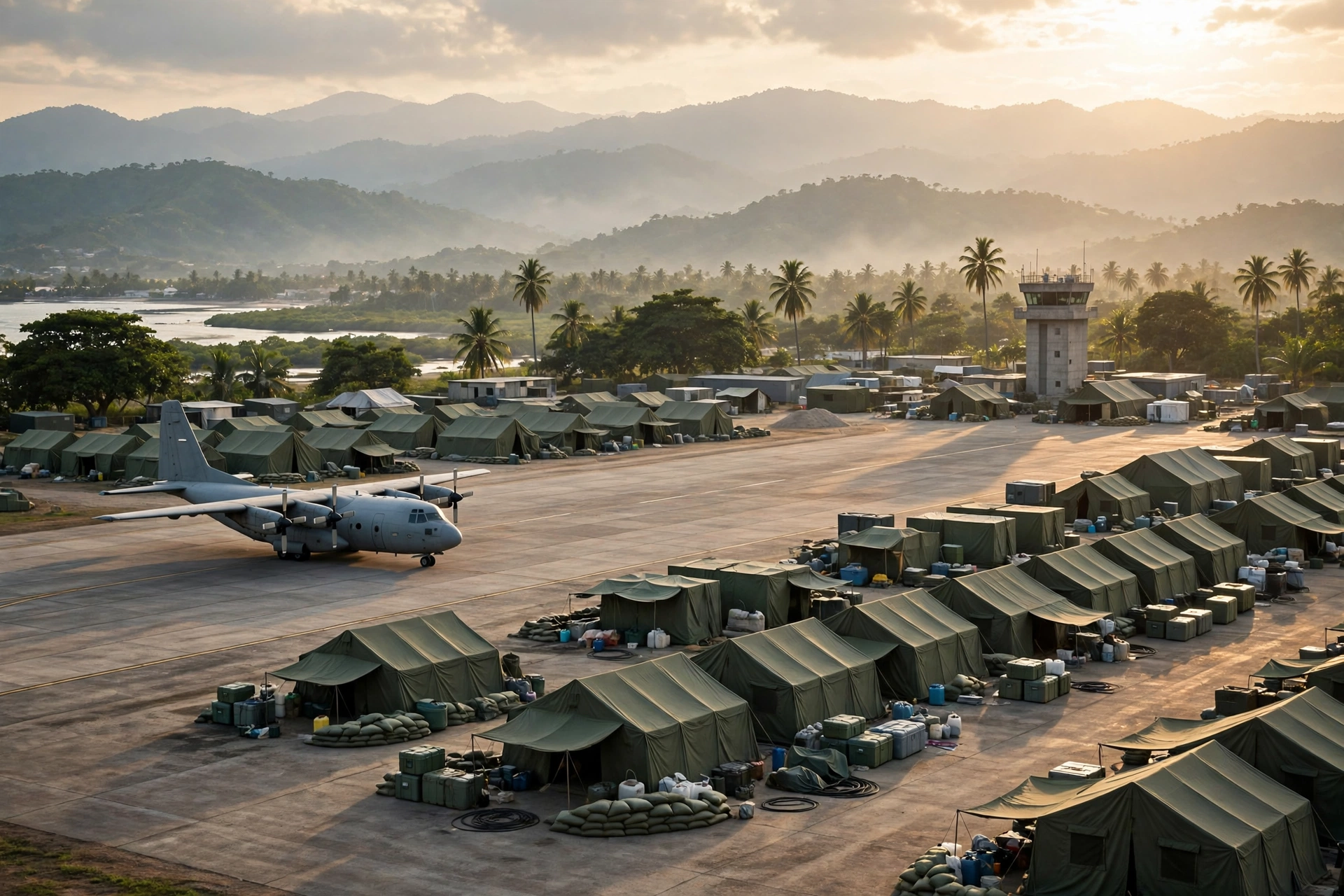
AFP’s investigation, published on 27 October, found dozens of tents and infrastructure work under way at the base, alongside an unusual deployment of United States aircraft. The agency identified about 20 US military flights at Taura between June and mid-October and obtained documents referring to the presence of American soldiers.
The scope of the US presence has not been disclosed. Neither the Pentagon, the US Southern Command nor Ecuador’s air force responded to requests for information when the AFP investigation was published in October.
Quito and Washington have nevertheless been strengthening their cooperation in the fight against drug trafficking in the region, and the scale of the American deployment has raised questions about its legality, including among senior Ecuadoran military officials.
A commander who asked questions
Those questions reached the top of Ecuador’s air force. The then air force commander, General Mauricio Salazar, asked the armed forces to clarify the legality of the deployment in a letter sent in September, according to AFP.
Salazar was subsequently removed from his post and reassigned to less senior duties. Noboa has not explained the move, and the government has not published any legal basis for the American presence at Taura.
The dispute comes as Washington’s overseas deployments face scrutiny elsewhere, with US troops in Europe falling to a two-year low as the Pentagon weighs further cuts.
A referendum that said no
The controversy carries constitutional weight in Ecuador. Noboa had campaigned to change the constitution and reverse a ban on foreign military bases, but 60.82 per cent of voters rejected the change in a referendum on 16 November last year. The National Electoral Council’s final results recorded 6,422,640 votes against lifting the ban and 4,136,617 in favour.
That result does not prohibit every temporary foreign presence or invalidate existing cooperation agreements. It does, however, set a clear political limit on establishing foreign military bases or handing an Ecuadoran base to a foreign power — the very line Noboa now insists has not been crossed.
Human Rights Watch says the United States has arguably become Ecuador’s main partner in its crackdown on organised criminal groups in the region, providing equipment, training, intelligence and direct military support. The New York-based watchdog has called the partnership “perilous”, arguing that “both governments have engaged in serious human rights violations fuelled by their insistence on framing their confrontations with organised crime groups as a kind of war”.
A wider American campaign
The Taura dispute sits inside a broader American campaign against drug trafficking across Latin America. The administration of US President Donald Trump has struck boats it has alleged were transporting illegal drugs through international waters and has designated several Latin America-based cartels as “foreign terrorist organisations”.
The approach echoes the death of the Guadalajara cartel founder, whose organisation helped shape the modern drug trade, and Washington’s footprint in the region extends beyond Ecuador, including its handling of Venezuela’s oil revenue.
For now, the facts at Taura remain contested: a president who says there is no American base, and an investigation that found American aircraft, tents and soldiers at an Ecuadoran one. Until Quito or Washington publishes the terms of the deployment, the gap between those two accounts is likely to keep growing.