Bangladesh Garment Owners Threaten ‘No Work, No Pay’ Closures as Wage Standoff Deepens
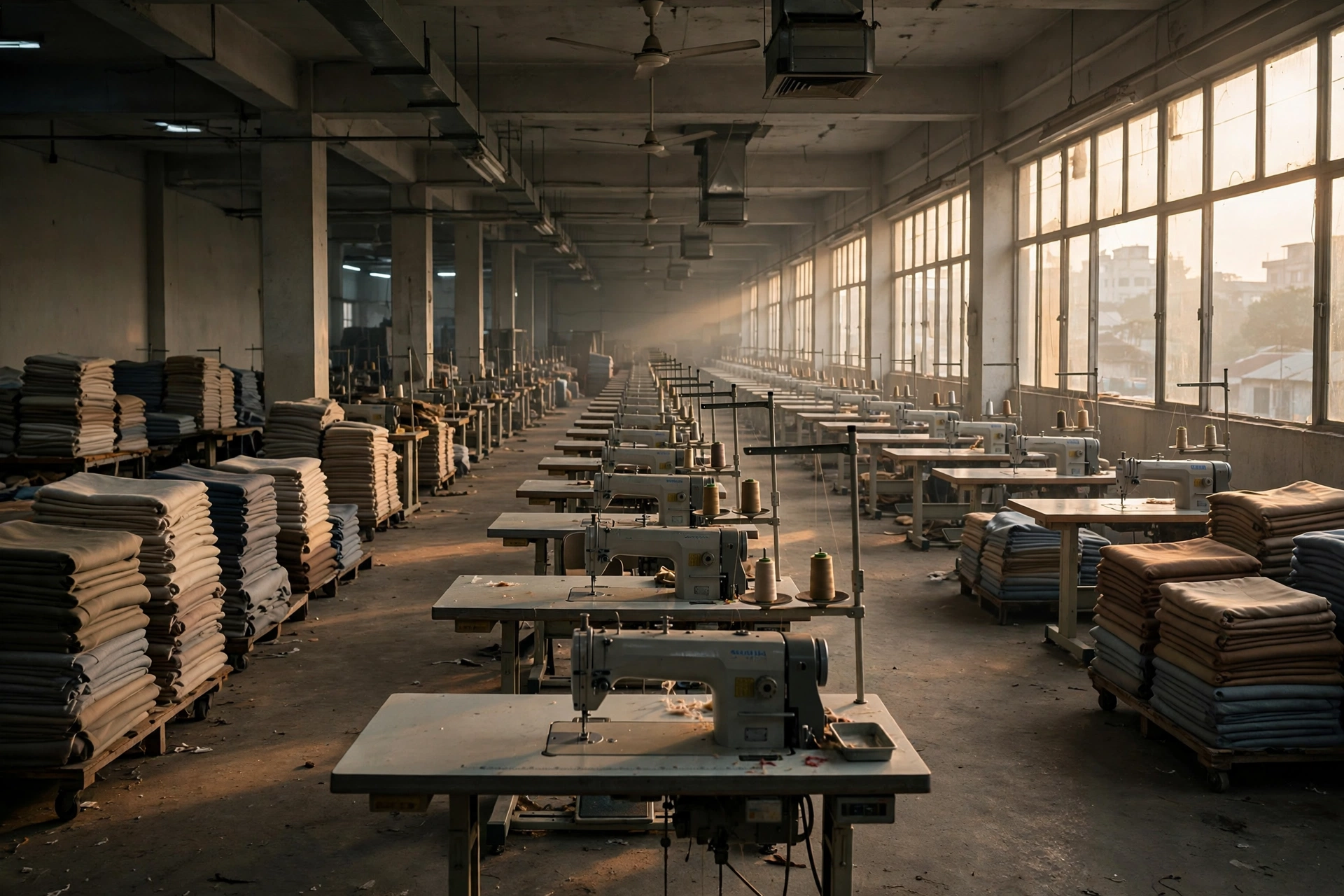
Bangladesh’s garment factory owners have warned they will shut plants indefinitely from Sunday, without pay for workers, if the unrest that has halted production across the country’s industrial belt does not end.
The ultimatum, delivered on Saturday by the Bangladesh Garment Manufacturers and Exporters Association (BGMEA), raises the stakes in a wage dispute that has already closed dozens of factories and left hundreds of thousands of workers facing lost income. Garments are Bangladesh’s principal export-earning industry, and American retailers are among its biggest buyers, so a prolonged shutdown would put orders bound for the United States at risk.
BGMEA President Mahmud Hasan Khan told a press conference at the association’s building in Uttara, Dhaka, that factories in the affected areas that cannot keep producing because of the unrest would be forced to close indefinitely from 15 November under Section 13(1) of the Bangladesh Labour Act, 2006. Under that provision, workers are not entitled to wages or allowances while their factories remain shut because of illegal strikes or unrest.
“These factories cannot remain operational because an environment conducive to production and overall security cannot be ensured,” Khan said.
The ultimatum and the numbers
The Business Standard reported that 55 factories have already been declared closed indefinitely under the provision, and production remained suspended on Saturday at 147 factories in Savar, Gazipur and other industrial areas, as workers did not report for duty or owners feared vandalism. The BGMEA said that if those 147 factories also fail to operate on Sunday, about 300,000 workers could temporarily lose their livelihoods.
Some factories have been unable to operate for nearly two weeks, and normal operations have been severely disrupted at several units for the past seven to 12 days. The association described the closures as a “difficult but unavoidable” step to protect the industry, and called on the government to take firmer action to restore law and order.
Khan also criticised labour leaders for failing to rein in demonstrators. “It is deeply regrettable that the efforts made by labour organisations to resolve this crisis have not been sufficiently effective,” he said. “Many grassroots leaders and labour representatives have been unable to maintain control over ordinary workers, making the overall situation even more complicated.”
The unrest flared again on Saturday morning, when garment workers blocked the Dhaka-Tangail highway in Kaliakair, Gazipur, temporarily halting traffic in both directions. The protest followed rumours that a worker injured in a clash with police on Thursday had died; police and other law enforcement officers dispersed the demonstrators and restored movement.
A wage gap at the heart of the dispute
Garment workers have been protesting since mid-October, demanding a minimum monthly wage of Tk30,000, up from Tk12,500 set in 2023. The government formed a six-member minimum wage board on 1 November, which has held two meetings so far, but demonstrations have persisted in Ashulia, Savar and Gazipur despite repeated appeals from the government, owners and labour leaders.
At the board’s latest meeting on 9 November, workers’ representative Babul Akter proposed a minimum monthly wage of Tk32,000. The owners’ side did not submit a proposal at the time and was given four days to do so. According to Wireast, the board has not yet produced an employer offer or a final wage figure.
Wage disputes have also spilled onto the streets elsewhere, and minimum-wage debates are running in the United States too, where the US jobs market remains a central political question. In Bangladesh, the gap between the two sides is wide: BGMEA leaders told The Business Standard on condition of anonymity that the consensus at Saturday’s internal meeting was that a minimum wage above Tk14,000 would be unsustainable for the industry, although some owners were said to be willing to offer more. Khan declined to disclose the exact figure owners will propose.
Missed shipments and air freight
Factory owners say they are already counting the cost. With some plants shut for nearly two weeks, owners are concerned about meeting shipment deadlines and fear they may have to send goods by air at several times the usual cost, or risk order cancellations.
BGMEA Vice-President Mijanur Rahman told The Business Standard that operations at his three factories in Savar remained halted. “Although workers at my factories wanted to work, outsiders or third parties came and attacked the premises,” he alleged. He said one of his buyers had asked him to ship some products by air and defer the shipment of other goods until next year. “The buyer has not outright cancelled the order, but cancellations may happen in some cases,” he said.
Normally, buyers bear the cost of shipping goods. But if a supplier fails to meet a shipment deadline, the additional expense falls on the factory owner, and air freight can cost around 13 times as much as the usual shipping method.
What happens on Monday
The BGMEA confirmed it will attend the minimum wage board meeting on Monday, 16 November, and submit its proposal on the day. Whether owners take part in subsequent meetings will depend on how the situation on the ground unfolds.
For the workers, the immediate question is simpler: whether their factories open on Sunday, and whether they will be paid if they do not. With 300,000 livelihoods in the balance and the two sides still far apart on pay, Monday’s meeting is the nearest test of whether the dispute can be settled at the negotiating table, or whether Bangladesh’s most important export industry faces a wider shutdown.