UN Ends 35-Year Western Sahara Peacekeeping Mission After Security Council Deadlock
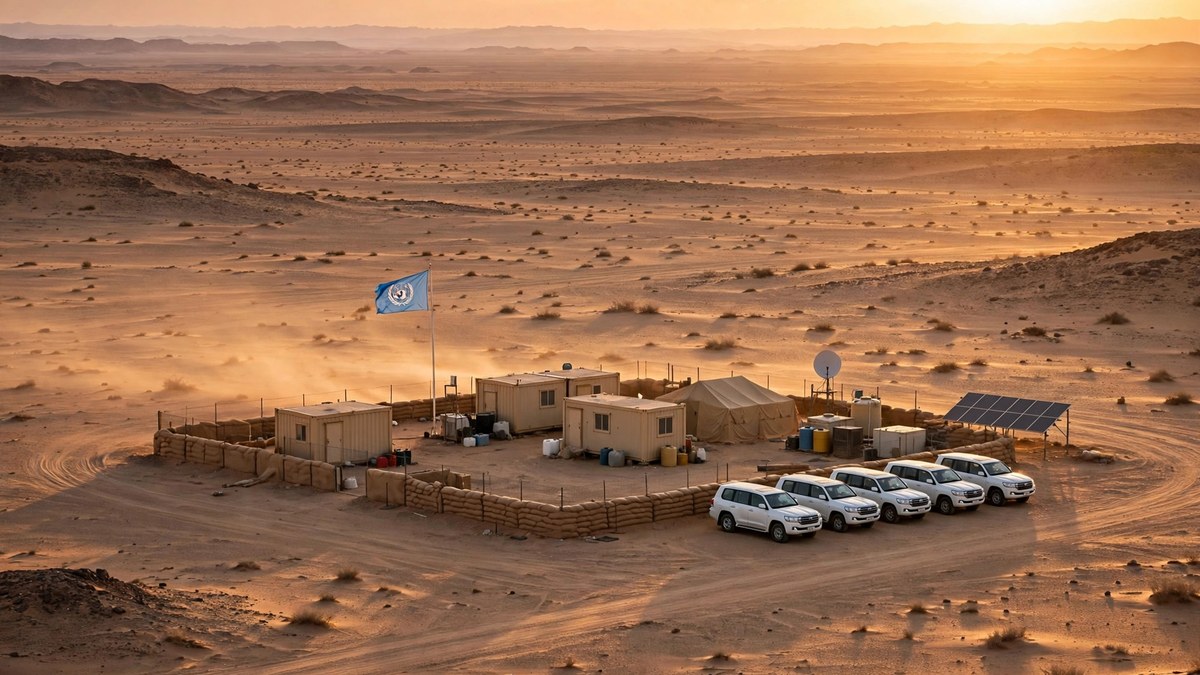
The United Nations has closed one of its longest-running peacekeeping missions. After 35 years in Western Sahara, the mission known as MINURSO ended its operations when the UN Security Council failed to renew its mandate, leaving the disputed territory without the international monitors who had watched over its fragile ceasefire since 1991.
The mandate expired at the end of October 31, and November 1 marked the start of a liquidation phase, during which a smaller UN team will oversee the return of equipment to troop-contributing countries and the disposal of mission assets. UN Secretary-General António Guterres warned of the risk of escalation and urged restraint, while stressing that the end of the mission does not end the UN’s diplomatic involvement in the dispute.
How the mandate ran out
The Security Council considered rival proposals on Friday, October 30, and adopted neither. A draft resolution from the United States, which would have renewed and restructured the mission, was vetoed by Russia despite winning the support of 11 of the Council’s 15 members, including fellow permanent members France and the United Kingdom. A competing Russian draft, which would have extended the existing mandate for another year, failed to win the nine votes needed for adoption.
The US draft would have removed the word “referendum” from the mission’s name and made Morocco’s autonomy proposal the basis for further talks, according to reporting on the Council debate. The US delegate argued that the draft would have supported the principle of self-determination and moved the 50-year conflict forward, calling the status quo unacceptable. Russia’s veto, and the failure of its own text, left the mission to expire without a new mandate.
It was a sharp break with recent practice. The Council had repeatedly extended MINURSO, most recently under Resolution 2797, which ran until October 31, 2026. That resolution had accepted Morocco’s plan to give the territory autonomy under Moroccan sovereignty as the “most feasible” solution to the conflict. Morocco welcomed the end of the mission, while the Algeria-backed Polisario Front expressed concern, according to Reuters reporting.
What MINURSO was sent to do
MINURSO — the UN Mission for the Referendum in Western Sahara — was established in 1991 under Security Council Resolution 690, following settlement proposals accepted in 1988 by Morocco and the Frente POLISARIO. Its original task was to monitor a ceasefire and to organize a referendum on the territory’s future.
That referendum never took place. Disagreements over who would be eligible to vote stalled the process for decades, even as the mission kept a presence on the ground. When its mandate ended, MINURSO was headquartered in Laayoune, with nine team sites — four west of the berm, the sand wall that divides the territory, and five east of it — plus a liaison office in Tindouf.
The ceasefire itself broke down in 2020, and low-intensity hostilities have continued since then. That history is part of why Guterres warned about security risks as the monitors departed: the mission had provided a visible international presence and a channel for reporting incidents, even when a political settlement remained out of reach.
What Guterres said as the mission closed
In a statement delivered by his spokesperson on Sunday, November 1, Guterres said the departure of MINURSO “does not abrogate” the people’s “inalienable right to self-determination.” He said the UN remains committed to a just, lasting and mutually acceptable political solution that provides for self-determination, and that the organization “stands ready to continue supporting efforts to advance dialogue and pursue a peaceful resolution of the conflict.”
The Secretary-General’s Personal Envoy, Staffan de Mistura, will continue working toward a peaceful resolution, the UN said. A smaller team reporting to the UN Department of Operational Support will oversee the liquidation work. The dispute itself remains on the Security Council’s agenda.
Why the deadlock matters beyond Western Sahara
The failure to renew MINURSO is also a story about the Security Council itself. The Council is the body charged with maintaining international peace and security, and its permanent members hold veto power. When the United States and Russia back competing texts and neither can command a majority, a mission that has operated for decades can end not by a decision to withdraw, but by the absence of a decision to continue.
For the United States, the episode carries a particular weight. Washington drafted the resolution that was vetoed, and the debate turned on a central US-backed idea: that autonomy under Moroccan sovereignty is the most feasible path forward. That position, adopted by the Council a year earlier, did not survive into a renewed mandate — a sign of how contested the issue remains even among the Council’s members.
What happens next
Without MINURSO on the ground, there will be no UN peacekeeping presence to observe the ceasefire line or to report on incidents in the territory. The UN’s envoy will continue to seek dialogue, but envoys do not patrol a berm. The risk, as Guterres warned, is that a local incident escalates without the buffer that an international presence provided.
For now, Western Sahara enters a new phase: no peacekeepers, no referendum in prospect, and a political process that must proceed without the mission that was created to support it. The UN says it is not walking away. But after 35 years, its most visible presence in the territory is gone.
Frequently Asked Questions
What is MINURSO?
MINURSO is the UN Mission for the Referendum in Western Sahara, established in 1991 to monitor a ceasefire and prepare a referendum on the territory’s future. The referendum was never held.
Why did the mission end?
Its mandate expired on October 31, 2026, after the UN Security Council failed to agree on a renewal. A US-drafted resolution was vetoed by Russia, and a rival Russian resolution did not win enough votes.
Who controls Western Sahara?
Morocco controls most of the territory and claims sovereignty over it. The Algeria-backed Polisario Front seeks independence. The dispute has lasted for about 50 years.
Does the end of MINURSO end UN involvement?
No. The UN says its Personal Envoy, Staffan de Mistura, will continue working toward a peaceful resolution, and the issue remains on the Security Council’s agenda.
What is the liquidation phase?
It is the wind-down period that began on November 1, during which a smaller UN team oversees the return of equipment to troop-contributing countries and the disposal of mission assets.
Sources
United Nations News: Western Sahara: UN ‘stands ready’ to keep supporting peace efforts as MINURSO mission ends
Al Jazeera: UN warns of security risks in Western Sahara as peacekeeping mission ends
Reuters via BusinessWorld: UN peacekeeping mission in Western Sahara ends after 35 years, UN chief says
Related coverage on NationWire: Bulgaria Presidential Election: Iotova Wins Runoff and North Korea Tests Cluster Warhead It Says Can Flatten 13 Hectares.