Bulgaria Presidential Election: Iotova Wins Runoff
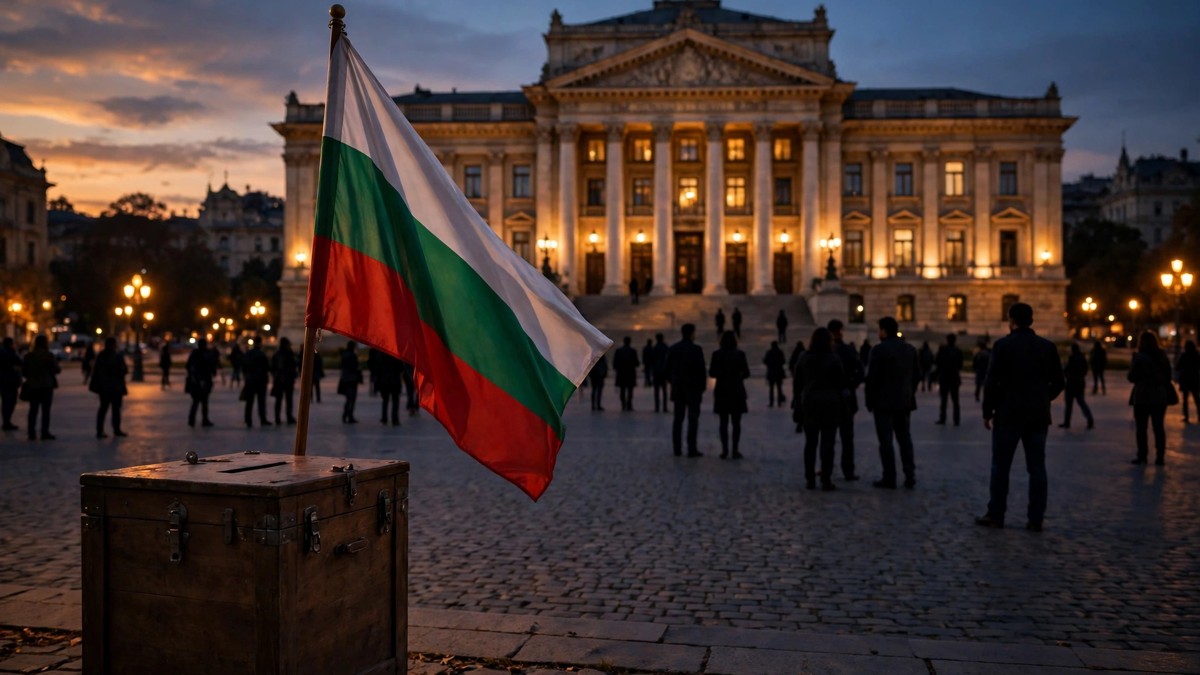
SOFIA, Bulgaria — Acting President Iliana Iotova appears to have won Bulgaria’s presidential runoff on Sunday, according to initial results, after a low-turnout vote that could make her the country’s first elected female head of state.
Initial counts reported on Sunday night put Iotova at about 58 percent of the vote, with her rival, former caretaker Prime Minister Andrey Gyurov, at about 38 to 39 percent. Gyurov conceded defeat on election night, telling supporters the result had to be accepted as it stood.
“This is how the Bulgarian citizens have voted,” Gyurov said, according to Al Jazeera’s reporting of the result.
The outcome is not yet official. Bulgaria’s election authorities are expected to confirm the final result on Monday, with official results due no later than November 4. If confirmed, Iotova would begin a full five-year term as president on January 22, 2027, with her running mate, Kiril Valchev, as vice president.
Iotova, 61, has served as acting president since January, when her longtime ally, Prime Minister Rumen Radev, resigned to run in — and win — a parliamentary election. She entered Sunday’s runoff as the favorite after leading the first round, but her margin on election night turned out to be far wider than the first exit polls suggested.
A wider lead as counting continued
Exit polls published as voting ended at 8 p.m. local time on Sunday put Iotova only narrowly ahead, at about 51 to 52.5 percent, against 43.4 to 44.7 percent for Gyurov. Alpha Research gave Iotova 52.5 percent and Gyurov 43.4 percent, with 4.1 percent of voters choosing “I do not support anyone.” Market Links put the split at 50.7 percent to 44 percent, while Myara, working with Bulgarian National Radio, reported 51 percent to 44.7 percent.
As ballots were counted, however, Iotova’s lead grew. Later partial counts reported by several polling agencies and news outlets put her at about 58 percent, with Gyurov at about 38 percent. The gap between the exit polls and the later counts reflects a familiar election-night pattern: exit polls capture voters as they leave polling stations, while the counted vote shifts as results arrive from different regions and from Bulgarians voting abroad.
In the first round on October 25, Iotova won about 35 percent of the vote and Gyurov about 32 percent — a much narrower gap than opinion polls had predicted for Iotova. Twenty-seven candidate tickets entered the race, and only the top two advanced to the runoff after no candidate won an outright majority.
A first for Bulgaria — and a low-turnout vote
If the result is confirmed, Iotova would become Bulgaria’s first woman elected head of state in a democratic vote, and its seventh president since the country’s democratic transition. That milestone sits alongside a more sobering figure: turnout remained low.
Exit polls put participation in the runoff at about 27 to 29 percent, only slightly higher than the first round’s record-low turnout of 23 percent. Bulgarian National Radio’s partners reported turnout of 26.8 percent in one exit poll and 29.1 percent in another, underscoring how many voters stayed home even for a contest that will decide the head of state for the next five years.
The low turnout has been widely linked to distrust in government and political apathy after years of political instability. Voters interviewed in Sofia on Sunday captured that mood. Krassimira Kostova, a 64-year-old teacher in the capital, told the AFP news agency she voted even though she said, “I don’t like either of the two candidates.” Petar Doitchinov, a 67-year-old retired engineer, said he had skipped the first round because he expected a runoff, and voted for what he called “the lesser evil.”
Bulgarians living abroad also took part, voting at polling stations in 60 countries. Voting abroad began in Auckland, New Zealand, on Saturday evening Bulgarian time and was due to conclude on the West Coast of the United States, where polling stations were scheduled to close at 6 a.m. Bulgarian time on Monday.
What Iotova stands for — and why allies are watching
The Bulgarian presidency is a largely ceremonial office, but the election was closely watched abroad because of what the two candidates represent on foreign policy — above all on Russia and the war in Ukraine.
Iotova advocates dialogue with Russia and opposes military aid to Ukraine. After voting on Sunday, she said she wanted “Bulgaria to be strong in a strong Europe” and “sovereign in its decisions.” During the campaign she argued that “peace can come only through negotiations.”
Gyurov, a banker and former interim prime minister backed by the pro-Western opposition, took a firmer line toward Moscow. In a televised debate he criticized Iotova for not explicitly blaming Russia, saying: “Russia must stop its aggression so that the next steps can be taken.”
That contrast matters because Bulgaria is a member of both the European Union and NATO, sitting on the Black Sea coast at the southeastern edge of the alliance. Its president’s voice on Ukraine, on relations with Moscow and on European unity carries weight in Brussels and Washington even when the office itself holds limited executive power.
The Black Sea shadow over the campaign
The vote took place against a tense backdrop in the Black Sea. Twenty-one people remained missing following a series of drone attacks last month on commercial vessels off Bulgaria’s Black Sea coast, suspected to be spillover from Russia’s war in Ukraine.
Prime Minister Radev has said the attacks appear to serve Moscow’s interests and summoned the Russian ambassador, though his government said there was no evidence directly linking them to Moscow. Both presidential candidates condemned the attacks and called for a diplomatic end to the war, but they differed sharply on how Bulgaria should respond — a question that, for coastal communities, was about safety as much as diplomacy.
What happens next
Attention now turns to the official count, due by November 4 at the latest. If confirmed, Iotova will serve a full five-year term beginning January 22, 2027. Her immediate challenge will be familiar: governing a country where fewer than three in ten eligible voters turned out, where trust in institutions is fragile, and where the war next door continues to test Bulgaria’s place between East and West.
Frequently Asked Questions
Who won Bulgaria’s presidential election?
Acting President Iliana Iotova is the apparent winner of the November 1 runoff, with initial counts putting her at about 58 percent of the vote. Her rival, Andrey Gyurov, conceded defeat. The result awaits official confirmation.
Why is Iotova’s win historic?
If confirmed, Iotova would become Bulgaria’s first elected female head of state, and its seventh president since the democratic transition. She has served as acting president since January 2026.
What was voter turnout?
Exit polls put runoff turnout at about 27 to 29 percent, slightly above the first round’s record-low 23 percent.
When does Iotova’s term begin?
If the result is confirmed, Iotova is due to begin a full five-year term as president on January 22, 2027, with Kiril Valchev as vice president.
Why does Bulgaria’s election matter to the US and Europe?
Bulgaria is an EU and NATO member on the Black Sea. Iotova favors dialogue with Russia and opposes military aid to Ukraine, while Gyurov took a firmer pro-Western line — so the result is watched closely by allies debating Ukraine policy.
Sources: Al Jazeera, “Initial results indicate victory for Iotova in Bulgarian presidential vote”; Bulgarian National Radio (Radio Bulgaria), “Exit Poll: Iliana Iotova is Bulgaria’s New President”; Reuters via The Straits Times, “Bulgaria’s acting President Iotova takes lead in presidential runoff vote, exit polls show.”
Further reading: Al Jazeera — Initial results indicate victory for Iotova | Bulgarian National Radio — Exit Poll: Iliana Iotova is Bulgaria’s New President | Reuters via The Straits Times — Bulgaria votes in presidential runoff