US Fuel Prices Hit Record Election-Eve Highs as Gas Nears $4.20 a Gallon
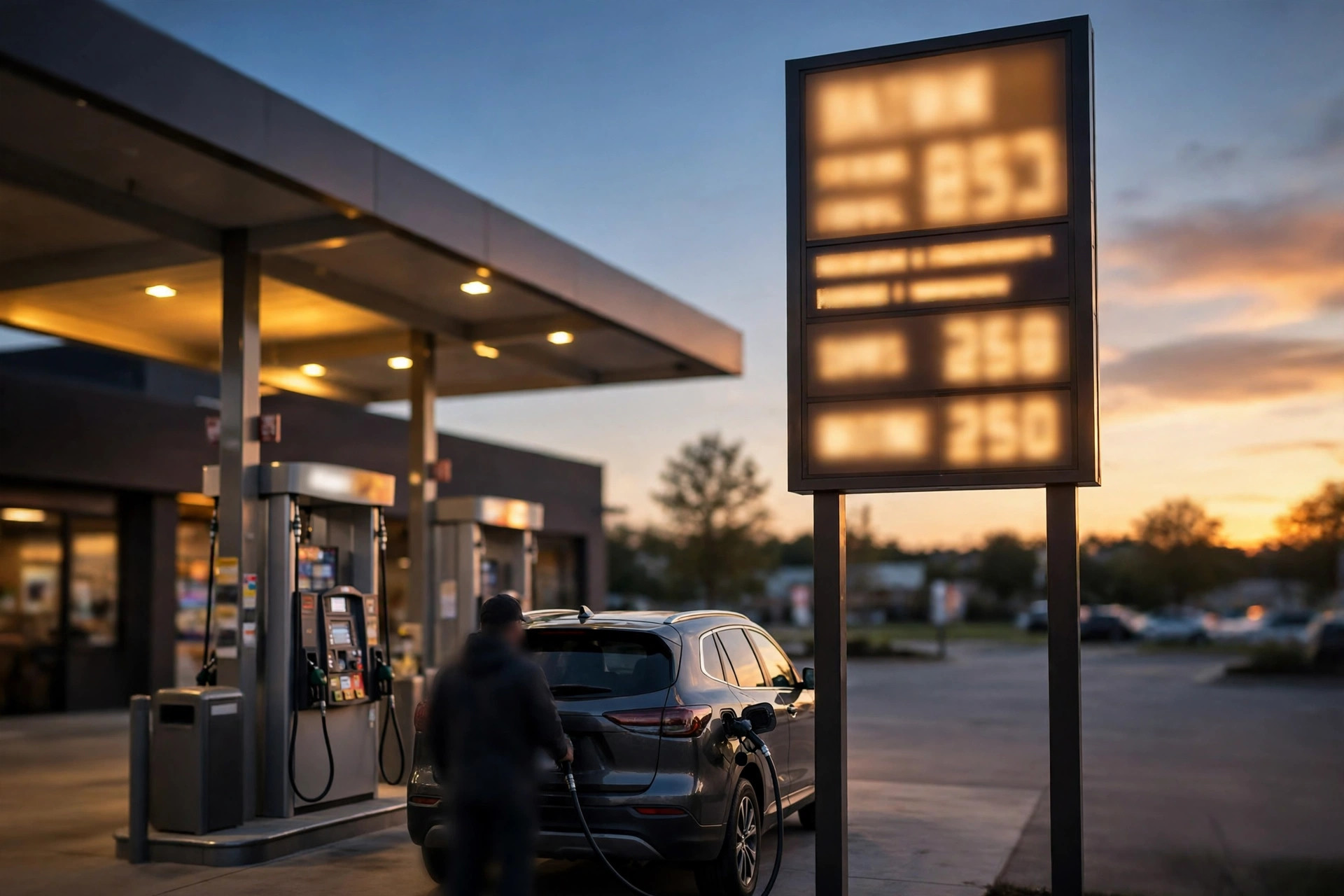
American drivers are heading into the final days before the November 3 midterm elections with fuel prices at levels never before seen on an election day, according to forecasts cited by CNBC. The national average for regular gasoline stood at $4.20 a gallon on Friday, while diesel reached $6.32 a gallon, putting household budgets, trucking costs and farm operations under fresh strain just as voters prepare to cast their ballots.
GasBuddy head of petroleum analysis Patrick De Haan told CNBC that prices were on track to be the highest ever recorded on an election day, adding: “Prices have never been this high this late in the year.” The figures mark a sharp break from the last midterms in 2022, when retail gasoline averaged $3.80 a gallon, according to AAA data cited by CNBC.
The jump matters well beyond the pump. Diesel powers the trucks that move food and goods across the country and the tractors that harvest crops, so a surge in diesel tends to ripple through grocery prices, delivery charges and airfares. Airlines, which count jet fuel as one of their largest costs after labour, have already raised fares to cover higher fuel bills, CNBC reported.
How high prices have climbed
Gasoline was nearly 40 percent higher than the same period a year earlier, while diesel had risen about 70 percent over the past year, CNBC reported. More detailed figures published in coverage of the same data put regular gasoline at $4.2046 a gallon on October 30, up 38.4 percent from $3.0377 a year earlier, and diesel at $6.3204, up 71.3 percent from $3.6889.
The weekly survey from the U.S. Energy Information Administration told a similar story, with gasoline at $4.269 a gallon and diesel at $6.352 in the week of October 26. Jet fuel showed an even steeper rise: the Gulf Coast spot price for kerosene-type jet fuel reached $4.444 a gallon on October 27, up 97.5 percent from $2.250 on the same date in 2025. Reuters reported that U.S. airfares rose 5 percent in September as airlines passed on jet-fuel costs.
Separate analyses cited in coverage of the CNBC report put the extra burden on households in stark terms. CNBC reported that Americans had paid about $59 billion more for gasoline, diesel and jet fuel since the Iran war began, averaging roughly $450 per household, while Brown University’s Climate Solutions Lab estimated Americans had spent $146.1 billion more on gasoline and diesel since February 28 than in the same period a year earlier, a burden above $1,100 per household.
Why fuel costs spiked
CNBC traced the surge to a series of supply shocks that began with the joint U.S.-Israeli attack on Iran on February 28, followed by Iranian strikes on tankers in the Strait of Hormuz, the narrow waterway through which a large share of the world’s seaborne oil passes. The disruption was compounded by Houthi attacks on Saudi Arabian refineries and Ukrainian strikes on refineries in Russia.
Crude prices reflected that pressure in October alone, with international Brent crude up more than 13 percent and U.S. West Texas Intermediate crude up 15 percent during the month, according to CNBC. With Election Day falling on Tuesday, November 3, and Thanksgiving travel approaching, analysts warned of further upward pressure at a moment when many Americans traditionally drive to visit family.
The White House response quoted by CNBC argued that, adjusted for inflation, gasoline prices had been higher around previous election days. That argument is unlikely to settle the political debate, because the contrast with the president’s own campaign pledge is so visible: during the 2024 campaign, President Donald Trump promised to bring gasoline below $2 a gallon within his first year in office.
What the administration has tried
Faced with rising diesel costs, the administration has weighed several responses, CNBC reported. Officials briefly considered a ban on diesel exports after lobbying by Senator Chuck Grassley of Iowa, who argued it would help Iowa farmers, but decided against the move because it could also push gasoline prices higher.
Instead, the president issued an executive order allowing truckers to use tax-exempt, off-road diesel on U.S. highways, and announced an $8 billion relief programme for farmers hit by high fuel prices. The administration also struck a deal for Russia to export about 6 million barrels of diesel into the global market through November, a move criticised by Ukrainian President Volodymyr Zelenskyy and some Republican senators. Energy analysts quoted by CNBC said the volumes were small compared with global demand and were unlikely to have a meaningful effect on prices.
ExxonMobil chief executive Darren Woods said on October 30 that diesel was the main pressure point for economic growth, a warning that underlines why the fuel story reaches beyond filling stations. When diesel is expensive, the cost of moving almost everything rises, and those costs eventually land on consumers.
What it means for voters and businesses
For households, the timing is difficult. Fuel is one of the few prices Americans see every day, posted in large figures on street corners, and it shapes how people feel about the economy regardless of what broader indicators say. For small businesses that depend on deliveries, vans and trucks, diesel at more than $6 a gallon squeezes margins that are already thin.
For farmers, the squeeze arrives at harvest and ahead of winter, when fuel powers equipment and heating. The $8 billion relief programme is designed to cushion that blow, but it does not change the price at the pump or at the bulk tank. For airlines and travellers, higher jet fuel points to dearer tickets into the holiday season.
Whether prices ease after the election will depend largely on crude markets and on whether shipping through the Strait of Hormuz stabilises. Until then, the record election-day figures give voters a concrete, everyday measure of how the economy feels in the final days of the campaign, and they ensure fuel costs will remain one of the most talked-about issues as Americans head to the polls on Tuesday.
Frequently asked questions
How much is gas in the U.S. right now?
The national average for regular gasoline was $4.20 a gallon on Friday, October 30, according to CNBC, up nearly 40 percent from a year earlier.
How much is diesel in the U.S. right now?
Diesel averaged $6.32 a gallon nationally, up about 70 percent from a year earlier, according to CNBC.
Are fuel prices the highest ever on an election day?
GasBuddy forecast that gasoline and diesel prices would be the highest ever recorded on an election day, CNBC reported.
Why are fuel prices so high?
CNBC pointed to supply disruptions linked to the conflict involving Iran, including tanker strikes in the Strait of Hormuz, attacks on Saudi refineries and strikes on Russian refineries, alongside rising crude prices in October.
What has the Trump administration done about fuel prices?
It allowed truckers to use tax-exempt off-road diesel on highways, announced $8 billion in relief for farmers, considered and rejected a diesel export ban, and arranged about 6 million barrels of Russian diesel exports through November, CNBC reported.
Sources: CNBC, “Trump promised to slash energy costs — but gasoline, diesel and jet fuel all soared instead” (October 31, 2026); AAA data and GasBuddy analysis as cited by CNBC; U.S. Energy Information Administration weekly survey as reported in coverage; Reuters reporting on September airfares.