North Korea Tests Cluster Warhead It Says Can Flatten 13 Hectares
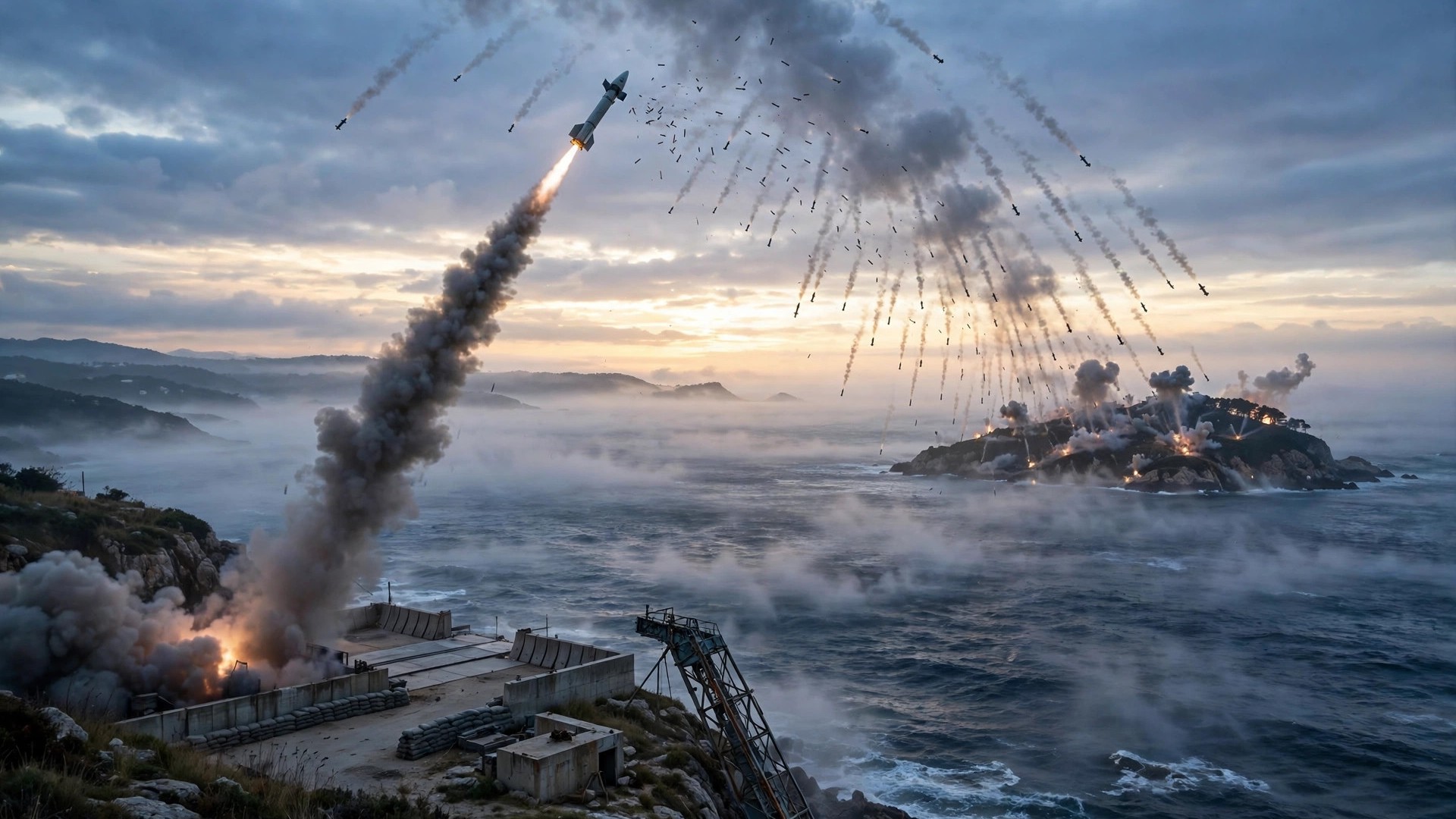
North Korea has tested a cluster warhead designed for tactical ballistic missiles and said it will put four types of the weapon into service before the end of the year, according to state media reporting on Sunday, November 1. The test, carried out on Saturday, October 31, is the latest in a rapid run of North Korean weapons trials and adds a new area-denial capability to an arsenal that already worries South Korea, Japan and the United States.
North Korea’s official Korean Central News Agency (KCNA) said the country’s Missile Administration conducted the test to assess the combat adaptability and power of a cluster-bomb warhead mounted on a tactical ballistic missile. Research institutes under the administration said the Standard Type 2 warhead was confirmed capable of devastating a target area of 12 to 13 hectares — roughly 29 to 32 acres, or about 18 soccer fields — at what Pyongyang described as its highest density.
That figure comes from North Korea itself and has not been independently verified. No flight distance, launch time or impact footage beyond the state-released images was disclosed, and outside governments have not publicly confirmed the claimed area of effect. What is independently established is that a launch took place: South Korea’s military said it had been monitoring the missile, which was fired toward the Yellow Sea from around Chongju in northwestern North Korea, and that South Korea and the United States had been tracking related movements and maintaining a readiness posture before the launch.
What was tested, and what was not disclosed
A cluster warhead works differently from a conventional single warhead. Instead of one explosive charge striking one point, it carries dozens to hundreds of smaller submunitions that scatter over a wide area as the warhead breaks apart. That makes it effective against troops, vehicles and equipment spread across open ground — and controversial, because submunitions that fail to explode on impact can remain dangerous long after a conflict ends.
KCNA did not name the missile used in the October 31 test. The general director of the Missile Administration was quoted as saying that North Korea classifies its cluster warheads into four categories, depending on their purposes, including special-purpose and standard types. Within this year, the director said, all of those types will be made available so military units can select and use them according to operational aims and the characteristics of their targets.
The test was overseen by General Kim Jong-sik, a member of the Central Military Commission of the ruling Workers’ Party of Korea and a first vice department director of the party’s Central Committee. North Korean leader Kim Jong Un was not reported to have attended this test. That is a notable contrast with April, when Kim oversaw a test of cluster bombs mounted on a Hwasong-11 Ra tactical ballistic missile, accompanied by his daughter Ju-ae.
South Korea’s Joint Chiefs of Staff did not separately announce the launch on the day it happened, saying only on November 1 that the missile had been detected and that flight details were being analysed. Analysts quoted in South Korean reporting offered differing assessments of which missile was involved, with one assessment pointing to the Hwasong-11 family of short-range missiles. The uncertainty underlines how much of the public record still rests on Pyongyang’s own account.
Part of a wider run of weapons trials
The cluster warhead test did not arrive in isolation. In recent weeks, North Korea has trialled a range of weaponry, including attack drones, a new precision-guided torpedo system and an intermediate-range hypersonic missile, according to regional reporting. Days before the cluster test, North Korea also fired around 10 ballistic missiles from its east coast toward the sea, on a day when German Chancellor Friedrich Merz was visiting South Korea for a summit.
Taken together, the trials point to a programme focused less on a single headline weapon and more on breadth: more ways to strike, at more ranges, with warheads tailored to different targets. A cluster warhead for a tactical missile fits that pattern. Tactical ballistic missiles are shorter-range weapons, generally aimed at battlefield targets rather than distant cities, and a warhead that spreads destruction across hectares would be intended to hit dispersed forces, airfields, ports or supply areas rather than a single hardened bunker.
For South Korea, that distinction matters. A weapon of this kind would be most relevant in a conflict on or near the Korean Peninsula, where US and South Korean forces operate in close proximity to North Korean launch sites. Seoul’s emphasis on joint tracking with Washington, and on readiness before the launch, signals that the allies are treating even unannounced tests as data points in a continuing assessment of North Korea’s capabilities, not as isolated propaganda events.
Why the year-end deadline matters
Pyongyang’s pledge to field all four cluster warhead types by the end of 2026 is the most consequential part of the announcement. A test is a demonstration; deployment is a capability. If the timetable holds, North Korean front-line units would be able to choose between warhead types for different missions within weeks, rather than relying on a single experimental design.
That timetable also gives outside analysts something concrete to watch. Future North Korean statements, parade displays or further tests that show the other warhead categories would support the claim of a maturing programme. Silence, by contrast, would suggest the October 31 test was a step in development rather than the final proof of a deployable weapon. Either way, the claim itself changes the planning picture for South Korea and the United States, which must now assume the capability could appear in the field.
The test also lands at a sensitive moment for the wider region. With tensions already high over the US-Israel-Iran confrontation and with the US midterm elections days away, a North Korean weapons advance is a reminder that Washington’s security commitments in Asia do not pause for domestic politics. American troops stationed in South Korea, and the US extended deterrence commitment to Seoul, are part of why a tactical weapon test in North Korea registers in Washington even when it poses no direct threat to the US mainland.
What to watch next
Three questions will shape how significant this test turns out to be. First, will South Korea or the United States release their own assessment of the launch, including the missile type and flight profile? Second, will North Korea show the other three warhead categories it says it will deploy, or conduct further tests before the end of the year? And third, will the test draw a formal response from Seoul, Washington or Tokyo, or be treated as part of a pattern that allies monitor without escalating in public?
For now, the verified facts are narrow but important: North Korea says it tested a tactical cluster warhead on October 31, claims a devastation area of 12 to 13 hectares, and says four types will be available to its units by year-end. South Korea confirms a missile was fired toward the Yellow Sea and tracked in coordination with the United States. The gap between those two accounts — between Pyongyang’s claims and independently confirmed detail — is where the real assessment of this weapon will be made in the weeks ahead.
Frequently Asked Questions
What did North Korea test on October 31, 2026?
According to KCNA, North Korea tested a cluster warhead for a tactical ballistic missile to assess its combat adaptability and power. The test was conducted by the country’s Missile Administration and reported on November 1.
How large an area does North Korea claim the warhead can devastate?
North Korea claims its Standard Type 2 cluster warhead can devastate a target area of 12 to 13 hectares — about 29 to 32 acres, or roughly 18 soccer fields — at ultra-high density. That figure has not been independently verified.
Who oversaw the test?
General Kim Jong-sik, a member of the Central Military Commission of the Workers’ Party of Korea, oversaw the test, according to KCNA. Leader Kim Jong Un was not reported to have attended, unlike the April cluster-bomb test he oversaw.
When will North Korea deploy cluster warheads?
Pyongyang says four categories of cluster warheads, including special-purpose and standard types, will be made available to military units by the end of 2026, allowing units to select warheads according to their mission and target.
Why are cluster munitions controversial?
Cluster munitions scatter many submunitions over a wide area, which makes them effective against dispersed targets but also means submunitions that fail to explode can pose a danger to civilians long after fighting ends.
How did South Korea respond?
South Korea’s military said it monitored the missile, fired toward the Yellow Sea from around Chongju, and that South Korea and the United States had tracked related movements and maintained readiness before the launch. It did not separately announce the launch on October 31.
References
- Yonhap News Agency — N. Korea tests cluster bomb mountable on tactical ballistic missiles
- The Japan Times — North Korea fires off cluster bomb warheads in latest ‘major’ weapons test
- The Express Tribune (Reuters/KCNA) — North Korea tests tactical ballistic missile cluster warhead
- Malay Mail (AFP) — North Korea says its latest cluster bomb can devastate 13 hectares