Nuclear Accident Risk in Ukraine Rising This Winter, Regulators Warn
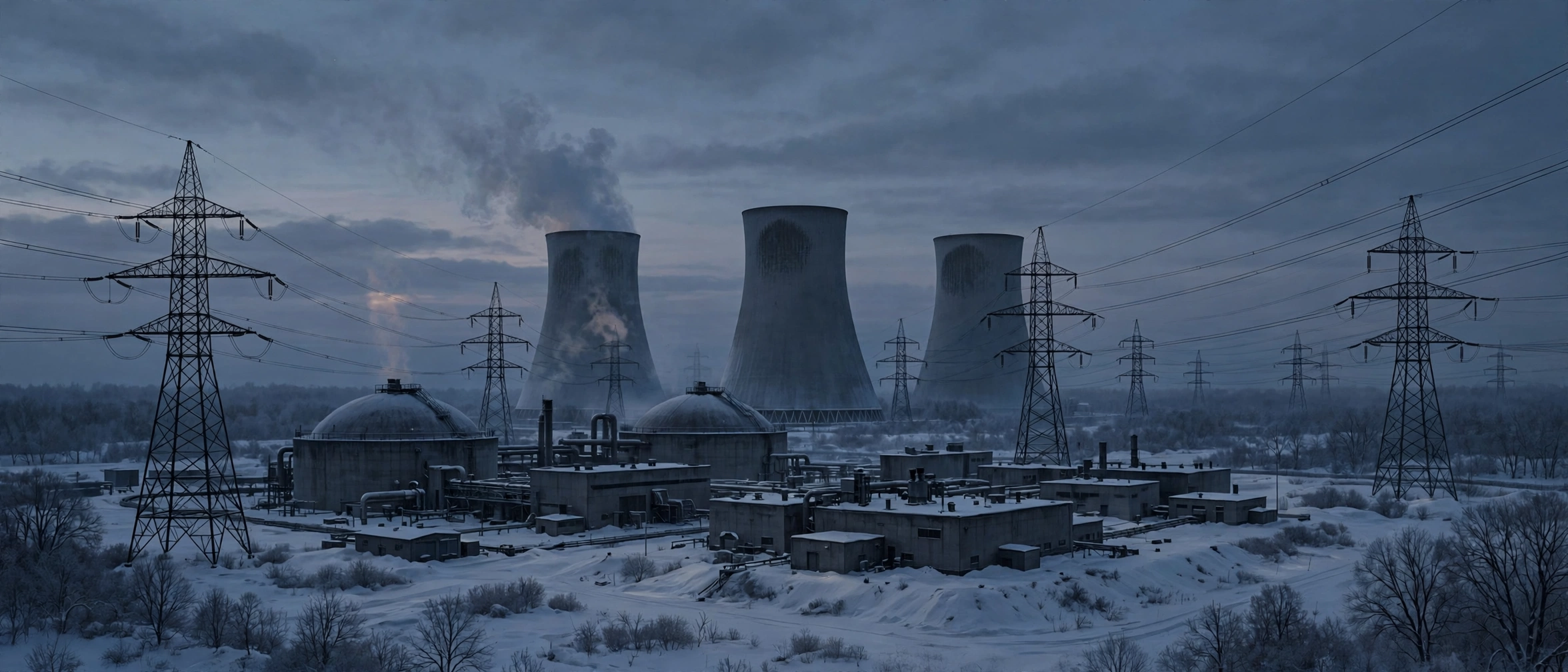
Nuclear safety regulators from 38 countries warned on Monday that the risk of a nuclear accident in Ukraine is increasing this winter, urging Russia to stop its attacks on the country’s power infrastructure.
In a joint statement, the bodies said they were deeply concerned about “the increasing risks to nuclear safety arising from Russia’s war against Ukraine, and its continued attacks on the country’s energy infrastructure”. They added that there was “an urgent need for Russia to cease attacks against Ukraine’s nuclear facilities and the energy infrastructure essential to their safe operation.”
The warning comes from three organisations: HERCA, the Heads of the European Radiological Protection Competent Authorities; WENRA, the Western European Nuclear Regulators Association; and NORA, the Heads of the Nordic Radiation Safety Authorities. Together they represent 38 countries, including all European Union members, the United States, Britain, Canada and Japan. Reuters reported the statement, which it had seen ahead of publication.
Nine reactors, one grid
The regulators’ concern is simple. A nuclear power plant needs a steady supply of electricity from the grid to keep its nuclear material cool. Cut that supply for long enough, and cooling fails — raising the risk of a meltdown and the release of radioactivity into the air, as happened during the 1986 Chornobyl disaster, the world’s worst civil nuclear accident.
Moscow has stepped up its drone and missile attacks on Ukrainian energy installations — power plants, power lines and electricity substations — hitting a system already weakened after nearly five years of war. Russian strikes on Ukraine’s power grid have repeatedly cut power to hundreds of thousands of people, with one earlier attack leaving 850,000 without electricity.
Per Strand, the head of HERCA and NORA, told Reuters that Russian attacks had become deadlier in recent weeks, with drones carrying bigger payloads and striking with greater precision. “Because of this new tactic of the Russians, … clearly the highest risk will be this winter for a nuclear accident,” he said.
The worst case, Strand said, would be a nationwide blackout of the Ukrainian power grid affecting all nine of the country’s producing nuclear reactors at the same time. “Nine reactors at the same time with the potential of (radioactive) releases would be quite a severe situation,” he said.
Ukraine has four nuclear power plants, of which three are in operation, providing about 80 per cent of the power used this winter.
Zaporizhzhia: the plant running on a single wire
The fourth plant, Zaporizhzhia — Europe’s largest — is under Russian control in an area close to the front line. It is not currently producing electricity, but it still relies on power supplied from Ukraine to keep its nuclear material cool and avoid a meltdown.
Since the start of the war, Zaporizhzhia has lost off-site power 27 times, forcing it to switch to emergency diesel generators. Since late March, the plant has relied on a single off-site power line, the Ferosplavna-1 330-kilovolt line. On 8 November it lost all off-site power for more than 12 hours after the line was damaged; four emergency diesel generators started automatically before operators cut back to two to conserve fuel.
The plant’s staff are also in danger. The IAEA was informed that one Zaporizhzhia employee was killed in a drone attack on 9 November and another died in an explosion the following day. Russia and Ukraine accuse each other of striking the plant and of severing the power lines leading to it.
The IAEA’s warning
The regulators’ warning is backed by the International Atomic Energy Agency, which said on Saturday that military activity had caused instability in Ukraine’s electricity grid in the preceding week, resulting in power reductions at some operating nuclear units. The IAEA said in its latest update that grid fluctuations at the Chornobyl site had automatically activated emergency diesel generators for several facilities inside the exclusion zone.
“It would be difficult for me to overstate my concern about the electrical grid in Ukraine and its impact on nuclear safety. These concerns are only further exacerbated as temperatures continue to fall and winter takes hold,” said IAEA Director General Rafael Mariano Grossi. He called for a complete cessation of military activity against electrical infrastructure related to nuclear safety, and for both sides to keep working with the agency to restore a damaged substation and reconnect a 750-kilovolt power line at Zaporizhzhia.
Why this winter, and what happens next
Diplomacy around the war is still moving, with US-mediated talks in Abu Dhabi held earlier this month and the Pentagon reviewing US troop levels in Europe.
But the regulators’ message is that the margin for error is shrinking. Strand stressed that the situation could still be avoided if action was taken now and Russia was pressured to stop its attacks on energy infrastructure. If not, he said, European countries must work together on their emergency preparedness for a possible nuclear accident.
No accident has happened. The warning is about risk, not an event — and a grid already pushed to its limits, with the coldest months still ahead.