US and Russia Set to Oppose Binding Rules on Killer Robots at Geneva Talks
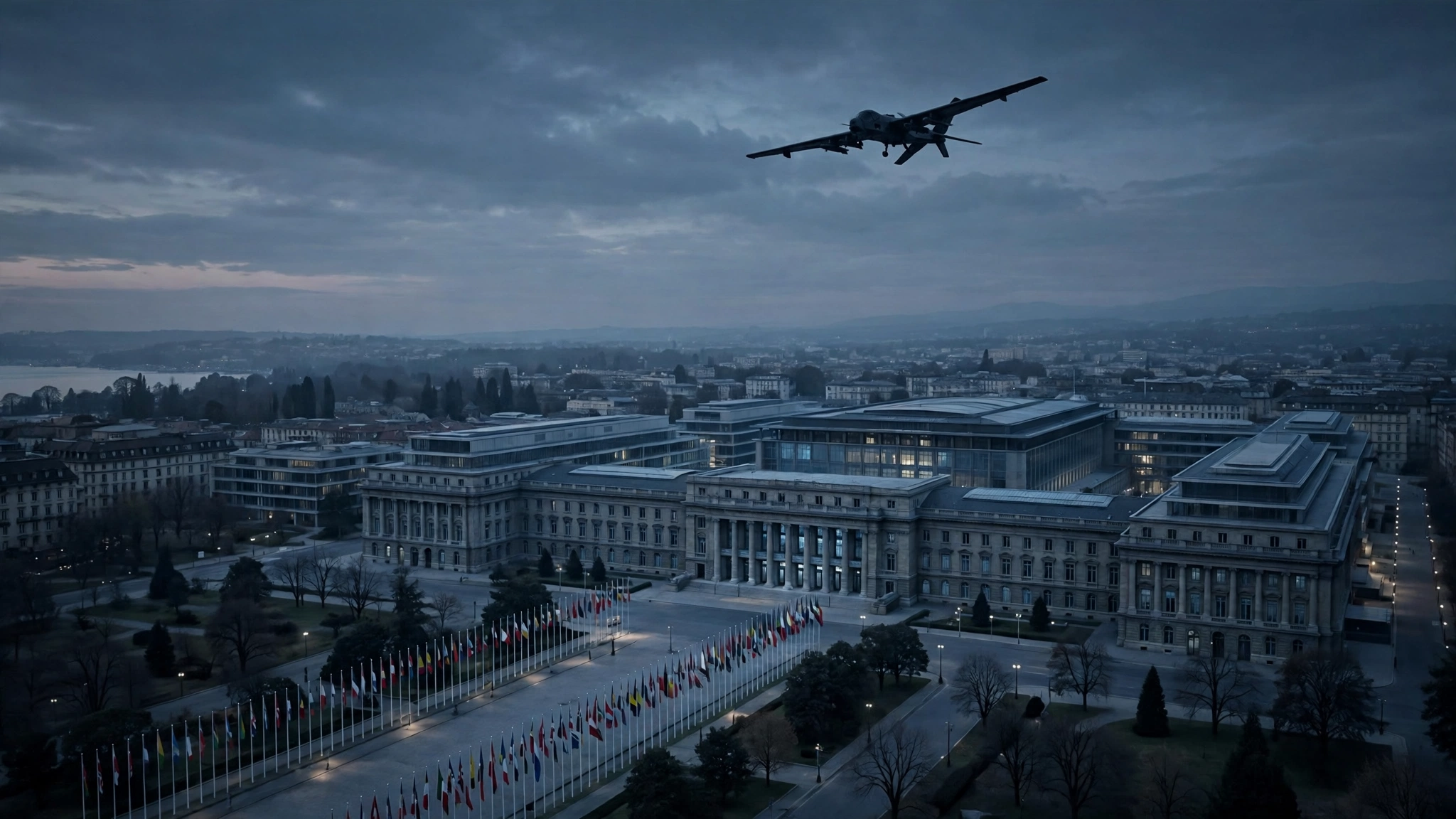
GENEVA — The United States and Russia look set to oppose a push for legally binding rules on autonomous weapons as a United Nations conference opens in Geneva, setting up a difficult week of talks over machines that can select and attack targets without human involvement.
The meeting, which began on Monday, is due to decide whether to launch negotiations on a legally binding agreement covering prohibitions and restrictions on lethal autonomous weapons systems, known as LAWS. Most of the 128 states party to the Convention on Certain Conventional Weapons support opening those negotiations. The United States, Russia and Israel oppose the move, arguing that existing humanitarian law is sufficient. Reuters reported on Monday that the talks were expected to be difficult, with diplomats and rights groups braced for hard bargaining.
A widening split over binding rules
Washington favours guidelines over binding rules and has proposed a five-year mandate for talks towards a non-binding agreement. The chair of this week’s talks has instead proposed a two-year mandate to negotiate a legally binding protocol. Britain, Germany and France have proposed negotiations on an instrument that leaves open whether it would be legally binding or not.
Russia has not publicly stated its position going into the talks, but it has previously resisted proposals for a legally binding agreement. A senior Western diplomat told Reuters that Moscow plans to block the European Union, an observer to the talks, from taking the floor.
Two diplomats told Reuters the discussions looked set to be challenging, but said states could still build bridges towards a compromise by the end of the week. All options remain on the table, one said, from a legally binding agreement to a non-binding one, as well as a hybrid deal with elements of both.
Weapons already in use
The debate is no longer theoretical. The rise of artificial intelligence has accelerated the development of drones, robots, tanks and submarines capable of killing without human involvement. Semi-autonomous, AI-assisted weapons have already been used in Ukraine, Sudan and the Middle East, despite ethical concerns.
Ukraine has used drones extensively in the war with Russia, including a record drone barrage against the Kerch Bridge this week. The debate comes as Washington moves to name leading American AI firms as national champions in the race with China.
Campaigners warn that autonomous systems can behave unpredictably, raising the risk of fatal errors. Anna Hehir, head of military AI governance at the Future of Life Institute, a US-based non-profit, said the weapons were no longer science fiction, pointing to media reporting of early use of fully autonomous systems in Ukraine.
“Machines should never be allowed to decide who lives and dies on a battlefield but that is the dystopian reality that is fast approaching,” said Verity Coyle of Human Rights Watch, which is urging the review conference to take firm action.
The International Committee of the Red Cross says humanitarian law does not sufficiently address the specific risks posed by autonomous weapons. The leaders of the United Nations and the Red Cross, along with the Pope, have all warned of the dangers and support regulation.
UN chief urges action as talks open
As talks opened, the UN secretary-general urged states in a video message to agree to move towards negotiating a legally binding instrument to regulate autonomous weapons, including clear prohibitions and restrictions.
What happens next
The Seventh Review Conference of the Convention on Certain Conventional Weapons runs from 16 to 20 November at the Palais des Nations in Geneva. Delegates are expected to decide by the end of the week whether to give negotiators a mandate — and whether that mandate aims at a binding treaty, voluntary guidelines, or something in between.
Anna Hehir told Reuters she expected the United States and Russia to seek to water down any outcome, as they did in September with a text about autonomous weapons and their potential for harm. The talks also come as the Pentagon weighs further changes to the American military footprint abroad, with US troop numbers in Europe at a two-year low.
For now, the central question remains unresolved: whether the countries building the most advanced autonomous weapons will accept rules that bind them — or whether the conference ends with guidance that carries no legal force.