320,000 March Across France in Third Weekend of Youth-Led Protests
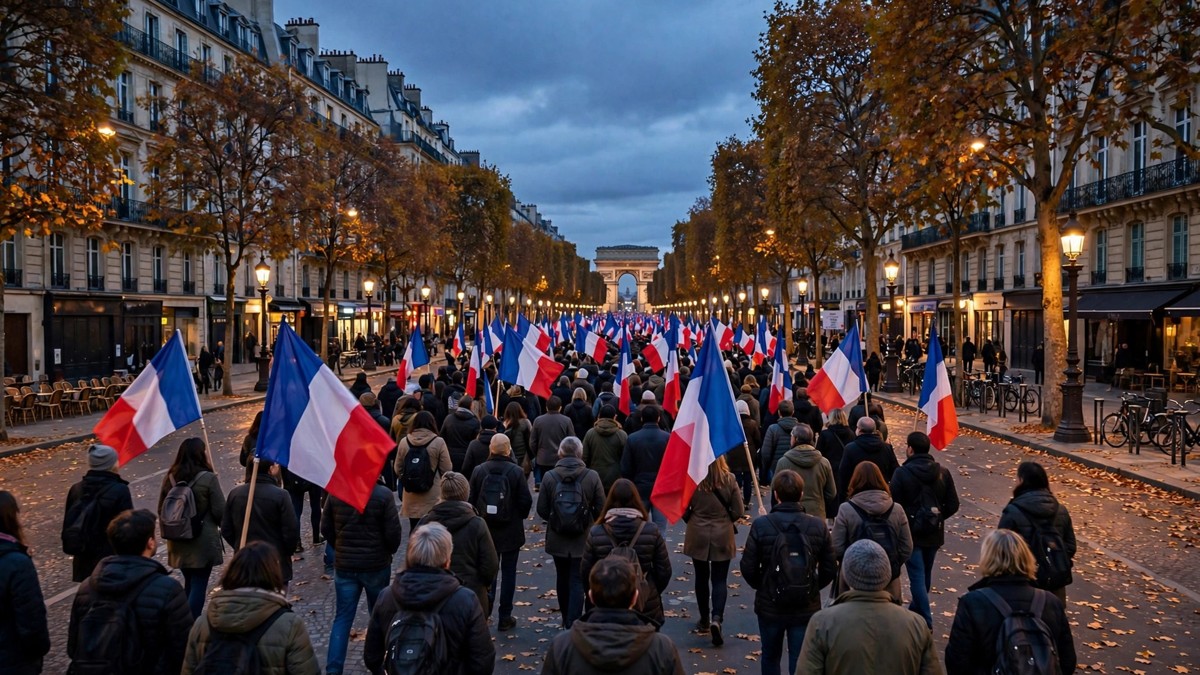
Hundreds of thousands of people, many of them young, took to the streets across France on Saturday, October 31, in a third consecutive weekend of demonstrations over the cost of living and the state of the country’s schools. The French government estimated that 320,000 people marched nationwide, including about 70,000 in Paris, in a movement that began with high school students and has since drawn in trade unions, climate activists and people angry about everyday prices.
The turnout was smaller than in the two previous weekends, but still large enough to bring an exceptional security operation to the streets. About 70,000 police officers and gendarmes were deployed across France, after Interior Minister Laurent Nuñez warned of a “very high risk” of disorder, especially after dark on Halloween. The Paris march was rerouted to the capital’s outer boulevards, away from the city centre, shops, government buildings and tourist areas, after a last-minute court battle over the route.
For most of the day, the Paris demonstration was peaceful, even festive. Students led the march hand in hand at Porte de Bagnolet, on the eastern edge of the city, while techno music played, a painter worked along the route to cheers, and some marchers went trick-or-treating in Halloween costumes as a police helicopter hovered overhead. By the evening, however, the mood at the end of the march had changed. Some protesters hurled glass bottles and fireworks at police, who responded with stun grenades and tear gas, and many peaceful marchers left coughing, their eyes streaming.
Arrest figures rose through the day as clashes were reported in several cities. Early counts put arrests at about 300 nationwide, down from 800 at the same point the previous weekend. By Saturday night, the Associated Press reported more than 560 arrests across France. The difference reflects how the count developed over the course of the day, rather than a single final official tally, and readers should treat the later figure as the fuller picture of the day’s detentions.
How a school protest became a national movement
The rallies began last month with high school students protesting neglected school buildings, teacher shortages and a university admissions system they see as unfair to students from disadvantaged backgrounds. One 21-year-old student, Corentin Cabreux, described living in a state-run student residence where, in his words, “there are damp stains all along the bottom of my walls, whole sections peeling off, cockroaches everywhere, rats.”
That grievance struck a chord well beyond the classroom. University students, labour unions and people struggling with housing costs, wages and public services joined the marches, each group carrying its own banner. The breadth of the crowd is part of why the movement has lasted: it is no longer only about schools, but about whether daily life in France has become too expensive and public services too thin.
The previous weekends show how quickly the mood can shift. On October 17, government estimates put turnout at more than 500,000, and the day deteriorated into some of France’s worst rioting in years, with hundreds of shops looted. On October 24, about 410,000 people marched, the protests were largely peaceful, but police still made more than 1,300 arrests. Saturday’s smaller turnout, and the heavy police presence, appeared designed to avoid a repeat of the October 17 disorder, and for much of the day that approach held.
Paris under tight control on Halloween night
Paris police barred people from entering the Place de la République and Les Halles neighbourhoods, both hit by rioting and looting on October 17, from 11 p.m. to 6 a.m. on Saturday and Sunday nights. Unaccompanied minors faced a separate 9 p.m. curfew around the Champs-Élysées. President Emmanuel Macron had said earlier in the week that marches would stay out of city centres to protect shops.
Instead of crossing central Paris, protesters streamed for hours along the Boulevards des Maréchaux, the ring of avenues skirting the city’s edge. The route kept the demonstration away from the most sensitive sites, but concentrated the end of the march, where the clashes broke out.
A youth wave spreading across Europe
France is the centre of the current wave, but it is not alone. In Germany, a youth initiative called “Gen Z regelt” — roughly, “Gen Z’s got this” — rallied in more than 30 cities for education, health, climate protection and an affordable life, and against any return of military conscription. Organisers said tens of thousands took part across Germany, though official figures were not immediately available.
In Berlin, young protesters gathered at the Brandenburg Gate, demanding more investment in education and housing. One student said young people would live with the consequences the longest; another described a school ceiling collapsing from water damage, a shortage of teachers and broken toilets, with nothing being done about it.
While most German rallies were peaceful, some turned violent on Saturday night. In downtown Frankfurt, rioters smashed several storefronts and stole goods, and stole weapons from a gun store that police were able to retrieve. Rioters also threw Molotov cocktails at police after pelting them with stones and bottles earlier in the day, Frankfurt police said. In Cologne, police ended a march early after protesters used pyrotechnics, threw stones and covered their faces despite a ban, and police used water cannons to disperse the crowd. In Hamburg, protesters shot pyrotechnics toward police and burned barricades, and police used water cannons and tear gas in response.
Elsewhere, thousands protested Portugal’s housing crisis peacefully in Lisbon, while police in The Hague reported no major disturbances by midafternoon.
Why this matters beyond France
For American readers, the French protests are a reminder that cost-of-living anger is not a uniquely American story in the run-up to the US midterm elections. France is a close ally, its president is under sustained pressure from a movement he did not start and has not yet defused, and the same pressures — housing, wages, school funding and the price of everyday life — are shaping politics in several European democracies at once.
The movement’s staying power is the question now. Organisers’ turnout estimates were higher than the government’s 320,000, as they have been each weekend, and a national strike has been called for November 5. If that strike draws broad support, the protests will have moved from a student-led campaign into a wider test of the Macron government’s economic record. If turnout keeps falling, the government may argue the wave is ebbing.
Frequently Asked Questions
How many people protested in France on October 31, 2026?
The French government estimated 320,000 protesters nationwide, including about 70,000 in Paris. Organisers put the turnout higher. The figure was down from 410,000 on October 24 and more than 500,000 on October 17, according to government estimates.
Why are people protesting in France?
The movement began with high school students protesting neglected school buildings, teacher shortages and an admissions system seen as unfair to disadvantaged students. It has broadened to include the rising cost of living, housing costs, wages and the quality of public services.
How many people were arrested?
Early reports put arrests at about 300 nationwide. By Saturday night, the Associated Press reported more than 560 arrests across France, reflecting detentions through the course of the day and evening clashes in Paris and other cities.
Did protests happen elsewhere in Europe?
Yes. Youth-led rallies were held in more than 30 German cities under the “Gen Z regelt” banner, thousands protested Portugal’s housing crisis in Lisbon, and police were on high alert in The Hague, where there were no major disturbances by midafternoon.
What happens next?
Organisers have called for a national strike on November 5. Whether that action draws wider support will be an early test of whether the movement is growing beyond its student-led origins or losing momentum after three weekends.
References
- Associated Press, via EuropeSays — Third weekend of protests in France as youth-led rallies sweep Europe
- NPR, via Pagegoo — Europe roiled by more youth-led protests
- DW reporting, via VidiaNews — More than 290 arrested in France as some weekend protests turn violent
Related coverage: the US jobs market is frozen as layoffs stay near record lows amid cost-of-living pressures, and more in our world news coverage.

