International Student Enrollment Falls 9% at US Colleges as New Arrivals Drop 15%
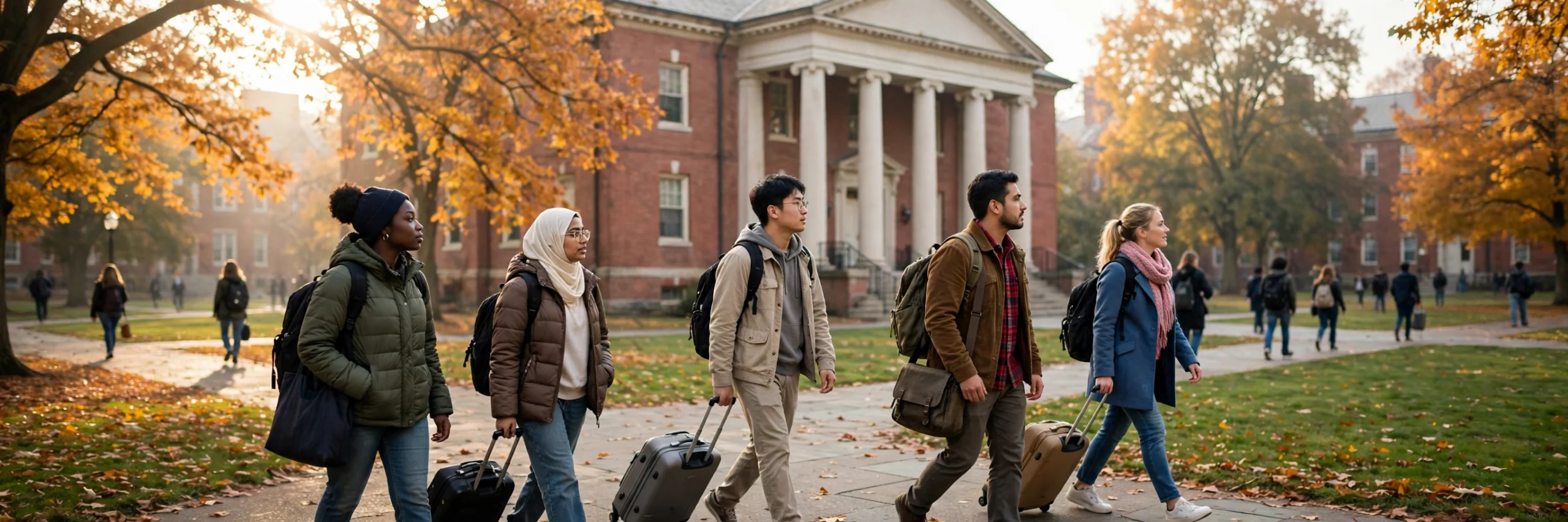
International enrollment at US colleges and universities fell 9% this autumn compared with last year, and the number of students entering the country for the first time dropped 15%, according to data released on Monday by the Institute of International Education (IIE).
The figures, drawn from a preliminary fall survey of more than 800 US institutions, are the clearest sign yet that tougher immigration rules are reshaping American higher education. They arrive as the Trump administration tightens visa screening, restricts travel from some countries and considers new limits on the work programme that lets foreign graduates stay on after their degrees.
The United States remains the world’s top destination for international students, college leaders told the IIE, but the survey suggests that position is under strain.
New arrivals and graduate study hit hardest
The sharpest falls were among the students universities rely on most. New international enrollment — students attending a US institution for the first time — fell 15% this fall, and international graduate enrollment dropped by the same amount.
Undergraduate enrollment proved more resilient, slipping 3%. The gap matters because graduate students make up a large share of enrolments in science, engineering and other research fields, and many go on to work in American laboratories and technology companies.
India, which sends more students to the United States than any other country, was among the countries where numbers fell, according to Associated Press reporting on the survey. The IIE did not publish country-by-country figures in its preliminary release.
Visas and travel rules blamed
Colleges were blunt about the cause. Among institutions reporting declines, 88% blamed the visa application process and 70% blamed travel restrictions, the survey found.
Visa interviews have become longer and less predictable, and some students have waited months for appointments or been turned away without explanation, campus officials have said. Travel restrictions affecting students from several countries have added to the uncertainty, discouraging applicants who might once have treated a US offer as a safe bet.
The survey, conducted in October with 10 higher education associations, is a preliminary snapshot. Full national data for the 2026–27 academic year will be published next year, but the early figures point in the same direction as other recent evidence.
Work rules and the $2.4 billion cost
The decline is also hitting the Optional Practical Training programme, known as OPT, which allows eligible foreign graduates to work temporarily in the United States after completing their studies. Participation fell 6% this fall, the survey found.
That matters because the Department of Homeland Security has proposed charging a $70,000 fee per OPT participant, a plan that has not been finalised. If work options are limited, 95% of schools predicted that international students would probably look to another country, according to the survey.
The economic cost is already visible. International students’ contribution to the US economy fell by $2.4 billion this autumn, according to research by NAFSA, the international education association, with JB International.
Individual campuses are feeling the squeeze. At Cleveland State University, international enrollment has fallen 46% in two years, from 1,542 in fall 2025 to 828 this autumn, leaving the university facing a budget hit estimated at $2 million to $4 million.
The pressure comes at a time when US schools are already competing hard for students and staff, and when the US job market and the AI talent pipeline depend heavily on graduates trained at American universities.
A longer slide, not a one-year dip
The fall snapshot follows a separate annual report that shows the downturn began before this autumn. The IIE’s Open Doors 2026 report, published alongside the survey, found that US colleges hosted roughly 1.1 million international students in the 2025–26 academic year, a decrease of 2.7% on the year before.
New international enrollment fell 17.7% in 2024–25, the second consecutive year of declines, and international master’s enrollment dropped 22.4% to 237,655 students, according to Higher Ed Dive‘s account of the report.
Taken together, the two releases describe a pipeline that is weakening at both ends: fewer new students are arriving, and fewer of those already here are staying on for work.
What comes next
The IIE’s full data for 2026–27 will not arrive until next year, but universities are already adjusting. Some are expanding recruitment in countries less affected by visa delays, while others are warning that lost tuition revenue will force cuts to programmes and staff.
For now, the survey’s message is plain. The United States is still the first choice for students around the world, but the barriers to getting here — and to staying on after graduation — are steering a growing share of them elsewhere.

[…] Grants Tulane Let a Student Graduate During a Rape Inquiry. A Law School Admitted Him Anyway International Student Enrollment Falls 9% at US Colleges as New Arrivals Drop 15% Toronto Tempo Win WNBA Draft Lottery, Land No. 1 Pick for 2027 Estonia to Close All Russia Border […]