Giant Waves Slam West Coast as Mavericks Swell Tops 50 Feet
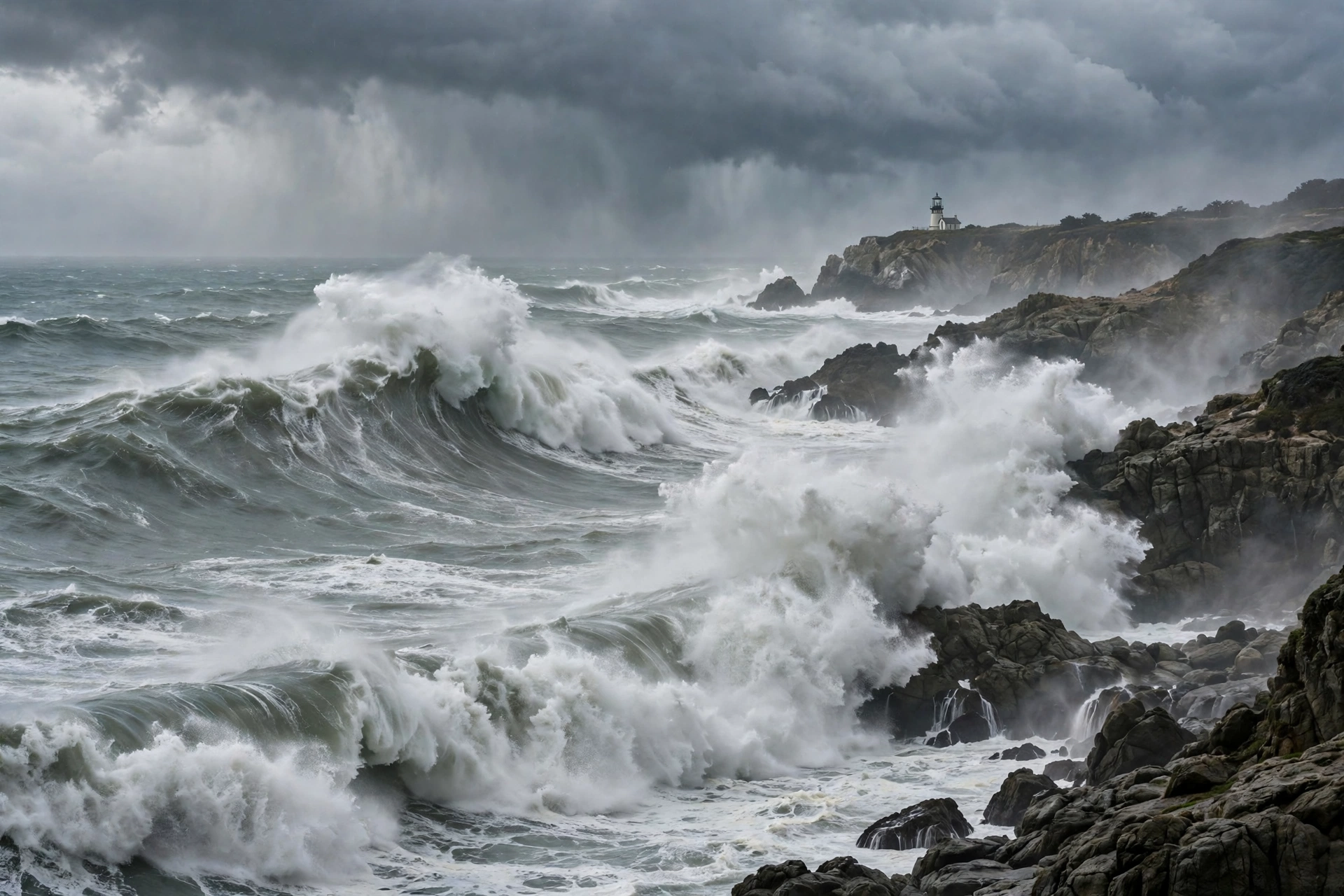
The biggest swell in about a decade battered the West Coast on Saturday, sending walls of water up to 50 feet high into California’s famous big-wave break at Mavericks and forcing evacuation warnings along the Santa Cruz County coast.
The swell, driven by a series of powerful low-pressure systems over the north-eastern Pacific, struck more than 500 miles of coastline from Washington state down to Southern California. Forecasters warned that the danger is far from over, with another large swell expected late on Sunday into Monday.
A decade’s biggest swell
The National Weather Service office in the San Francisco Bay Area said breaking waves of 25 to 35 feet were expected along the Pacific coast on Saturday, with occasional sets of 40 to 50 feet at favoured breaks such as Mavericks, the surf spot off Pillar Point near Half Moon Bay, about 20 miles south of San Francisco.
Rachel Kennedy, a meteorologist with the National Weather Service’s Bay Area office, told the Los Angeles Times that waves topped 25 feet along much of the coast, with “more localized” sets of 50 to 60 feet at Mavericks.
A buoy off Point Reyes, north of San Francisco, measured a significant wave height of 31.2 feet on Saturday morning. Mark Sponsler, who runs the forecasting site Stormsurf, estimated that the biggest waves at Mavericks were above 50 feet and possibly close to 60.
The swell prompted the first coastwide High Surf Warning in California since 2024. The storms that generated it were described by the Weather Service as hurricane-force systems, with one low off the Pacific Northwest producing hurricane-force winds, and the surge was fed by an atmospheric river streaming moisture into the coast.
Evacuation warnings and flooding
In Santa Cruz County, the Sheriff’s Office and Capitola Police issued evacuation warnings for low-lying neighbourhoods including Capitola Village, Potbelly Beach, New Brighton State Beach and its campground, the Las Olas neighbourhood, Beach Drive in Rio Del Mar and Platform Beach. About 270 homes were covered by the warnings.
Streets flooded in Pacifica, and piers and beaches were closed from the Oregon border to Los Angeles County as waves overtopped seawalls and coastal roads. In Los Angeles County, surf of 6 to 9 feet was expected to build to 8 to 12 feet, with a high surf advisory in effect through Tuesday afternoon.
The timing of the swell is unusual. California’s biggest swells typically arrive between December and January, and forecasters have linked the active pattern to this year’s El Niño.
Oregon and Washington feel the storm
The storm did not stop at the California border. On the Oregon coast, forecasters warned of breakers of 30 to 35 feet, with wind gusts of 45 to 50 miles an hour and High Wind Warnings on the south-central coast. The Weather Service office in Medford warned of breaking waves of 30 to 35 feet along the south-central Oregon coast and the Curry County coast, including Charleston, Port Orford, Gold Beach and Brookings.
In Washington, the Weather Service warned of dangerously large breaking waves along the northern coast and Grays Harbor, with gusts of up to 80 miles an hour on the south-west coast. Forecasters in Portland warned of breakers of up to 30 to 35 feet on the north and central Oregon coast and the south Washington coast, and said the sneaker wave danger was “extreme”.
The Weather Service office in Eureka, California, warned of breaking waves of 30 to 40 feet along the Del Norte, Humboldt and Mendocino coasts until 4 a.m. on Sunday.
More swell on the way
Forecasters say the coast is not clear yet. Another swell of near 20 feet is expected in California on Sunday night into Monday, Washington goes back under a High Surf Warning on Sunday morning, and the storms are expected to continue through mid-week.
Officials urged the public to stay off rocks, jetties and piers, to keep well back from the water’s edge and never to turn their back on the ocean, warning that sneaker waves can sweep people off beaches without warning.
Read more: Southwest flooding linked to an atmospheric river in Arizona and New Mexico.
Sources: WeatherBoy’s report on the swell and Smart AI Intel’s roundup of the Mavericks flooding and warnings.