FBI Warns of Rising ATM Jackpotting, the New High-Tech Bank Robbery
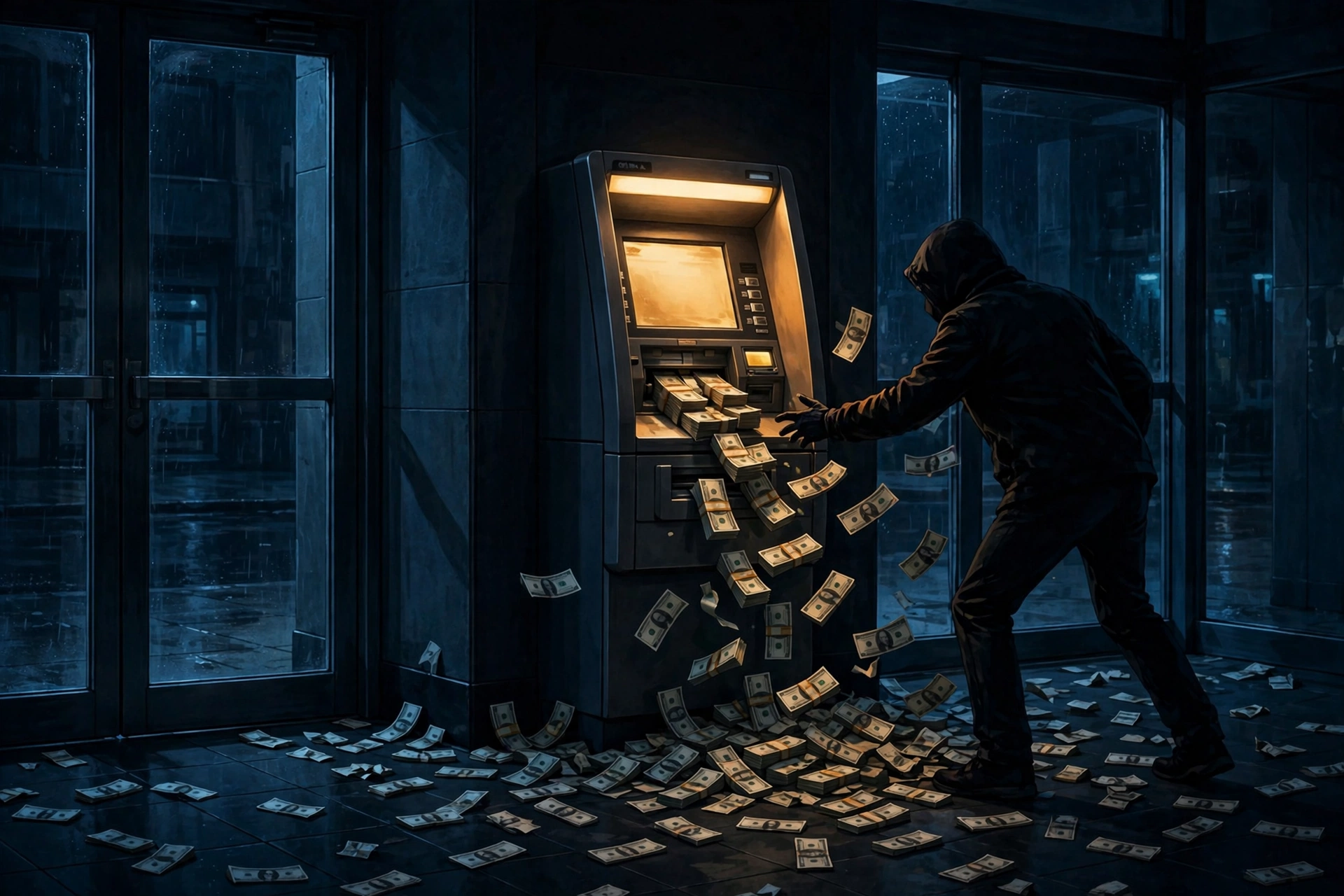
The FBI is warning banks across the United States about a fast-growing form of theft that needs no mask, no note and no getaway car. Criminals are installing malicious software on cash machines and forcing them to hand over their contents — a technique investigators call “ATM jackpotting” — and the bureau says the losses are already running into the tens of millions of dollars.
The warning follows two brazen thefts in Wisconsin this year and a string of prosecutions across the country, as federal investigators say organised groups are treating the humble ATM as the softest target in American banking.
Two Wisconsin machines emptied in a week
Surveillance footage from a bank in Glendale, Wisconsin, in March shows how the crime unfolds. Two men pull up to an ATM. Instead of entering a PIN, one of them uses a key to open the machine. The screen goes black, then appears to reboot, and the men drive away.
About an hour later, the men return. This time the machine obliges, dispensing stack after stack of banknotes as the men fan the cash out and pose for a selfie.
The thieves in the Glendale case got away with roughly $110,000. A week later, about $230,000 was stolen from a bank ATM in nearby Greenfield. It is unclear whether the two crimes were connected. Police in Glendale believe one of the suspects may be from Chicago as they work to identify those involved, while Greenfield police have closed their case, saying they have no leads.
A nationwide problem measured in millions
The Wisconsin cases are part of a much larger national pattern. According to figures cited by the FBI, banks across the United States have reported more than 1,900 jackpotting incidents since 2020. In 2025 alone, about 700 incidents cost banks more than $20 million.
“Think of this as the new bank robbery, without the force of violence of a bank robbery,” said Alan Karr, special agent in charge of the FBI’s Milwaukee field office.
Karr said the thieves are sophisticated criminals who study their targets for days, watching the bank, its cameras and its vulnerabilities before they strike.
How jackpotting works
Jackpotting attacks combine physical access with malicious software. Criminals open an ATM’s service panel — sometimes with a key, sometimes by swapping a drive — and install malware that takes control of the machine’s cash-dispensing functions. The malware, which includes a family known as Ploutus, bypasses the normal security checks, so the machine pays out until it is empty.
The FBI set out the threat in a cybersecurity alert on 19 February 2026, warning financial institutions that the attacks were increasing across the country.
Federal prosecutors have brought a string of cases against jackpotting crews. In Kansas, five Venezuelan nationals pleaded guilty to attempting to steal cash from ATMs in Wamego and Manhattan in December 2025, after an FBI investigation. The US Attorney’s office in Kansas said the group had travelled from Indiana to target machines they believed were more vulnerable to the malware.
What banks are being told to do
The FBI is urging banks to treat jackpotting as both a physical security threat and a cybersecurity risk. Karr encouraged banks to update ATM software to close vulnerabilities, strengthen the physical protection of machines and add cameras around them.
“We always encourage the banks to take common-sense approaches and measures, updating software to overcome vulnerabilities, increasing the physical protections of ATMs, cameras in the area,” Karr said.
Ryan A. Kriegshauser, the US Attorney whose office prosecuted the Kansas case, urged banks and other financial institutions to take a proactive approach to guarding against a crime he described as becoming more prevalent.
The new face of bank robbery
Traditional bank robbery has been falling for years as branches harden their defences and cash becomes harder to reach. Jackpotting reverses that logic: the criminal never enters the bank, never confronts a teller and never needs a weapon — only access to a machine that is often left standing alone on a street corner through the night.
For banks, the lesson of the Wisconsin thefts is that the ATM is now a computer first and a safe second — and it needs to be defended as both.