UN Watchdog Cannot Locate Iran’s Isfahan Nuclear Plant as Inspections Stall
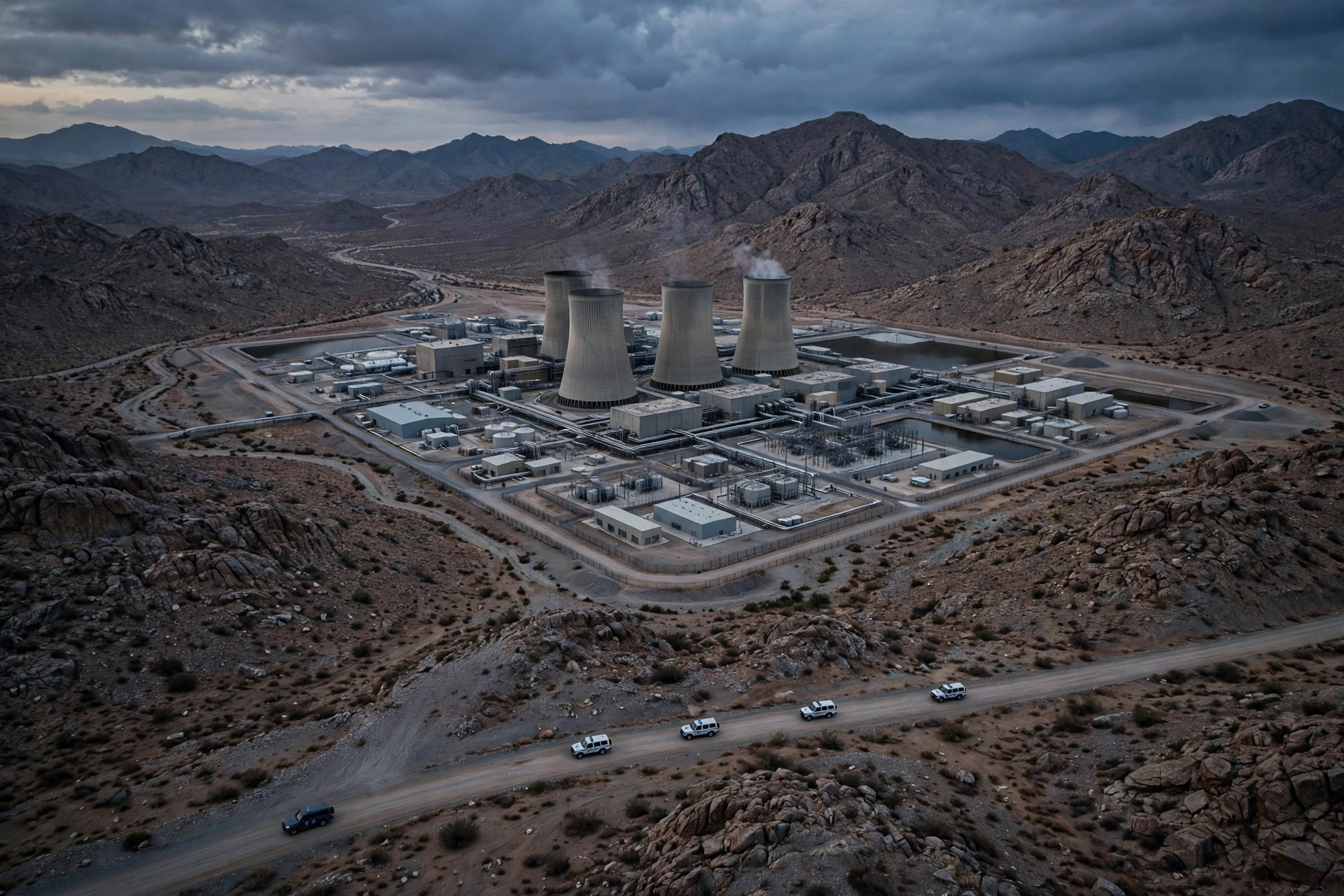
The United Nations’ nuclear watchdog has told member states it does not know where one of Iran’s declared uranium enrichment plants is, whether it holds nuclear material, or even its exact location — more than a year after inspectors last had access to the country’s nuclear sites.
In a confidential quarterly report circulated to member states on Friday 13 November, the International Atomic Energy Agency (IAEA) said it was “increasingly concerned” about the Isfahan Fuel Enrichment Plant and warned that its lack of information about Iran’s nuclear material is a serious proliferation concern that needs to be rectified with the utmost urgency.
A plant declared, then never inspected
Iran informed the IAEA about the Isfahan Fuel Enrichment Plant on 12 June 2025, a day before Israel began airstrikes on Iranian nuclear and military facilities in the 12-day war that June. Inspectors were due to visit the site on 13 June, but the visit was cancelled when the bombing began, and no inspector has entered the plant since.
“The Agency does not know IFEP’s exact location, status for safeguards purposes or whether it contains nuclear material,” the report said, according to a confidential report obtained by Reuters.
Diplomats believe the plant sits within an underground tunnel complex at Isfahan, and satellite imagery has since detected vehicle activity near the tunnels, where Iran stores uranium enriched to 60 per cent purity. The agency has not established whether nuclear material is present inside the plant, and Iran has not provided its design information, leaving inspectors unable to determine its configuration or its activities.
440.9 kilograms, unverified for more than a year
The agency’s last verified figure for Iran’s stockpile of uranium enriched to 60 per cent dates from 13 June 2025: 440.9 kilograms. By the IAEA’s measure, about 42 kilograms of uranium at that enrichment level is enough for one weapon if enriched further to about 90 per cent, meaning the full stockpile would be enough for roughly ten.
IAEA Director General Rafael Grossi said in March 2026 that a bit more than 200 kilograms was believed to be stored in the Isfahan tunnels. The report said it is “more than a year since the agency lost continuity of knowledge” of the declared stockpile, and the IAEA said it is “not able to conclude that there has been no diversion of declared nuclear material” in Iran.
The absence of verification does not by itself establish that material has been diverted or that Iran has built a nuclear weapon. Iran has no known nuclear weapon and has never tested one.
Inspections stalled since June 2025
Iran has not allowed inspectors into any of the sites struck by Israel and the United States in June 2025, and has not reported what happened to the uranium stored there. The only facility inspected since then is the Bushehr nuclear power plant, visited from 12 to 15 September 2026.
Tehran told the agency this month that discussions on restoring monitoring cannot proceed while it faces what it described as “a series of persistent, explicit, and public threats by the President of the United States of America … to commit further acts of armed aggression” against Iran, “particularly targeting its nuclear facilities”, according to the Associated Press.
Iran said the situation would not resolve “until the root causes of the present situation are addressed and the essential requirements for normal safeguards implementation are restored.”
The IAEA said it is ready to resume safeguards work at short notice and urged Tehran to take incremental steps towards restoring access. Washington recently offered a reward of up to $20 million for information about Iran’s nuclear programme.
What happens next
The report is expected to inform discussions among the IAEA’s Board of Governors next week. Qatar has presented proposals to Tehran and Washington aimed at bridging differences over the nuclear programme, according to the Associated Press.
Iran claimed earlier this week that it had struck a US radar in Bahrain as Gulf tensions flared. The United States has kept up sanctions and a blockade on Iran while insisting there will be no major combat.
The Media Line reported that in September 2026 the IAEA Board adopted a resolution referring Iran’s nuclear file to the UN Security Council over its continued failure to meet safeguards obligations.
Does Iran have a nuclear weapon?
No. As of 13 November 2026, Iran has no known nuclear weapon and has never tested one. What it does have is the fuel: 440.9 kilograms of uranium enriched to 60 per cent at the last verified count, with no inspector able to check where that material is for more than a year.
What is the Isfahan Fuel Enrichment Plant?
It is a uranium enrichment facility Iran declared to the IAEA on 12 June 2025. An inspection planned for the following day never took place because the 12-day war began, and the agency says it still does not know the plant’s exact location or whether it contains nuclear material.
Why can’t IAEA inspectors return to Iran?
Iran says talks on restoring inspections cannot proceed while it faces threats of further military attacks, particularly against its nuclear facilities. The IAEA says it is ready to return at short notice and has urged Tehran to agree to gradual technical measures that would make inspectors’ return possible.