NHTSA Opens New Probe After Waymo Robotaxis Kept Passing Stopped School Buses
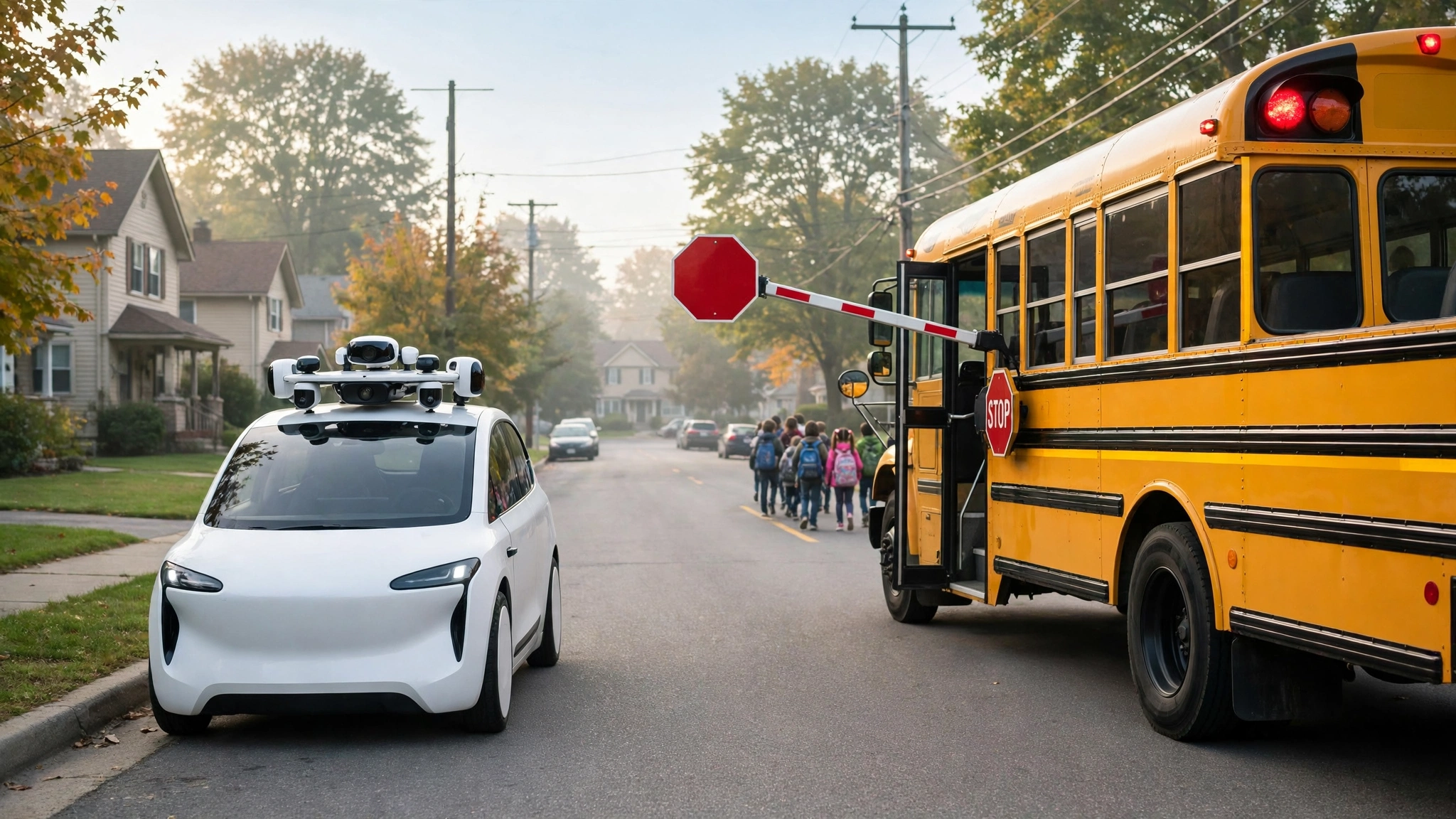
Federal safety regulators have opened a fresh investigation into Waymo after finding that its driverless cars kept passing stopped school buses long after the company said it had fixed the problem.
The National Highway Traffic Safety Administration (NHTSA) said on 6 November that it had opened a recall query covering 2,895 Waymo vehicles equipped with the company’s fifth-generation automated driving system. The move, first reported by Reuters on 9 November, puts the Alphabet-owned robotaxi operator back under federal scrutiny over one of the most sensitive areas of road safety: children getting on and off school buses.
A fix that did not hold
The story began in October 2025, when NHTSA opened a preliminary evaluation after footage showed a Waymo robotaxi in Atlanta manoeuvring around a stopped school bus. The bus had its stop sign extended and red lights flashing while children were unloading; the vehicle crossed in front of it and turned left before continuing down the street.
Waymo responded by filing a voluntary safety recall, numbered 25E084, on 10 December 2025. The company said a software defect could cause its vehicles to pass a stopped school bus after initially slowing or stopping, and that a corrective update had been installed across all affected vehicles by 17 November 2025.
That should have been the end of it. Instead, reports of the same behaviour kept coming in — and, in NHTSA’s words, a majority of the incidents occurred after the remedy date. The regulator said the post-remedy reports “call into question the effectiveness of the recall remedy”, and it has now closed the original preliminary evaluation in favour of the new recall query.
Nineteen incidents in Austin alone
The clearest picture of the scale comes from Austin, Texas, where Waymo operates one of its largest robotaxi fleets. The Austin Independent School District documented 19 distinct violations and issued numerous $300 tickets to Waymo, according to Reuters. At least five of those incidents happened in November, after the company said its software update was complete, according to a letter filed with NHTSA and reported by TechCrunch.
Waymo has said it has since improved how its vehicles behave around school buses and that it has had no citations since March 2026. But the regulator’s filing shows that the problem persisted for months after the remedy was declared complete, and NHTSA has not yet established why.
The investigation does not mean every vehicle under review broke the law, nor has the regulator concluded that the entire fleet is defective. But the number of vehicles involved — nearly 3,000 — and the fact that the incidents continued after a formal recall remedy make this a serious test of how the company validates its own safety fixes.
What a recall query means
A recall query does not order a new recall. It asks whether a previous recall actually worked — whether the remedy a manufacturer promised was adequate and properly carried out. If NHTSA concludes it was not, it can press for a further recall or other corrective action. That matters because robotaxis are moving from pilot projects to mass-market products — Tesla’s driverless Cybercab plans are a case in point — and regulators are still working out how to police software that can be changed overnight. When a fix is delivered over the air, who checks that it actually worked? NHTSA’s answer, in this case, is that it will check itself.
A wider safety spotlight
The school-bus inquiry is not the only federal probe facing Waymo. NHTSA and the National Transportation Safety Board have also opened investigations after one of the company’s vehicles struck a child in January near an elementary school in Santa Monica, California. That incident is separate from the school-bus recall query, but together the two cases put the company’s record around children under an unusually bright spotlight.
The timing is awkward for the wider self-driving industry. Alphabet is pouring billions into artificial intelligence, from Google’s latest AI chips to the vast data-centre spending now loading up the balance sheets of Alphabet and its big-tech peers. Robotaxis are one of the most visible products of that investment, and a federal finding that a flagship safety system failed to do its job would land at a moment when public trust is already being tested.
What happens next
For now, Waymo’s cars keep operating. No regulator has ordered the company to stop service over this issue, and no new recall has been ordered. NHTSA’s inquiry will examine the software, the data behind the post-remedy incidents, and the reasons the fix did not hold.
Waymo will have to explain why a problem it said was solved kept happening — and show regulators that it has a way of knowing, next time, whether a fix has really worked. Until then, the question hanging over the company’s robotaxis is the one NHTSA has now put in writing: if the remedy did not remedy anything, what comes next?