Trump Calls Iran War ‘Effectively Over’ After Qatar Talks
President Donald Trump said on Monday that the war with Iran was “militarily effectively over”, hours after he met Qatar’s prime minister at the White House to discuss a possible deal to end the eight-month conflict.
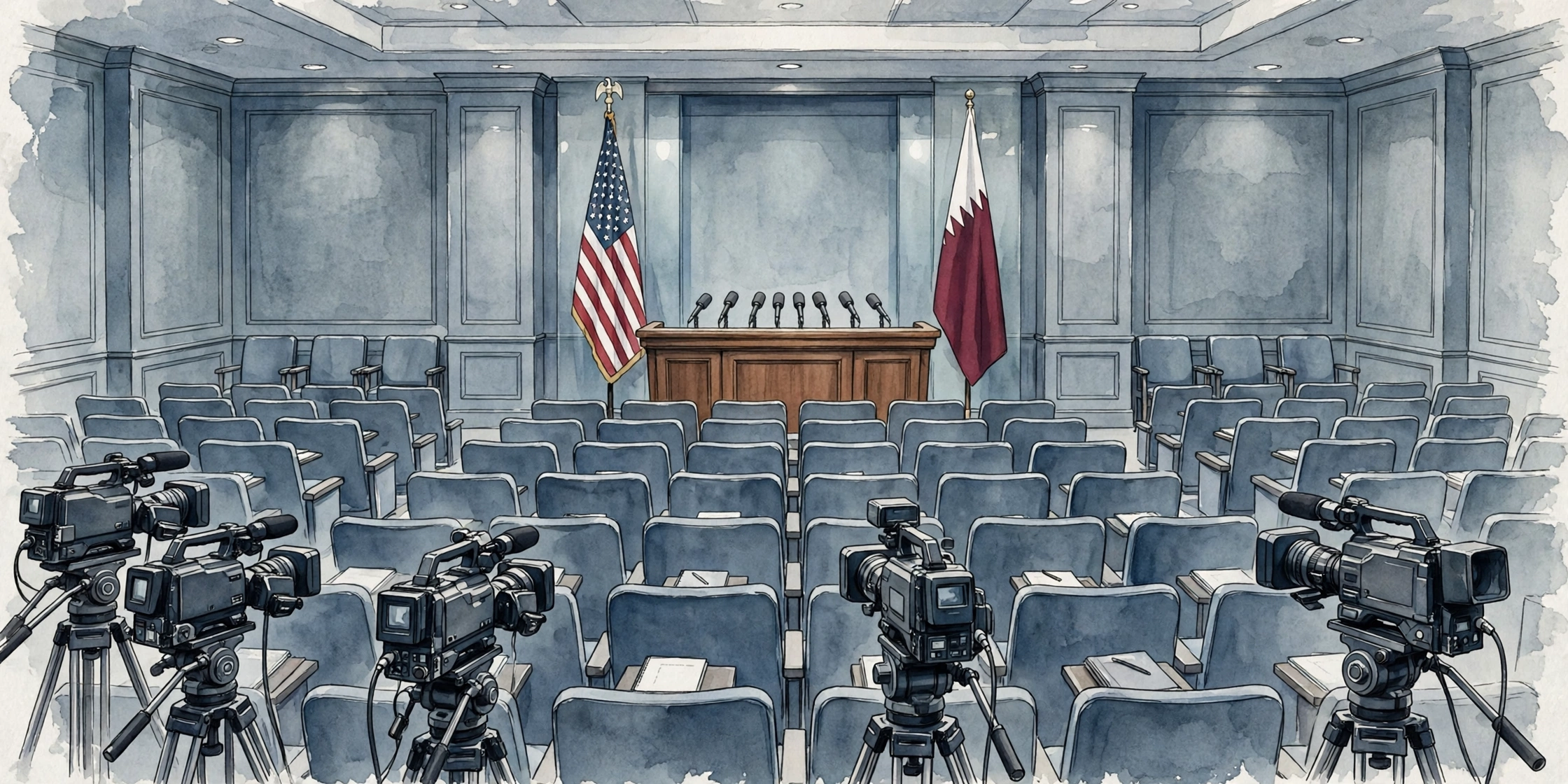
Trump made the remarks during a surprise appearance in the White House briefing room after the closed-door meeting with Sheikh Mohammed bin Abdulrahman Al Thani, who is also Qatar’s foreign minister. Vice President JD Vance took part in the talks.
“Iran, militarily, is effectively over,” Trump told reporters. “We’re just keeping it the status quo.”
The president said there was “positive momentum” towards ending the war and that there was a “good chance” of a deal. He also told Reuters that Iran was “speaking to us very politely”. The Hindu BusinessLine, reporting on the briefing, described it as a signal of a shift away from renewed military strikes. But he offered no long-term ceasefire commitment, and no agreement was announced.
A 45-minute meeting with the mediator
The White House meeting lasted about 45 minutes, according to Axios reporting, and focused on the Iran negotiations. Afterwards, the Qatari prime minister posted on social media that he was “grateful for the positive discussions on reaching a deal and bringing peace to the region”.
Qatar has acted as the key intermediary between Washington and Tehran since the conflict began on 28 February, when the United States and Israel launched their campaign against Iran. In Monday’s meeting, Sheikh Mohammed reportedly presented Trump with a two-day framework from Tehran under which the United States would lift its naval blockade and release some frozen Iranian funds, while Iran would move towards renewed nuclear inspections and reopen the Strait of Hormuz.
That proposal has not been accepted by Washington. Senior American and Gulf officials have cast doubt on an imminent deal.
The status quo, as Trump described it
Trump said the status quo would continue at the request of Iran’s neighbours. “Most importantly, Qatar, Saudi Arabia, UAE, Bahrain, Kuwait and others would prefer the status quo, that we remain as is — in other words, a continuation of the greatest naval blockade in the history of our country. Probably in the history of the world,” he said.
Alongside the blockade, Trump pointed to Task Force Iron Gate, the newly announced American operation aimed at stopping Iran moving advanced weapons and other sanctioned materials across its land borders and through the Caspian Sea.
No guarantee, and forces on standby
Trump was careful not to declare the war formally over. Asked by a reporter why he did not simply declare an end to the conflict, he declined to commit.
“I don’t guarantee anything,” he said. “But if we do have to go back in, we are locked and loaded and ready to go.”
“The military action doesn’t seem to be a very necessary thing, but we’re locked and loaded, ready to go for any reason that changes,” he added.
The caution reflects the gap between the two sides. On Sunday, before departing for the G7 foreign ministers in Paris, Secretary of State Marco Rubio said negotiations were nowhere near a breakthrough and described some of Iran’s conditions as “outrageous and ridiculous”. Iran’s Foreign Ministry spokesman Esmaeil Baqaei has called Tehran’s two-day plan the most reasonable offer on the table and demanded that Washington lift sanctions and the blockade before talks begin.
Iranian President Masoud Pezeshkian said on Monday that Tehran was prepared to negotiate with dignity, but would not surrender to coercion.
A shift in tone, not yet a settlement
Trump’s remarks mark a further softening from his position on Sunday, when he told CNN in a telephone interview that new strikes were “highly unlikely” as long as talks made progress and Iran signed a “strong agreement”. Times of Israel reported that, in a short telephone interview with Reuters on the same day, Trump said Qatar and Saudi Arabia would rather see a peaceful solution, while adding that the United States was ready for strikes if necessary. Diplomacy is also moving on Ukraine, with the US-mediated talks in Abu Dhabi due on Tuesday and Wednesday.
The fighting has not stopped. The United States struck Qeshm Island again overnight into Monday, according to Iranian state media, and Iran has attacked tankers in the Gulf and the Strait of Hormuz this month, while its Houthi allies in Yemen have hit Saudi Arabia.
Oil prices fell about 3 per cent on Monday ahead of the White House meeting, with US crude down to about $88 a barrel. Qatar also denied a report that it was set to discuss a deal to reopen the Strait of Hormuz in exchange for the release of $8 billion in frozen assets, calling the report “totally inaccurate”.
Neither side has said when formal talks will resume. The coming days will show whether Monday’s meeting was the start of an end to the war or another pause in a conflict that has already lasted more than eight months.