UPS and Copa Jets Collide on Miami Taxiway; Two Treated for Minor Injuries
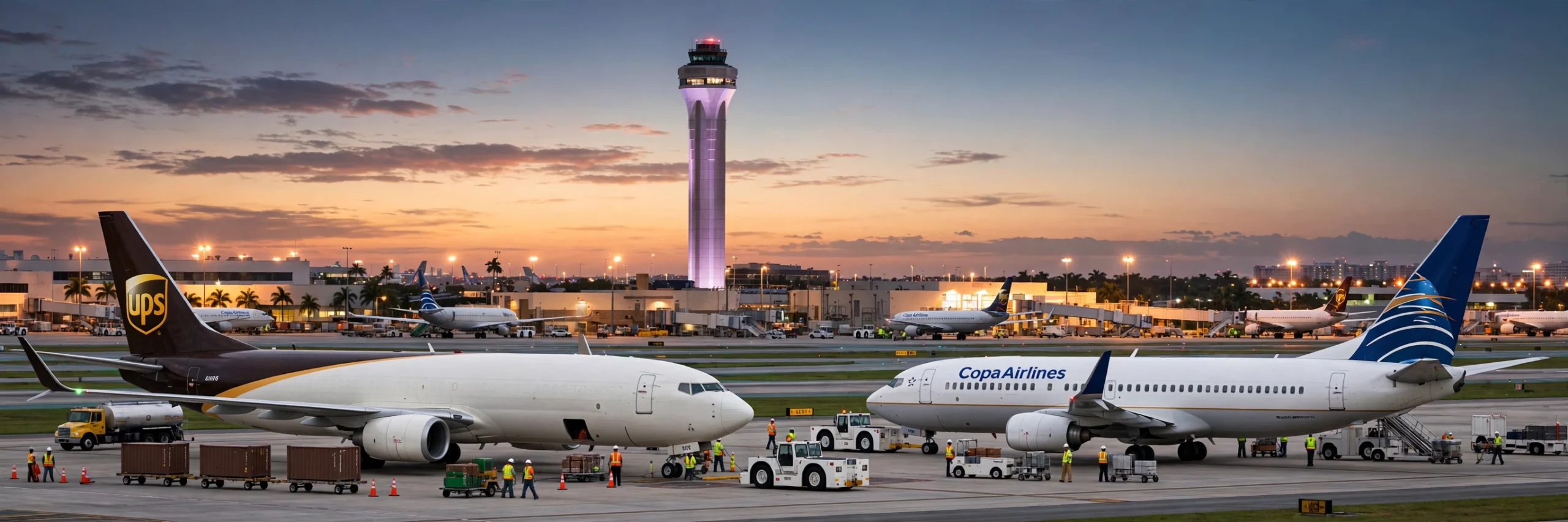
A UPS cargo jet and a Copa Airlines passenger plane collided while taxiing at Miami International Airport on Saturday night, damaging both aircraft and leaving two people with minor injuries.
The collision happened at about 9:15 p.m. Eastern time on Saturday, 14 November, at the intersection of two taxiways, the Federal Aviation Administration said. The agency has opened an investigation.
What happened on the taxiway
UPS Flight 358, a Boeing 767 freighter, was taxiing from the cargo ramp for departure to Bogotá, Colombia. Copa Airlines Flight 427, a Boeing 737-800, had just landed after arriving from Panama City, Panama, and was taxiing towards the terminal.
According to the FAA, the wingtip of the Copa passenger jet struck the nose of the UPS freighter as the two aircraft crossed paths. The agency said air traffic controllers had told the UPS crew to give way to the Copa flight before the collision.
Recorded air traffic control audio circulating publicly appears to capture the moment. In the recording, the controller asks the UPS crew whether they hit the other aircraft. The crew replies: “Yeah, we went too far.”
Both aircraft stopped on the taxiway and shut down while fire crews checked them. The fire commander confirmed there were no fuel leaks, although debris from the Copa jet’s left wing was left on the taxiway. Both aircraft were to be towed from the scene.
Two people treated for minor injuries
Two people were treated at the scene for minor injuries and did not need to be taken to hospital, according to reports citing the FAA and the airport. The airport’s initial statement had reported no injuries.
All 166 passengers and six crew aboard the Copa flight disembarked safely, and the aircraft returned to the terminal. Miami International Airport said flights were being directed to other taxiways and that overall airport operations were not affected.
FAA investigation under way
The FAA has not given an official cause for the collision and has not said when its investigation will conclude. Investigators will examine the air traffic control instructions, the movements of both aircraft on the ground, and the layout of the taxiway intersection where they met.
Ground collisions between aircraft are rare at major US airports, but they carry serious risk even at low speed, because a wingtip strike can damage flight controls and fuel systems. The fact that both aircraft were moving slowly on the ground is likely to have limited the damage and prevented more serious injuries.
A strained weekend for US aviation
The collision came a day after a nationwide ground stop on Friday halted departing flights across the United States for more than four hours. The stop followed a communications failure at an air traffic control centre, and thousands of flights were cancelled or delayed through the weekend.
There is no confirmed evidence linking the earlier disruption to the Miami collision. FAA Administrator Bryan Bedford has said the national air travel schedule is expected to return to normal by the end of Sunday, 15 November.
The incident is the second ground collision involving a large aircraft at a major US airport in as many days to draw national attention. On Friday, a tanker struck a docked cruise ship in New Orleans, although all 180 people aboard were rescued unharmed.
For now, the focus at Miami is on establishing exactly how two aircraft, both under the direction of ground controllers, ended up on a collision course at a taxiway intersection. The FAA’s findings will determine whether procedures, signage, or controller instructions need to change.