Trump’s $20 Billion Wall Street Journal Lawsuit Dismissed With Prejudice Over Epstein Birthday Letter
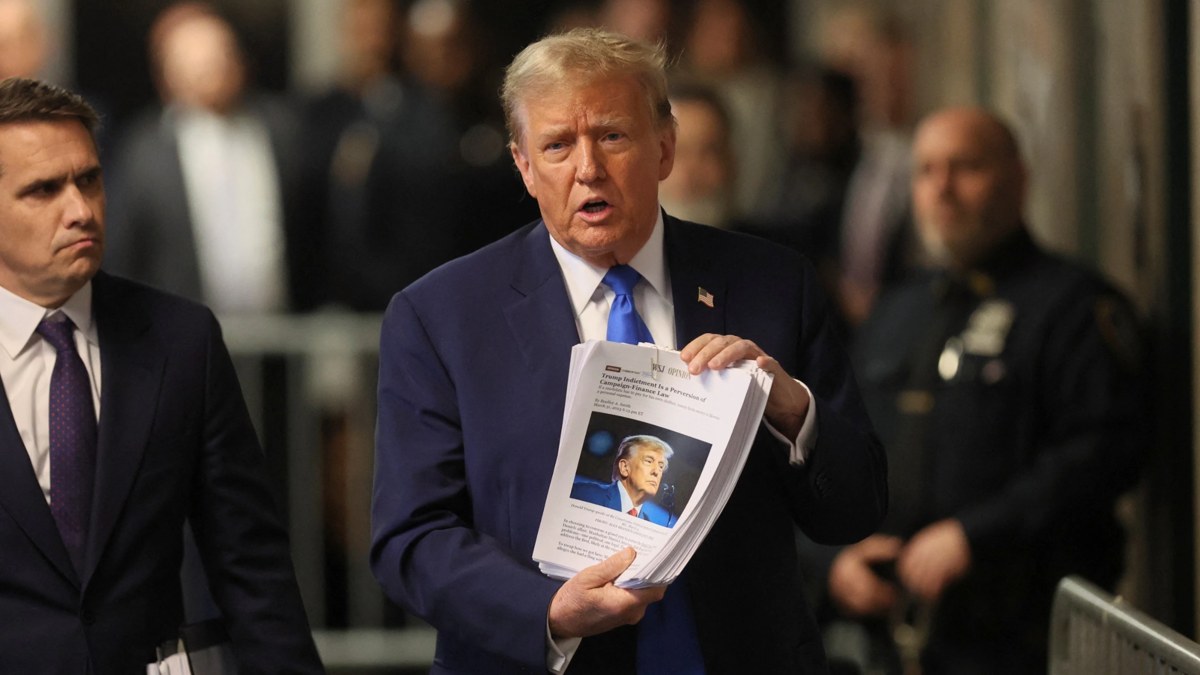
A federal judge in Miami has thrown out President Donald Trump’s defamation lawsuit against The Wall Street Journal for a second time — this time permanently — ruling that he failed to show the newspaper acted with “actual malice” in its reporting on a birthday letter to Jeffrey Epstein.
MIAMI — President Donald Trump’s multibillion-dollar defamation lawsuit against The Wall Street Journal and media mogul Rupert Murdoch is over in the trial court. On Saturday, U.S. District Judge Darrin P. Gayles dismissed the case with prejudice, ruling that the president did not prove — or even plausibly allege — that the defendants published their story with actual malice, the Associated Press reported.
Dismissal with prejudice means Trump cannot refile the same claims in district court. The ruling said the amended lawsuit was “grasping at straws” as it attempted to “manufacture” flaws in the Journal’s investigative reporting — reporting the judge instead described as a “thoughtful and detailed investigation,” according to Reuters.
Key points at a glance
• Case: Trump v. Dow Jones / News Corp / Rupert Murdoch — defamation over the Epstein birthday letter story
• Damages sought: At least $10 billion per claim, $20 billion in total
• Ruling: Dismissed with prejudice on Saturday, October 31, 2026 — cannot be refiled
• Judge: Darrin P. Gayles, U.S. District Court for the Southern District of Florida (Miami)
• Reason: Trump failed to plausibly allege “actual malice”
• Next step: Trump’s legal team says he will appeal
Dismissed Twice — And This Time, For Good
This was Trump’s second failure with the same lawsuit. Judge Gayles first dismissed the case in April, ruling that the original complaint relied on “formulaic” assertions and came “nowhere close” to the legal standard for a public figure. That dismissal was without prejudice, so Trump was given a chance to fix the complaint and refile, which he did in May.
The amended version fared no better. “As with his first attempt, he has failed,” Gayles wrote, finding Trump’s allegations “conclusory, vague, sometimes inconsistent with the article, and often irrelevant” to the question of actual malice, The Wall Street Journal reported. “The Court agrees that President Trump’s defamation claims lack merit,” the judge concluded.
The judge also rejected a central Trump argument — that the Journal should have dropped the story once the president denied writing the letter. “Were that the law, any time a public figure or his team denies an accusation, journalists would be immediately blocked from publishing negative or contradictory press,” Gayles wrote, saying such a rule would run afoul of the First Amendment, CNN reported.
What Was the Wall Street Journal Story About?
The lawsuit stems from a Journal story published in July 2025, headlined “Jeffrey Epstein’s Friends Sent Him Bawdy Letters for a 50th Birthday Album. One Was From Donald Trump.”
The Journal reported that a birthday album compiled in 2003 by Ghislaine Maxwell for Epstein’s 50th birthday included a sexually suggestive letter: typewritten text framed by the outline of a hand-drawn naked woman, signed “Donald,” and ending, “Happy Birthday — and may every day be another wonderful secret.”
Trump denied writing the letter, called it “a fake thing,” and described the story as “false, malicious, and defamatory.” The article itself included Trump’s denial and his threat to sue. He then sued the Journal’s publisher Dow Jones, its parent company News Corp, chairman emeritus Rupert Murdoch, CEO Robert Thomson, and the two reporters behind the story in federal court in Miami — bringing two defamation claims and seeking at least $10 billion on each.
After the story ran, the House Oversight Committee obtained a copy of the birthday book from Epstein’s estate, which included the letter at the center of the dispute. The judge did not rule on who actually wrote the letter — only on whether Trump had met the legal test for defamation.
What “Actual Malice” Means — And Why Trump Could Not Meet It
Under the Supreme Court’s landmark 1964 ruling in New York Times Co. v. Sullivan, a public figure suing for defamation must prove actual malice: that the publisher knew the statement was false, or acted with reckless disregard for whether it was true or false.
It is deliberately one of the highest bars in American law, designed to protect robust reporting on public figures. Gayles — who was appointed by President Barack Obama — found that Trump’s team had not shown the Journal doubted its story, ignored reliable evidence, or skipped basic verification. In fact, he noted, the reporters sought comment from Trump and other officials before publishing, and included his denial in the article.
“As President Trump has not plausibly alleged that each Defendant made defamatory statements with actual malice, the Amended Complaint must be dismissed.” — Judge Darrin P. Gayles
Dow Jones “Pleased”; Trump Team Vows to Appeal
“We’re pleased with the court’s decision,” a spokesperson for Dow Jones told CNN. The White House did not immediately respond to CNN’s request for comment.
Trump’s side, however, signalled the fight is not finished. A spokesman for the president’s legal team said Trump will appeal the ruling, adding: “The President will continue to hold those who mislead the American People with Fake News and smears accountable for their actions.” An appeal would go to the U.S. Court of Appeals for the Eleventh Circuit — but it cannot revive the case by simply refiling it in Miami.
Part of a Wider Legal Campaign Against the News Media
The case was historic in one respect: legal analysts told CNN they could not recall another instance of a sitting president suing a news outlet over a story. And it is far from Trump’s only media lawsuit in his second term:
- The New York Times: Trump filed a $15 billion defamation case over coverage of his 2024 campaign. A judge dismissed the original complaint but allowed him to refile, and the case is still being contested.
- The BBC: Trump sued the British broadcaster for $10 billion over its editing of his January 6, 2021 speech in a documentary. The BBC has vowed to defend the case.
- Iowa pollster case: Trump sued pollster J. Ann Selzer, The Des Moines Register and its parent company over a pre-election poll showing him trailing in Iowa. A judge dismissed that lawsuit with prejudice in September.
Press-freedom groups have denounced the suits, and legal experts quoted by CNN warn that even unsuccessful lawsuits can chill aggressive reporting by forcing news organisations into long, expensive litigation. Saturday’s ruling, by contrast, is being celebrated by those groups as a clear reaffirmation of the Sullivan standard.
Why This Ruling Matters
Beyond the Trump–Epstein headlines, the decision matters for every newsroom in America. Gayles drew a bright line: a denial from a powerful public figure is not, by itself, evidence that a publisher acted with malice — and treating it as such would effectively give public figures a veto over negative coverage.
The ruling also underlines how difficult defamation cases remain for public officials in the United States, even for a president willing to seek $20 billion. Unless an appeals court disagrees, the actual malice standard has survived its highest-profile test in years completely intact.
What Happens Next
Trump’s lawyers are expected to file a notice of appeal. The Eleventh Circuit will then decide whether Gayles applied the law correctly — a review that typically focuses on the written complaint and the article itself, rather than new evidence. Meanwhile, Trump’s separate cases against The New York Times and the BBC continue, and NationWire.us will follow each ruling.
Frequently Asked Questions
- Why was Trump’s lawsuit against The Wall Street Journal dismissed?
Judge Darrin P. Gayles ruled that Trump failed to plausibly allege the Journal acted with “actual malice” — the standard a public figure must meet — when it published its Epstein birthday letter story. - What does “dismissed with prejudice” mean?
The case is permanently closed in the trial court and cannot be refiled. Trump’s only remaining route is an appeal to a higher court. - How much was Trump suing for?
At least $10 billion on each of two defamation claims — $20 billion in total. - What was the Epstein birthday letter?
A sexually suggestive, typewritten letter signed “Donald” in a 2003 album compiled by Ghislaine Maxwell for Jeffrey Epstein’s 50th birthday, as reported by the Journal. Trump denies writing it. - Did the judge decide whether Trump wrote the letter?
No. The ruling was only about whether Trump met the legal test for defamation, not about who authored the letter. - Will Trump appeal?
Yes — a spokesman for his legal team said the president will appeal and continue to pursue media outlets over what he calls “Fake News.”
References & Further Reading
- CNN — “Judge tosses Trump’s lawsuit against Wall Street Journal again, this time for good”
- The Wall Street Journal — “Judge Dismisses Trump’s Lawsuit Against Wall Street Journal Publisher Again”
- Associated Press (via 28/22 News) — “Trump lawsuit against Wall Street Journal over Epstein birthday letter is dismissed with prejudice”
- Reuters (via 94.1 Duke FM) — “US judge dismisses Trump’s lawsuit against Wall Street Journal with prejudice”
- Editor & Publisher (Reuters / AP / Axios) — “Judge dismisses Trump’s Wall Street Journal defamation lawsuit with prejudice”
- The New Indian Express (AP) — “Trump’s lawsuit against WSJ over Epstein birthday letter is dismissed with prejudice”
Tags: Trump Wall Street Journal lawsuit, Trump defamation lawsuit dismissed, Epstein birthday letter, Judge Darrin Gayles, actual malice, Rupert Murdoch, Dow Jones, First Amendment, US politics, NationWire
