Supreme Court Weighs Fate of Bivens Suits as Prisoner’s Case Is Heard
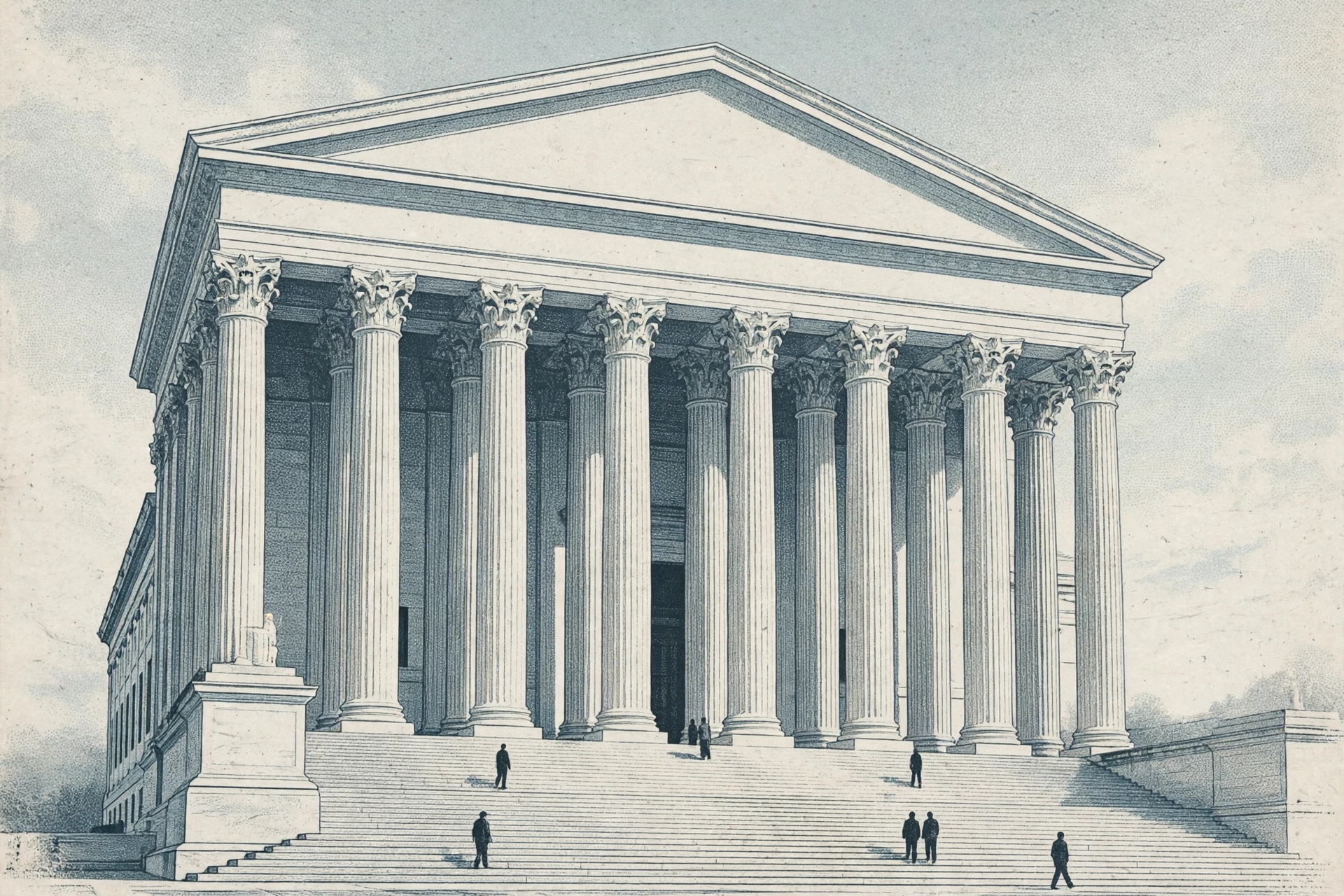
The Supreme Court heard arguments on Monday in two cases that ask the same underlying question: when federal power causes harm, who gets a remedy in court?
The first, Nielsen v. Watanabe, could narrow or even end damages suits against individual federal officers for constitutional violations. The second, Hoffmann v. WBI Energy Transmission, asks whether North Dakota landowners can recover legal fees spent fighting a pipeline company that took easements across their property. No ruling is expected for months — decisions are due by the end of the Court’s term in June 2027.
The prisoner and the nurse
Kekai Watanabe was a federal detainee at the Federal Detention Center in Honolulu. In July 2021, he was injured in a gang fight and suffered a fractured coccyx, or tailbone. According to his complaint, prison staff — including nurse Francis Nielsen — gave him over-the-counter pain medication and told him to stop being a “cry baby”. He says the care was deliberately indifferent to his serious medical needs, and he sought $3 million in damages.
The district court dismissed the case, but a divided Ninth Circuit panel reversed, holding that Watanabe’s claim could proceed under Bivens v. Six Unknown Named Agents, the 1971 decision that implied a damages remedy for certain constitutional violations by federal officers. The full court declined to rehear it, and the Supreme Court granted review in June.
The question before the justices is not whether Watanabe’s care was adequate. It is whether his claim fits inside the narrow set of cases in which the Court has allowed a Bivens remedy. Nielsen argues that it does not: the injury was less severe than the one in Carlson v. Green, the 1980 case in which a federal prisoner died after officials failed to treat his asthma. Nielsen also points to the administrative remedies available to federal detainees — the Bureau of Prisons’ grievance programme, the Prison Litigation Reform Act and the Federal Tort Claims Act — as reasons against a judge-made damages remedy. Nielsen also asks the Court to overrule Bivens outright, a position the United States supports as a friend of the court. The American Civil Liberties Union backs Watanabe, arguing that Congress preserved Bivens liability and that stare decisis favours keeping the remedy.
A remedy the Court has narrowed for decades
The Court has recognised Bivens claims only three times: in Bivens itself in 1971, in Davis v. Passman in 1979, and in Carlson in 1980. Since then, it has not recognised a new Bivens remedy, and later decisions made the test harder to satisfy.
The practical stakes reach well beyond one inmate. If the Court overrules Bivens or refuses to apply it here, federal officers — including immigration agents, prison staff and law enforcement officers — would face fewer damages suits. USA Today reported ahead of the argument that the case could affect suits over immigration enforcement, at a moment when complaints about federal immigration agents are rising. Supporters say the remedy was invented by judges and that Congress should decide when damages are available. Critics say it would leave people with no meaningful remedy when federal officers violate constitutional rights.
The pipeline case: who pays the lawyers?
The second case began with a pipeline. WBI Energy Transmission built a roughly 12-mile natural gas pipeline in McKenzie County, North Dakota. When negotiations with landowners failed, WBI used its authority under Section 7 of the Natural Gas Act to condemn easements across their property. They later settled the property’s value, but disputed the legal fees.
The district court awarded the landowners $383,375.76 in attorney’s fees and costs under North Dakota law. The Eighth Circuit vacated the award, holding that the Natural Gas Act’s condemnation power carries the federal Fifth Amendment’s just-compensation standard, which does not include attorney’s fees. That created a split with the Third, Fifth, Sixth and Eleventh Circuits, which apply state law to compensation in these cases.
The landowners, represented by the Institute for Justice, argue that the Natural Gas Act does not displace state law, pointing to the Act’s instruction to conform to state practice “as nearly as may be”. WBI relies on PennEast Pipeline Co. v. New Jersey. The Solicitor General supports WBI; twelve states support the landowners. A ruling for WBI would leave Eighth Circuit landowners with the constitutional minimum and no fee award; a ruling for the landowners would validate fee-shifting in the other four circuits.
What happens next
Decisions are expected by the end of the term in June 2027, and the Court could decide either case narrowly. But the remedy question is not abstract: it decides whether an inmate can hold a nurse accountable, and whether a landowner can afford to challenge a pipeline.
Earlier this month, the Court blocked full SNAP funding in a dispute over food assistance, and it held a tariffs hearing on the president’s emergency-powers import duties. Monday’s arguments add two more tests of how far the current Court will go in limiting the remedies available against federal power.