South Sudan Delays First-Ever Elections to February 2027
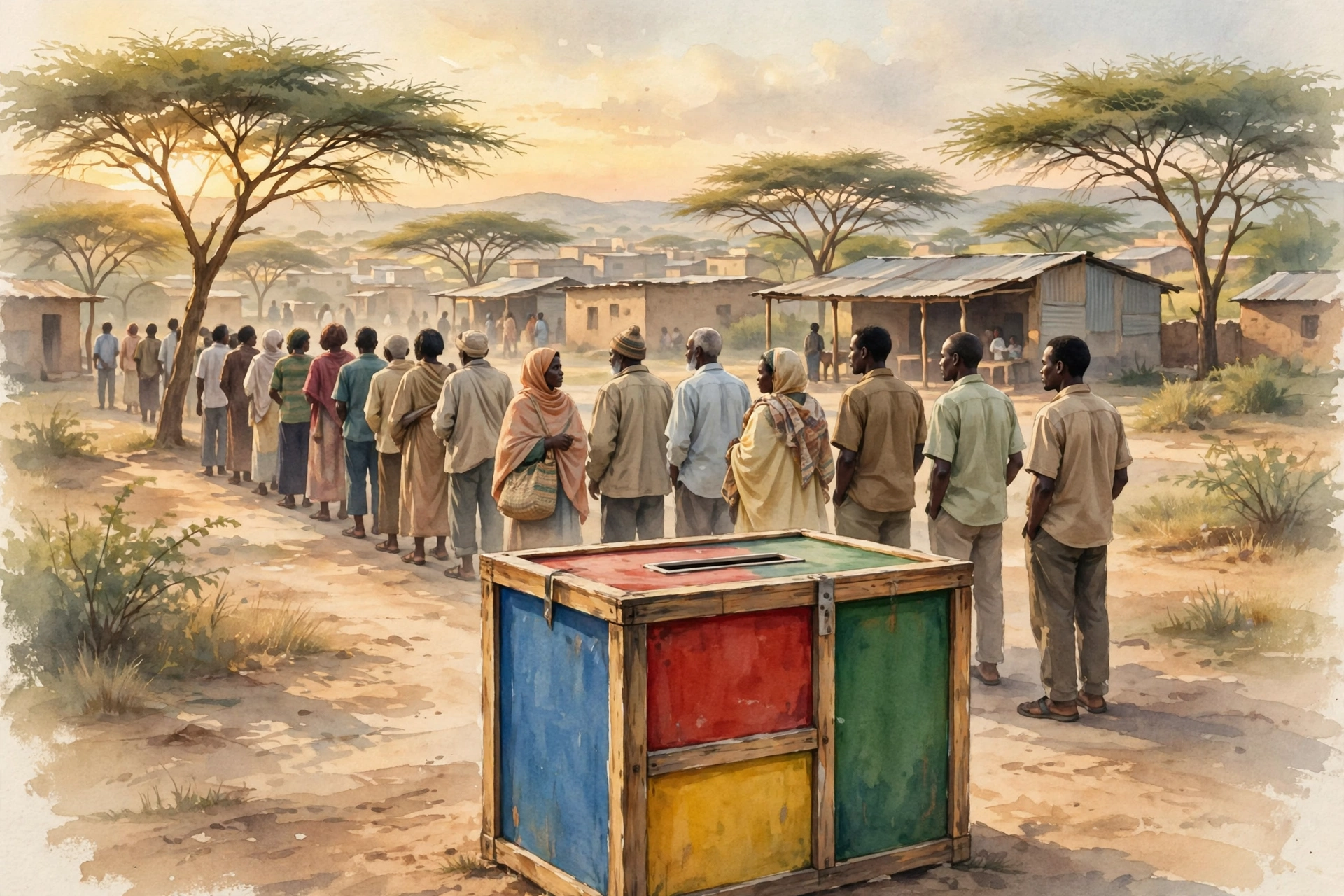
South Sudan has postponed its first general elections since independence, pushing the long-delayed vote from 22 December to 11 February 2027, the country’s National Elections Commission announced on Saturday.
The decision, published in a revised electoral calendar, delays by 51 days a vote that would be the first held in the world’s youngest nation since it broke away from Sudan on 9 July 2011. The commission gave no specific reason for the change, saying only that more time was needed for preparations.
“This is the timeline we have come up with after a thorough consultation with the stakeholders,” Josephine Achiro Fortelo, a commissioner and spokesperson for the electoral body, told Reuters on Saturday, confirming the new date.
A 51-day delay, with no reason given
Under the revised timetable, voter registration runs from 14 to 28 November, with the provisional register due on 29 November. Political campaigning is scheduled to begin on 27 December and run for 45 days until 9 February, two days before polling. Final results are expected by 15 February.
Commission chair Gabriel Bol Deng said 3,161 voter registration centres had been set up across the country, with more than 22,000 personnel recruited to support the exercise. Registration opened on the same day the new date was announced.
The postponement is the latest in a series of delays. Elections originally expected in 2022 were pushed back repeatedly, and the December date itself had been maintained for months despite warnings from political parties, civil society groups and international partners that the country was not ready.
A vote 15 years in the making
South Sudan gained independence in 2011 after decades of civil war with Khartoum, but it has never held a general election as a sovereign state. A transitional government formed under a 2018 peace deal was meant to steer the country to the polls; instead, the transition has been extended again and again.
In September, President Salva Kiir dissolved the transitional government, the national legislature and state governments, installing a caretaker administration to oversee government operations during the electoral period.
The political situation has grown more fragile since then. Former vice president Riek Machar has been under house arrest since March 2025, accused of crimes against humanity, and the opposition has warned that the conditions for a free vote do not exist.
Washington was a leading backer of the 2011 independence referendum, and the United States and other international partners have pressed Juba for years to hold a credible election. The new date leaves little room for error: the transitional period is due to end on 22 February 2027, just 11 days after polling day.
Money, security and a ticking clock
Funding is one of the sharpest constraints. The electoral commission has received only $21 million of the $276 million it requested to organise the vote, according to reports from the region, leaving questions over how logistics, staffing and security will be paid for in the weeks ahead.
The United Nations has also warned that the country is not adequately prepared. Days before the announcement, the UN Security Council heard warnings that South Sudan lacked the safeguards for peaceful and credible elections, with UN and African Union officials cautioning that a rushed or poorly managed process could undermine the fragile peace and plunge the country back into conflict.
In September, the UN Commission on Human Rights in South Sudan said the country lacked the safeguards and conditions for peaceful and credible elections.
What happens next
The commission’s calendar sets out the stages leading to the vote, but it does not explain how election disputes continuing beyond February would affect the transition, which formally ends on 22 February. Results are due by 15 February, with publication the following day and disputes running through to July.
For now, the focus shifts to registration. With just two weeks to enrol voters across a country where roads are poor, flooding is common and large areas remain insecure, the commission faces a race against its own timetable — and against a deadline that has already slipped many times before.