Oil Prices Drop More Than 3% as Iran-Qatar Talks Ease War Fears
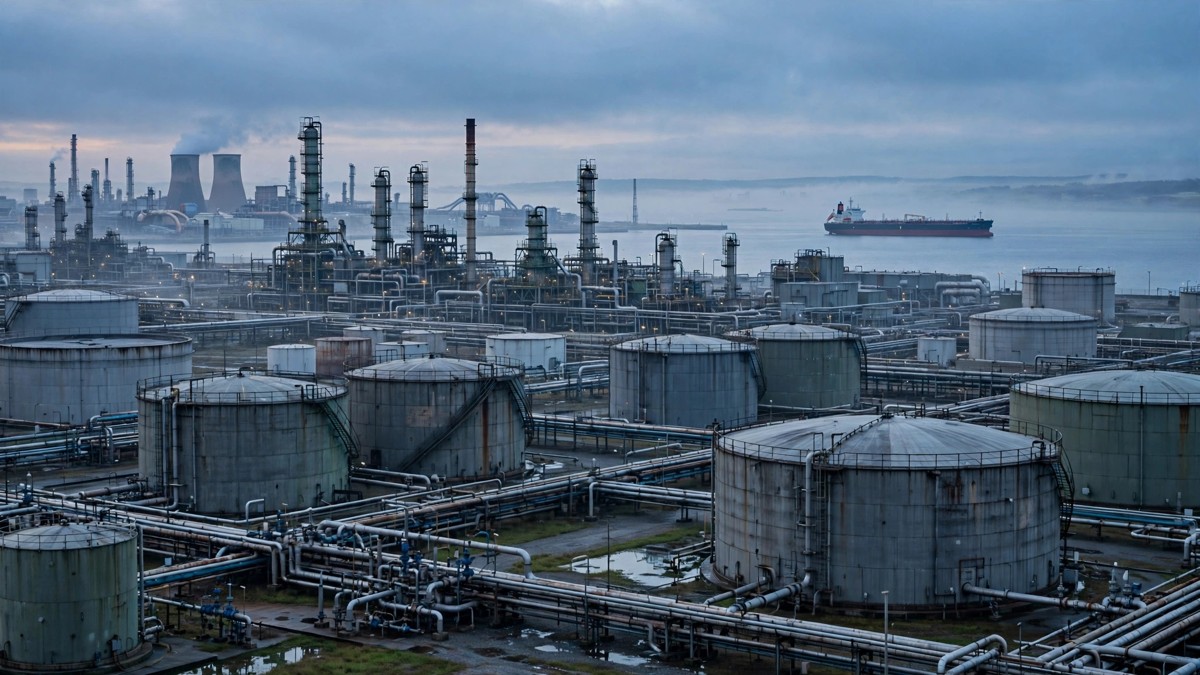
Oil prices fell more than 3% on Monday morning, November 2, 2026, as a third straight day of talks between Iranian and Qatari officials raised hopes that the war between the United States, Israel and Iran could be brought to an end without a wider disruption to global energy supplies.
Brent crude, the international benchmark, dropped $3.43, or 3.0%, to $110.00 a barrel by 7:12 a.m. GMT (3:12 a.m. Eastern), according to Reuters. U.S. West Texas Intermediate (WTI) fell $3.50, or 3.4%, to $100.62 a barrel. A Dow Jones Newswires report carried by Morningstar put the January Brent contract down 3.8% to just above $109 a barrel, with the December WTI contract slipping below $100.
The pullback came after a sharp run higher. Brent ended October at its highest level in six months, driven by fears that the conflict could escalate again after Tuesday’s midterm elections and by attacks on tankers near the Strait of Hormuz, the narrow waterway through which a large share of the world’s seaborne oil moves.
For American drivers, the move is welcome relief at a sensitive moment. NationWire reported on November 1 that U.S. fuel prices had hit record election-eve highs, with gasoline nearing $4.20 a gallon. A sustained drop in crude would not show up at the pump overnight, but it eases the pressure that has pushed prices to those levels.
Why prices fell on Monday
Traders pointed to two forces working in the same direction: diplomacy and a quiet weekend. Iranian and Qatari officials have now met for three consecutive days in an effort to reach an agreement to end the U.S.-Israeli war on Iran, which began in February. Iranian Foreign Minister Abbas Araqchi said on Sunday that the talks with Qatari mediators were “ongoing and progressing” and that Tehran remained ready “for both defense and diplomacy.”
“Oil is seeing a technical pullback this morning after last week’s strong gains,” Tim Waterer, chief market analyst at KCM Trade, told Reuters. “Lingering hopes of some form of diplomatic progress, combined with the absence of any meaningful military escalation over the weekend, have taken some of the immediate heat out of prices for now.”
Diplomatic signals from Washington pointed the same way. President Donald Trump said on Saturday that the United States had knocked out much of Iran’s military and nuclear program but still had “one or two targets” to deal with, adding that he was not in a hurry to take offensive action. The Wall Street Journal has reported that Vice President JD Vance sent a letter to Mohsen Rezaei, secretary of Iran’s Supreme National Security Council, in an effort to restart peace talks, and Qatari mediators landed in Tehran on Friday.
ING analysts said in a note that “the price action in oil in recent weeks reflects a market increasingly bracing for the potential for more hostilities between the U.S. and Iran.” Monday’s drop, in that reading, is the market pricing out some of that war premium — not pricing out the risk entirely.
OPEC+ holds December output steady
Supply policy added a second anchor on Monday. OPEC+ met virtually on Sunday, November 1, and seven of its members — Saudi Arabia, Russia, Iraq, Kuwait, Kazakhstan, Algeria and Oman — agreed to keep production targets unchanged for December, extending an earlier freeze.
The seven countries will maintain combined production targets of 31.01 million barrels per day, with Saudi Arabia accounting for 10.478 million and Russia for 9.949 million, according to the group’s announcement. The wider OPEC+ agreement produced 39.07 million barrels per day in September, up about 903,000 barrels per day from August, according to the group’s October monthly report.
Holding targets steady, rather than cutting further, removed one potential source of upward pressure on prices. At the same time, Saudi Arabia increased crude exports in October compared with September, despite attacks by Yemen’s Iran-linked Houthis on the kingdom’s energy infrastructure, according to Reuters reporting.
Traders are not treating the calm as settled. Market participants are watching for tougher rhetoric on Iran after the midterms, and some analysts cited in Reuters reporting warned that a renewed escalation could push Brent toward $120 a barrel. That upside risk is why Monday’s decline, while sharp, still leaves both benchmarks far above where they traded before the war began.
Stocks bounce as oil eases
The oil drop helped risk appetite recover after a brutal end to last week. Stock futures rose on Monday morning, with Nasdaq futures up 0.7% and futures for the S&P 500 and the Dow Jones Industrial Average up 0.4% and 0.2%, respectively, according to Dow Jones Newswires. Artificial intelligence stocks rallied after heavy selling last week, which ended in the Nasdaq’s worst one-day decline since June on Friday.
Friday’s session had been punishing across markets. The Nasdaq fell 2.86% to 25,437, the S&P 500 fell 1.82% to 7,580.07 and the Dow fell 1.09% to 51,770.31, while gold fell 3.3% to its lowest settlement since October 2025. On Monday, gold ticked higher but stayed below $4,000 a troy ounce, and bitcoin edged up to about $78,200, still below its level before last week’s disclosure of a record $6.3 billion hack at Binance.
In the bond market, Treasury yields eased at the longer end of the curve, with the 10-year yield hovering around 4.91% and the 30-year yield below 5.30%, while the two-year yield crept higher to about 4.60% as investors continued to expect a Federal Reserve rate hike in December. Markets assigned roughly a three-in-four probability to a December increase, according to rate-futures pricing cited in Monday market coverage.
What to watch this week
Oil traders now face a calendar packed with catalysts. Americans vote in the midterm elections on Tuesday, November 3, and investors will watch final-stage polls closely, with a Democratic sweep of the House and Senate viewed in market commentary as a negative for the AI trade amid voter concern about data centers. Apple and Palantir both report earnings after Monday’s closing bell, with Apple expected to post about $113.4 billion in revenue and $1.99 in earnings per share, and the October jobs report lands Friday, November 6, with economists polled by Dow Jones projecting a gain of 55,000 jobs.
The U.S. manufacturing survey arrives Monday, followed by the services report on Wednesday, while the Bank of England also decides on rates this week. Any of those releases could shift rate expectations — and with them, the dollar and oil.
For now, the market’s message is cautious relief: three days of talks and a quiet weekend were enough to take more than $3 a barrel off Brent and WTI. Whether that relief lasts depends less on Monday’s trading than on what the talks produce, and on what happens after Americans vote on Tuesday.
Frequently Asked Questions
Why did oil prices fall on November 2, 2026?
Brent and WTI each fell more than 3% as Iranian and Qatari officials held a third straight day of talks aimed at ending the U.S.-Israeli war on Iran, and as a weekend without meaningful military escalation reduced the immediate fear of supply disruptions. Analysts also described the move as a technical pullback after Brent ended October at a six-month high.
How far did Brent and WTI fall?
By 7:12 a.m. GMT on Monday, Brent was down $3.43, or 3.0%, at $110.00 a barrel and WTI was down $3.50, or 3.4%, at $100.62 a barrel, according to Reuters. Dow Jones Newswires later put January Brent down 3.8% to just above $109, with December WTI below $100.
What did OPEC+ decide on November 1?
Seven OPEC+ countries — Saudi Arabia, Russia, Iraq, Kuwait, Kazakhstan, Algeria and Oman — agreed to keep production targets unchanged for December, at a combined 31.01 million barrels per day, extending an earlier freeze.
Could oil prices rise again quickly?
Yes. Traders warned that tougher rhetoric on Iran after the November 3 midterms, or a renewed escalation, could push Brent toward $120 a barrel. Monday’s drop eases the war premium in prices but does not remove the underlying supply risk, particularly around the Strait of Hormuz.
What does this mean for U.S. gasoline prices?
Lower crude prices ease the cost pressure behind record election-eve gasoline prices near $4.20 a gallon, but pump prices move with a lag and depend on refining, distribution and local competition. A one-day crude drop alone does not guarantee an immediate fall at the pump.
Sources: Reuters, via The New Voice of Ukraine; Dow Jones Newswires, via Morningstar; OPEC+ announcement, November 1, 2026; AnewZ coverage of the OPEC+ decision. Related NationWire coverage: U.S. fuel prices hit record election-eve highs and U.S. stock futures rise ahead of midterms, Apple earnings.