Hungary Recovers $19.5 Million in Buried Cash in Orban-Era Bribery Probe
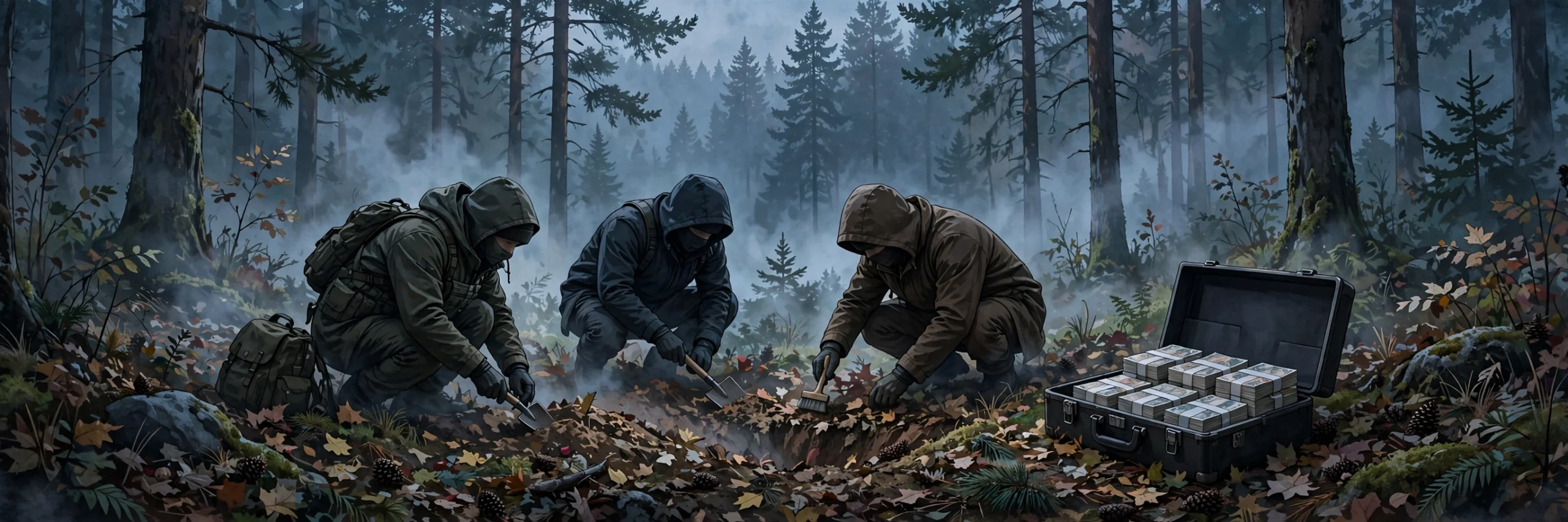
BUDAPEST — Hungarian investigators have recovered about $19.5 million in cash, some of it buried in forests and some hidden in farm buildings, warehouses and safes, during a bribery investigation into a former minister in Viktor Orbán’s government.
The National Asset Recovery and Protection Office said the money was found during coordinated searches on 12 and 13 November in Budapest and in Pest, Békés and Nógrád counties. Reuters reported that investigators found large amounts of cash “buried in forests, hidden in farm buildings, warehouses and a residential property, and stored in a high-value safe in a secluded location”.
The haul comprised 5,071,632,000 Hungarian forints, €2,658,350 and $1,257,100, according to the agency. The forint portion alone was worth about $15.33 million, with the euros worth about $2.93 million, taking the combined total to roughly $19.5 million. The money has been deposited with the Hungarian State Treasury.
Eight hours to count the cash
The scale of the find was such that counting it became a job in itself. Finance Minister András Kármán said it took a dozen State Treasury workers eight hours, using five banknote-counting machines, to tot up the recovered notes.
Footage released by the recovery office showed investigators digging through forest ground and examining substantial piles of bundled currency. The searches were carried out over two days, and the agency announced the result late on Friday, 13 November.
The office, known by its Hungarian initials NVVH, was created by the new government to examine suspected misuse of public funds during Orbán’s 16 years in power and to recover assets allegedly connected to corruption. Its work is part of a wider anti-corruption drive that Prime Minister Péter Magyar has called Operation Purgatory.
The minister at the centre of the inquiry
The investigation centres on Miklós Seszták, who served as national development minister from 2014 to 2018 under Orbán. He was detained in September and has denied wrongdoing.
Prosecutors suspect Seszták and a former head of Hungary’s state asset management company of receiving more than 11 billion forints in unlawful benefits between 2015 and 2018, Euronews reported, in connection with contracts held by Volánbusz, the state-owned bus operator, and with government construction projects. The Hungarian Conservative reported that the suspected payments were linked to overpriced purchases of second-hand buses by state transport companies.
Two other former ministers from Orbán’s government and former central bank chief György Matolcsy are under arrest over graft accusations in separate investigations, according to Reuters.
It is important to be clear about what the seizure does and does not establish. The recovery office has not said the cash belonged to Seszták, and no court has ruled on the origin of the money. The find is evidence seized during an investigation, not a finding of guilt, and Seszták retains the presumption of innocence.
A political test for the new government
The discovery lands at the centre of Hungarian politics. Magyar ousted Orbán in an April election after 16 years in power, pledging to mend ties with the European Union, strained by years of disagreements under Orbán, and to launch a sweeping investigation into allegations of graft.
Magyar has presented the investigation as a central part of his anti-corruption campaign, calling the discovery the end of what he described as the “Fidesz-KDNP mafia”. Orbán has called the investigations political “tyranny”.
Public backing for the drive appears strong. A survey by the pollster Median, carried by news website HVG this week, found that 70% of respondents rated the anti-corruption clampdown as “very important”.
The case also comes as the European Union weighs the release of almost all of Hungary’s €10 billion from the post-pandemic recovery fund, which must be authorised by the end of November before the fund expires. Brussels froze the money for years over rule-of-law concerns, and the new government’s handling of the Orbán-era investigations is being watched closely in European capitals.
In Chile, meanwhile, Chile’s President Kast has seen his approval fall to 24% amid a fuel crisis and protests, while Southeast Asian leaders opened their ASEAN summit in Manila this week facing trade strains and security tests — a reminder that leaders under pressure are a theme well beyond Budapest.
What happens next
The recovered cash will remain with the State Treasury while the criminal proceedings continue. Investigators have not announced any arrests in connection with the buried money itself, and have not said whether they expect further searches.
The courts must now determine whether the money can be linked to the bribery allegations, and if so, to whom it belonged. Until then, the forest find stands as the most vivid image yet of Hungary’s reckoning with the Orbán era: bundles of banknotes dug out of the ground, counted for eight hours, and placed in the treasury while the legal arguments are still to come.