FAA Switches On America’s First Digital Air Traffic Towers in Florida and Alaska
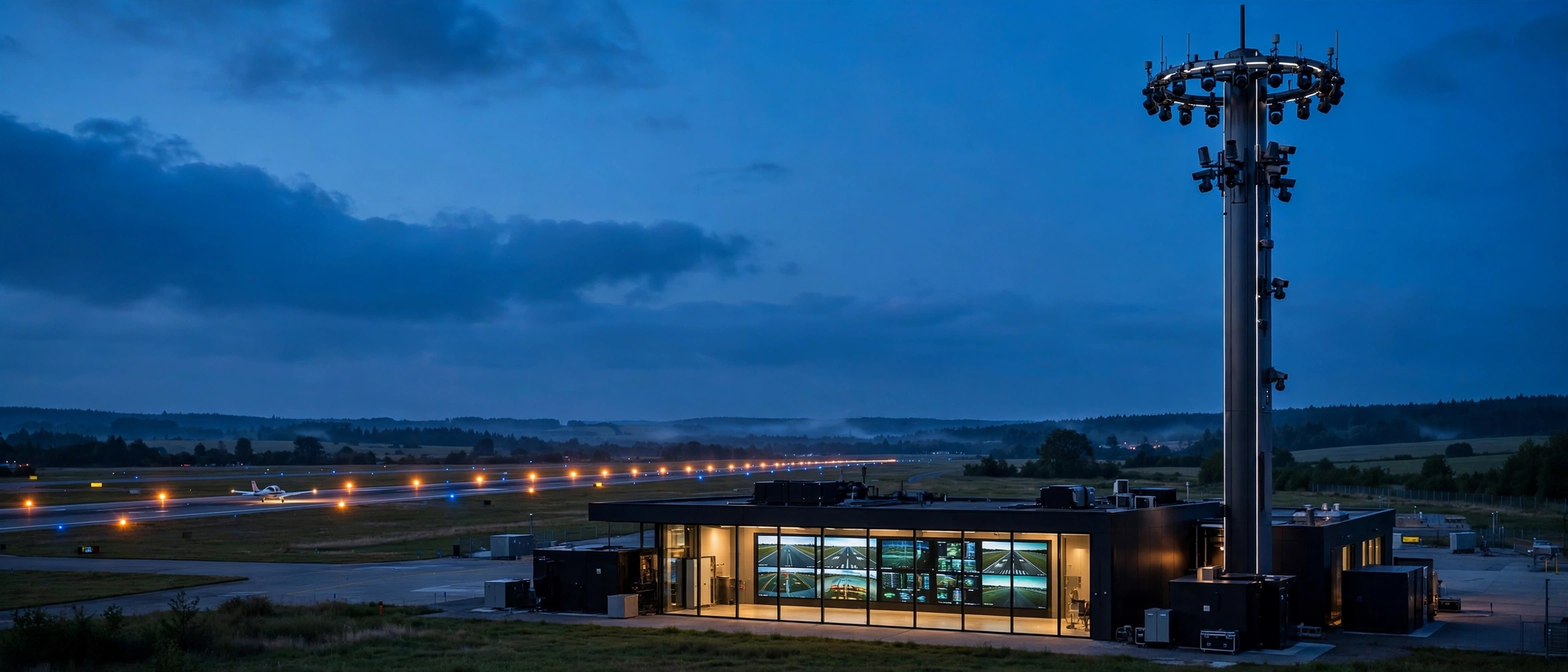
The Federal Aviation Administration has switched on the United States’ first digital air traffic control towers, replacing the traditional view from a glass cab with high-definition cameras and digital displays at two airports in Florida and Alaska.
The FAA said on Friday 6 November that the systems are now operational at Bartow Executive Airport in Florida and Kenai Municipal Airport in Alaska. Controllers there still manage the airspace, but now do so with a continuous 360-degree view of runways, taxiways and surrounding airspace assembled from cameras and sensors.
“Our air traffic controllers continue to do the critical job of keeping aircraft safely separated, and we’re giving them better technology to do that,” said FAA Administrator Bryan Bedford. “Digital towers provide controllers with greater visibility of airport activity and more information to make critical decisions.”
How the digital towers work
A digital tower replaces the direct view from a control cab with a live electronic panorama. Cameras mounted around the airfield feed high-definition images to screens in an operations room, which can sit on the airport site or elsewhere. The FAA has moved away from the older “remote tower” label because the defining feature is the electronic view, not the distance between the controller and the runway. The agency selected the smartVISION system from Frequentis, an Austrian aviation technology company, and issued its first system design approval for the technology in September, covering single-runway airports in Class D airspace.
Bartow began operating its system in September, AVweb reported, so Friday’s announcement confirms the first two operational locations rather than switching both on that day. The FAA conducted years of testing at its William J. Hughes Technical Center in Atlantic City, New Jersey, and at other sites, to develop standards and check the systems against its safety, accuracy and reliability requirements.
Five more airports in line
Five more airports without towers are next, all funded through the Working Families Tax Cut Act, according to the FAA: Winter Haven Regional and Venice Municipal in Florida, Montgomery County Airpark in Maryland, Johnston Regional in North Carolina, and Durango-La Plata County in Colorado. The agency has not given individual commissioning dates for the five. Aviation Week reported that the seven airports will be managed from remote operations centres — a model already used in several European countries, where digital towers have operated for years.
Kenai was chosen as Alaska’s first demonstration site partly for its mix of traffic and surfaces, according to FAA slides shown to the Kenai Airport Commission this year. The agency has said it is interested in bringing the technology to other Alaska airports, with Kenai as the model.
A second attempt after Leesburg
The technology has been tested in the United States before. A camera-based remote tower began providing air traffic control services at Leesburg Executive Airport in Virginia in 2018, and the FAA determined the system was operationally viable in 2021. The agency discontinued the programme in June 2023 after the developer, Saab, withdrew from the system design approval process. The new programme uses a different supplier and a fresh approval, and the FAA says the two new sites are the first under it.
What happens next
The announcement comes in a busy stretch for US aviation. The FAA ordered flight cuts at 40 airports during the shutdown, JetBlue is cutting 13 international routes while expanding in Fort Lauderdale, and American Airlines is ending first class on its busiest route between New York and Los Angeles.
For now, the focus is on the five airports in the queue and on proving the systems at Bartow and Kenai through daily operations. If the rollout goes to plan, small airports that have never had a tower could gain one without building a tall cab — and controllers could one day manage several airfields from a single room.