Nearly 2,200 Migrants Reach Canary Islands in Two Days
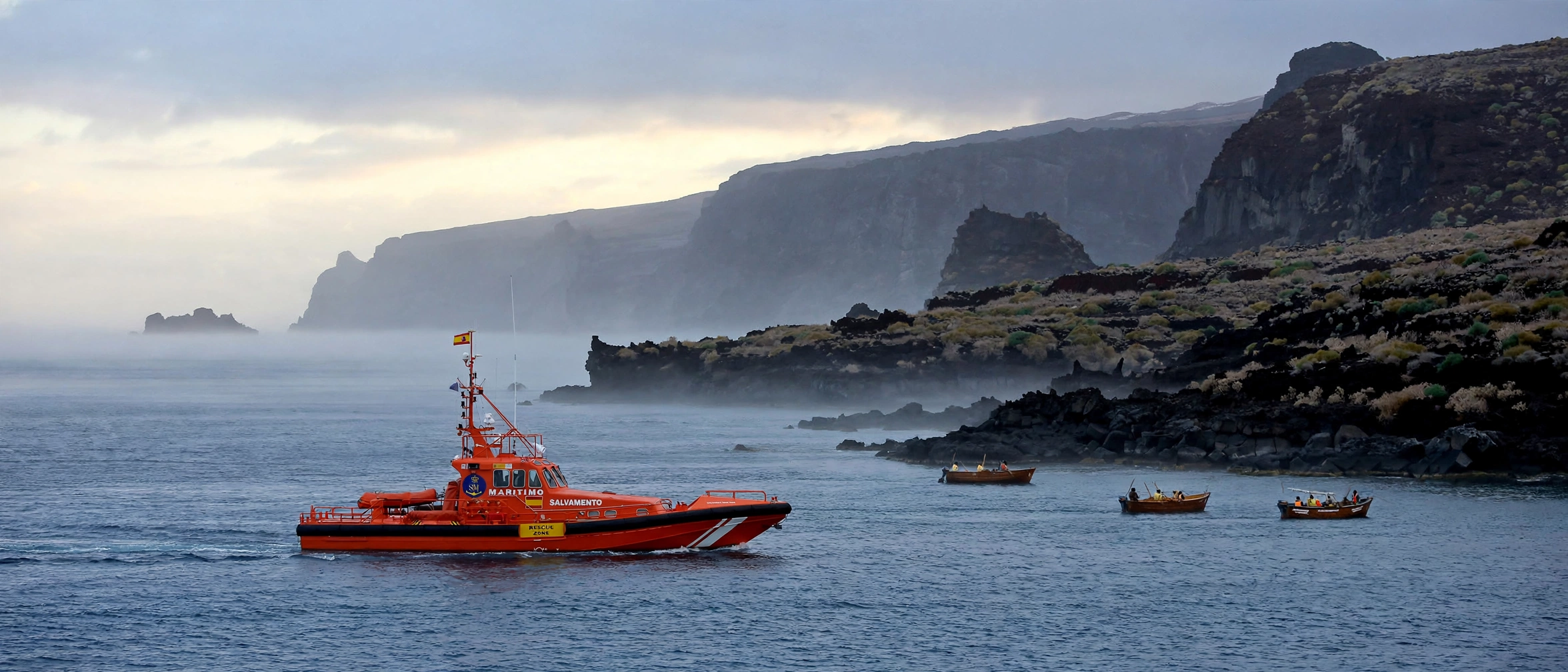
Nearly 2,200 migrants reached Spain’s Canary Islands by boat over two days, Spain’s maritime rescue service said on Sunday, in the busiest weekend the Atlantic route has seen in years — and most of them landed on El Hierro, the smallest island in the archipelago.
The surge has left the tiny island, home to roughly 12,000 people, struggling to cope. Spain declared a migration emergency in the Canary Islands on Tuesday, 11 November, after weeks of rising arrivals, and the weekend’s numbers have now pushed local reception capacity to its limit.
According to the Associated Press, the Maritime Rescue Service said it had assisted 1,324 migrants aboard 14 dinghies, most of whom reached El Hierro. Spanish coverage put Saturday’s provisional tally at 1,488 arrivals — above the previous one-day record of 1,461 people rescued on 7 November 2020. Spanish news agency EFE reported a higher Saturday figure of 1,580 and a two-day total of 2,331, a reminder that the counts are provisional and that different agencies compiled their tallies while rescues were still under way.
A tiny island takes the strain
El Hierro, the smallest and westernmost of the Canary Islands, bore the brunt of the weekend. Spanish reports said the island alone received 12 boats carrying 1,235 people on Saturday, with the rest of the arrivals brought ashore on Gran Canaria and Tenerife.
Provisional counts identified 108 women and 167 minors among those who arrived on Saturday. Most of the new arrivals were from West African countries, including Senegal, Gambia and Guinea, according to Deutsche Welle.
Canary Islands President Fernando Clavijo said the islands were “overwhelmed”, warning that the continuous arrival of boats this month had completely exhausted local resources. El Hierro’s council had already declared a social emergency weeks earlier, after more than 8,000 migrants landed on the island within five weeks.
At the port, Red Cross staff met the new arrivals, providing dry clothes, food and water and registering them, Dácil León, the organisation’s emergency coordinator in Tenerife, told public broadcaster RTVE.
A route that keeps claiming lives
The Atlantic crossing from West Africa to the Canary Islands — a journey of more than 1,000 kilometres from departure points in Senegal, Gambia and Mauritania — is one of the world’s deadliest migration routes, typically made in overcrowded and ill-equipped makeshift boats.
The dangers were underlined again this month, when a boat capsized off Senegal with at least 35 people killed, in the latest disaster on the same route.
Spain’s Interior Ministry figures show that 13,327 migrants reached the Canary Islands by sea between 1 January and 31 October 2026, out of just over 28,000 people who arrived in Spain by sea in the same period. October alone brought 6,194 arrivals to the archipelago, the highest monthly pressure on the Atlantic route since 2023, and officials do not expect the flow to ease before December, when weather conditions on the route change.
Madrid under pressure to act
Madrid held an emergency migration meeting on Tuesday, 10 November, and announced extra funding for reception capacity, a day before declaring the migration emergency. The weekend surge is now testing that response.
The pressure comes as Spain faces strain on other fronts at home, with the country holding its first general strike in 14 years over housing and wages — a sign of the domestic tensions the government is juggling alongside the migration crisis.
For now, the immediate question is practical: where to house, feed and process thousands of people arriving on an island of 12,000. With more boats expected and reception centres already full, Canary Islands officials are pressing Madrid and Brussels for help — and warning that the current pace of arrivals cannot continue without it.