Humanoid Robot Maker Agility Debuts on Nasdaq Under Ticker AGLT
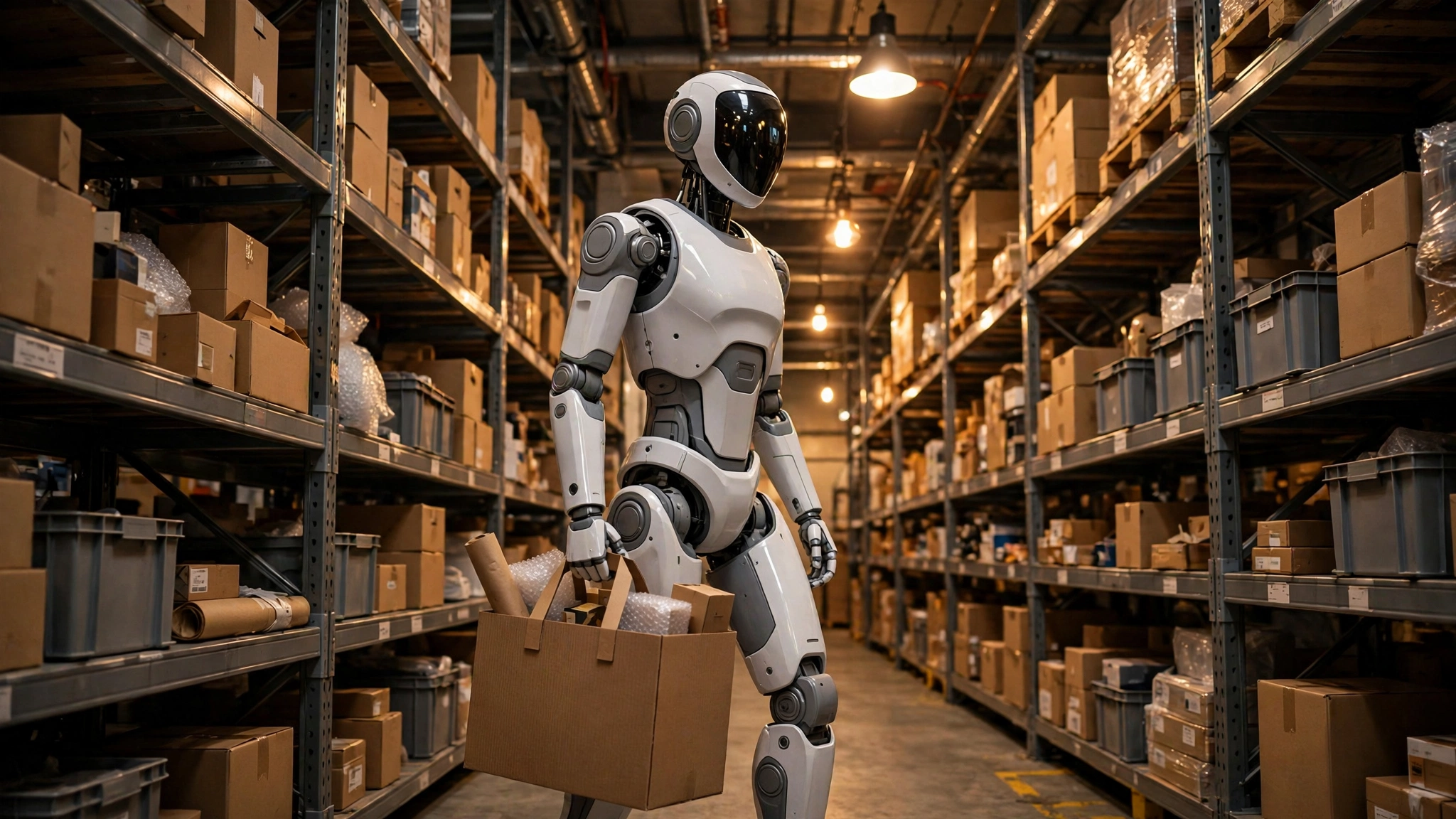
SALEM, Ore. — Agility Robotics began trading on the Nasdaq on Thursday, becoming the first publicly listed American company devoted entirely to humanoid robots, as investors get their first chance to buy shares in a maker of two-legged warehouse workers.
The Salem, Oregon company’s shares started trading under the ticker AGLT, with warrants trading as AGLTW, a day after it completed a merger with Churchill Capital Corp XI, a special-purpose acquisition company led by former Citigroup executive Michael Klein. Agility said in its announcement that the deal and related financings raised about $465 million in gross capital before expenses. Churchill’s shareholders approved the combination on 2 November, with more than 84% of votes cast in favour.
The listing values Agility’s existing equity at roughly $2.5 billion. That is a striking figure for a company that reported just $1.8 million of revenue in 2025, against a net loss of $138.1 million, according to its filings with the US Securities and Exchange Commission.
A $2.5 billion valuation on $1.8 million of sales
The gap between valuation and revenue is the central question hanging over the debut. Agility’s 2025 revenue rose from $310,000 the year before, but more than half of it came from five robots bought by a single investor, filings show, and about 64% came from related parties. Its filings show the company recorded about $174,000 in revenue in the first six months of 2026 and lost $362 million in the same period.
Agility’s backers argue the numbers describe a company still in the foothills of commercialisation, not a broken business model. Its investor roster includes Amazon, Foxconn, Nvidia, SoftBank and venture firm DCVC, and the financing behind the listing included a private investment in public equity led by Foxconn and $100 million of equity funding received before closing.
The listing comes amid a rush of money into AI infrastructure: Fal raised $1.3 billion at a $16 billion valuation earlier this week, while AI chip demand has pushed suppliers such as AMD to record quarters. The listing also comes as Oracle scrapped a $7 billion chip deal with Tencent under reported US pressure, a reminder that the AI supply chain is being reshaped by politics as well as demand.
Digit’s record on the warehouse floor
Agility’s case rests on Digit, its bipedal robot, which is designed to move totes and handle repetitive material-handling work in warehouses and factories. The company says Digit has logged more than 65,000 hours of operation across nine customer facilities, working with GXO, Schaeffler and Toyota Motor Manufacturing Canada. At a GXO site in Georgia, Digit has moved more than 100,000 totes, and the partnership will expand to two more US logistics facilities in early 2027.
The company also has a pilot agreement with farm-equipment maker AGCO, due to begin in 2027, and a pipeline of more than 30 prospective customers.
Digit 5 and the $300 million order book
The growth case depends on Digit 5, unveiled in September. Agility says it has more than $300 million in committed multi-year orders for the new machine, including 1,000 units from a single undisclosed customer, according to its filings. Securities.io reported that those commitments are not yet realised revenue, because they depend on contractual milestones, product features and specifications.
Digit 5 is designed to work alongside people without the safety cages earlier models required, and to lift up to 50 pounds using new actuator technology. It will run on Nvidia’s IGX Thor platform, and a Nyobolt fast-charging battery is designed to recharge it in nine minutes and deliver more than 20 hours of work in a 24-hour day. Early customer access is expected in the first half of 2027, with general availability targeted for the end of that year.
What the listing means for the sector
Agility is the first pure-play humanoid maker to reach a US exchange, while its best-known rival, Figure AI, remains private and Tesla’s Optimus programme sits inside a much larger carmaker. That gives public investors their first direct way to bet on humanoid labour — and their first chance to see how the market prices it.
“Today marks an important milestone for Agility, but the bigger story is what it means for the future of work,” chief executive Peggy Johnson said. “Digit is doing real work in customer operations today, taking on repetitive, physically demanding tasks.”
The company plans to use the money raised to fulfil orders, expand deployments and scale production at RoboFab, its 70,000-square-foot factory in Salem, designed for annual output of up to 10,000 robots.
Whether the market’s enthusiasm survives contact with Digit 5’s delivery schedule is the open question: the robots must still turn a $300 million order book into revenue that justifies a $2.5 billion valuation.

