Hundreds of Thousands Strike Across France on Living Costs
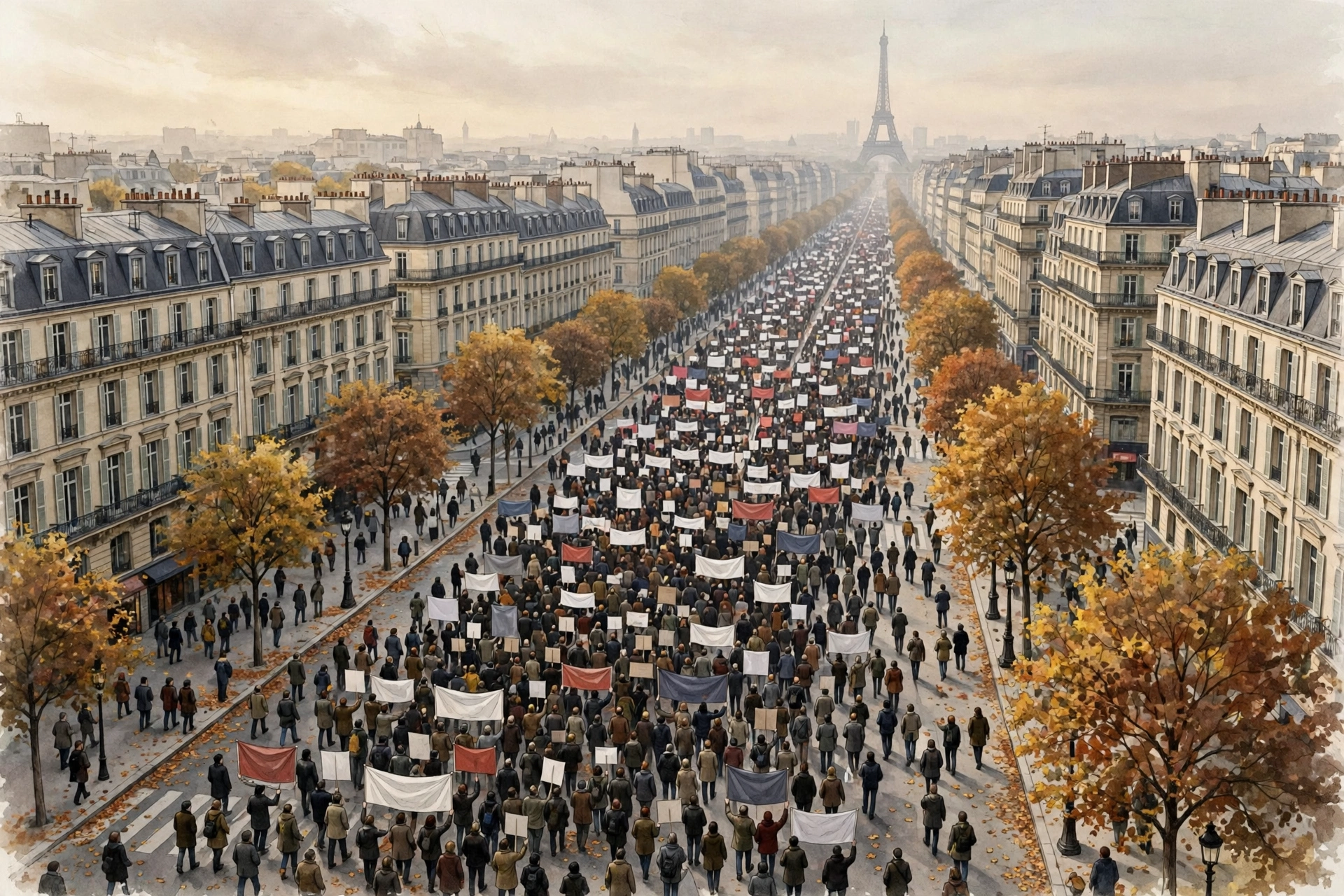
Hundreds of thousands of people marched across France on Thursday in a nationwide day of strikes and demonstrations over the rising cost of living, in the largest test yet of a protest movement that began in the country’s schools and has spread to workplaces across the economy.
Trade unions said about 1.6 million people took part in around 260 rallies, including 350,000 in Paris. Interior Ministry figures put the nationwide turnout far lower, at about 575,000. The gap between the two counts is a familiar feature of French protest days, with unions and the government routinely publishing sharply different estimates.
The Interior Ministry said at least 448 people were arrested and 53 police officers were injured. About 70,000 officers were deployed across the country, supported by armoured vehicles, drones and helicopters. Most marches were peaceful, but clashes broke out in Paris and Lyon, where police fired tear gas.
A day of disruption
The strike was called by France’s main union confederations, including the CGT, CFDT, FO, UNSA and FSU, and drew in teachers, rail workers, hospital staff, postal employees and some energy workers. Teachers from private schools joined their state-school colleagues on the picket lines.
Rail services were heavily disrupted. The four main rail unions had filed strike notices running from 7pm on Wednesday until 8am on Friday, affecting high-speed TGV routes, Intercités and regional TER trains, and suburban lines around Paris. Dock workers disrupted French ports, and air traffic controllers also joined the stoppage.
Schools were among the hardest hit. About one-third of high schools were closed or disrupted by student blockades and teacher walkouts, and the education ministry expected almost one in five nursery and primary school teachers to strike. The Eiffel Tower shut for the day, and public transport services in Paris and other major cities were heavily affected.
The rail disruption came days after bomb threats disrupted flights across Europe, including an Aer Lingus service diverted to a French military base, adding to a week of travel chaos for French passengers.
What the unions want
The strikers are demanding a higher minimum wage, pay rises for all workers, changes to the tax system, better conditions in schools, improved pensions and help with rising fuel, food and energy costs. The unions have set out their demands in a seven-point plan centred on higher wages and a fairer distribution of wealth.
France’s four main rail unions said the government’s proposed budget cuts would “worsen poverty, slash social security, freeze state workers’ salaries and dry up investment needed for environmental measures”.
The Guardian reported that the action was designed to test a government already struggling to pass its budget through a divided parliament, with public debt nearing 120 per cent of GDP.
A movement that began in schools
The protests began in September, when high school students started demonstrating over staff shortages, overcrowded classrooms and dilapidated buildings. They demanded more school funding, smaller classes and repairs to damaged facilities.
The movement quickly attracted backing from unions and workers, and hundreds of thousands of people took to the streets over the past three weekends. The third weekend of marches drew an estimated 320,000 people on 31 October, and Thursday’s strike was the first since September to bring together private-sector employees, civil servants and pensioners alongside students.
Pressure on Macron’s government
The unrest is shaping President Emmanuel Macron’s final months in office. His government is trying to cut public spending while parliament remains divided, and unions have warned that the planned budget would deepen poverty and stall investment.
In an attempt to calm anger over living costs, the government this week pointed to a drop in diesel prices at 6,000 of France’s 10,000 service stations, following the release of strategic fuel stocks. Prime Minister Sébastien Lecornu has scheduled a meeting with trade unions and business leaders for Monday, with salaries and the cost of living at the top of the agenda.
The pressure may not ease over the weekend. The Yellow Vest movement, which has joined the student and union protests, has called for strikes and blockades to continue on Friday, followed by further demonstrations on Saturday as part of its fourth weekend of action.
For now, the government and the unions are counting very different crowds. What neither side disputes is that the dispute has moved well beyond the school gates — and that Thursday showed it can still bring much of France to a standstill.

