Congo Ebola Outbreak Passes 11,200 Cases as Response Strains Six Months On
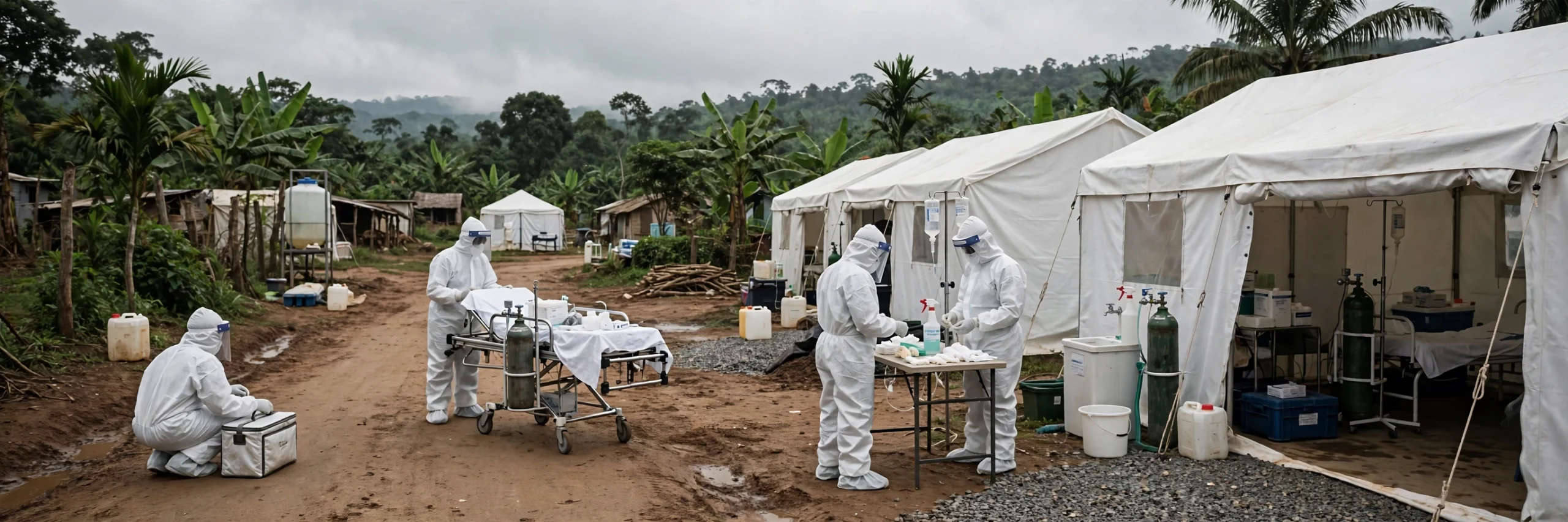
Six months after the Democratic Republic of the Congo declared an Ebola outbreak, the epidemic is still growing — and the people trying to stop it say the response is falling behind.
More than 11,200 people have now been infected and about 5,500 have died, according to figures cited by Reuters from Africa CDC chief Jean Kaseya on Sunday, 15 November. Government figures released earlier in the week counted 11,042 confirmed cases and 5,387 deaths, a fatality rate of about 49 per cent. The outbreak, caused by the rare Bundibugyo virus, is already the deadliest in Congo’s history and the second-largest ever recorded anywhere, behind only the 2014–2016 epidemic in West Africa, which infected more than 28,600 people and killed over 11,000.
The outbreak was declared on 15 May 2026 in Ituri Province, in the country’s east. Two days later, the World Health Organization declared it a public health emergency of international concern. It is Congo’s 17th Ebola outbreak since the disease was first identified there in 1976, and the fastest-growing the country has recorded.
Most new cases are outside known contact lists
The most worrying sign, health officials say, is not only the size of the toll but the shape of it. More than 80 per cent of new cases are now emerging outside known contact lists, Kaseya told Reuters — meaning tracers cannot say where most newly infected people caught the virus, or who else they may have exposed.
Between 400 and 500 new infections are still being recorded every week, according to the WHO. British epidemiologist Neil Ferguson estimated at a briefing on 11 November that between 2,000 and 3,000 people currently have Ebola in Congo. The U.S. Centers for Disease Control and Prevention’s situation summary put the total at 11,145 cases and 5,437 deaths as of 10 November, including a small number of cases beyond Congo’s borders.
The outbreak has now reached eight of Congo’s 26 provinces and 67 health zones, the Associated Press reported in its six-month assessment of the epidemic. The WHO’s 6 November bulletin recorded 10,668 confirmed cases and 5,198 deaths as of 3 November, with active transmission continuing in 51 health zones. The main hotspots remain Ituri, the epicentre, and North Kivu, both in the east, where insecurity has repeatedly interrupted the work of response teams.
Children have been hit hard. UNICEF figures released on 13 November showed 2,959 children under 18 had been confirmed with Ebola. Many deaths have occurred outside treatment centres, where patients never reached care in time.
Aid groups say the response is failing on basics
Doctors Without Borders said on 12 November that the outbreak remained out of control and the response was failing on basics such as pay, fuel and surveillance. WHO Director-General Tedros Adhanom Ghebreyesus acknowledged some of the same problems, including delayed pay for frontline workers, in remarks to member states in Geneva on 11 November, warning that the emergency was far from contained and that violence in the affected areas was holding back the response.
Congo’s government has extended its national response plan to January 2027, but the extension alone does not solve the practical problems: reaching remote villages, keeping treatment centres supplied, and persuading frightened communities to report illness early, when isolation and supportive care save the most lives.
The pattern is familiar from other outbreaks closer to home. Florida’s dengue outbreak this year became the worst in the state since 2009, and a new Covid variant spreading in the United States has shown how quickly an unfamiliar pathogen can move before surveillance catches up. In Congo, the challenge is sharper still, because the virus is deadlier and the health system thinner.
No approved vaccine for this strain — yet
Part of the difficulty is that there is no approved vaccine or specific treatment for Bundibugyo virus, the species behind this outbreak. A trial of the existing Ervebo vaccine began last month. On 4 November, WHO expert groups backed adding two candidate vaccines designed specifically for Bundibugyo to Congo’s Tumaini trial — one developed by the University of Oxford with the Serum Institute of India, the other by Moderna. The trial is led by Congo’s National Institute for Biomedical Research, and WHO expects results in early 2027.
Until then, the tools available are the old ones: finding cases fast, tracing contacts, isolating the sick, safe burials, and community trust. All of them depend on access, and access is exactly what insecurity has taken away in the east.
Six months in, the numbers tell a stark story. The outbreak that was supposed to be contained in weeks has become the worst Congo has ever faced, and the share of cases appearing out of nowhere — outside any contact list — is rising, not falling. Whether the next six months look different will depend less on new science than on whether responders can reach the places the virus already has.
Frequently asked questions
How many people has the Congo Ebola outbreak infected?
More than 11,200, with about 5,500 deaths, according to figures cited by Africa CDC chief Jean Kaseya on 15 November. Government figures released earlier in the week counted 11,042 confirmed cases and 5,387 deaths.
What virus is causing the outbreak?
Bundibugyo virus, a rare species of Ebola for which there is currently no approved vaccine or specific treatment.
Why is the outbreak so hard to contain?
More than 80 per cent of new cases are appearing outside known contact lists, and insecurity in eastern Congo is disrupting response work, including contact tracing, surveillance and pay for frontline workers.
When were vaccines expected?
Two candidate vaccines designed for Bundibugyo are being tested in Congo’s Tumaini trial, with results expected in early 2027. A trial of the existing Ervebo vaccine began in October.