Tesla Cybercab Orders Open at $29,990 — But the Car Needs $299 a Month to Move
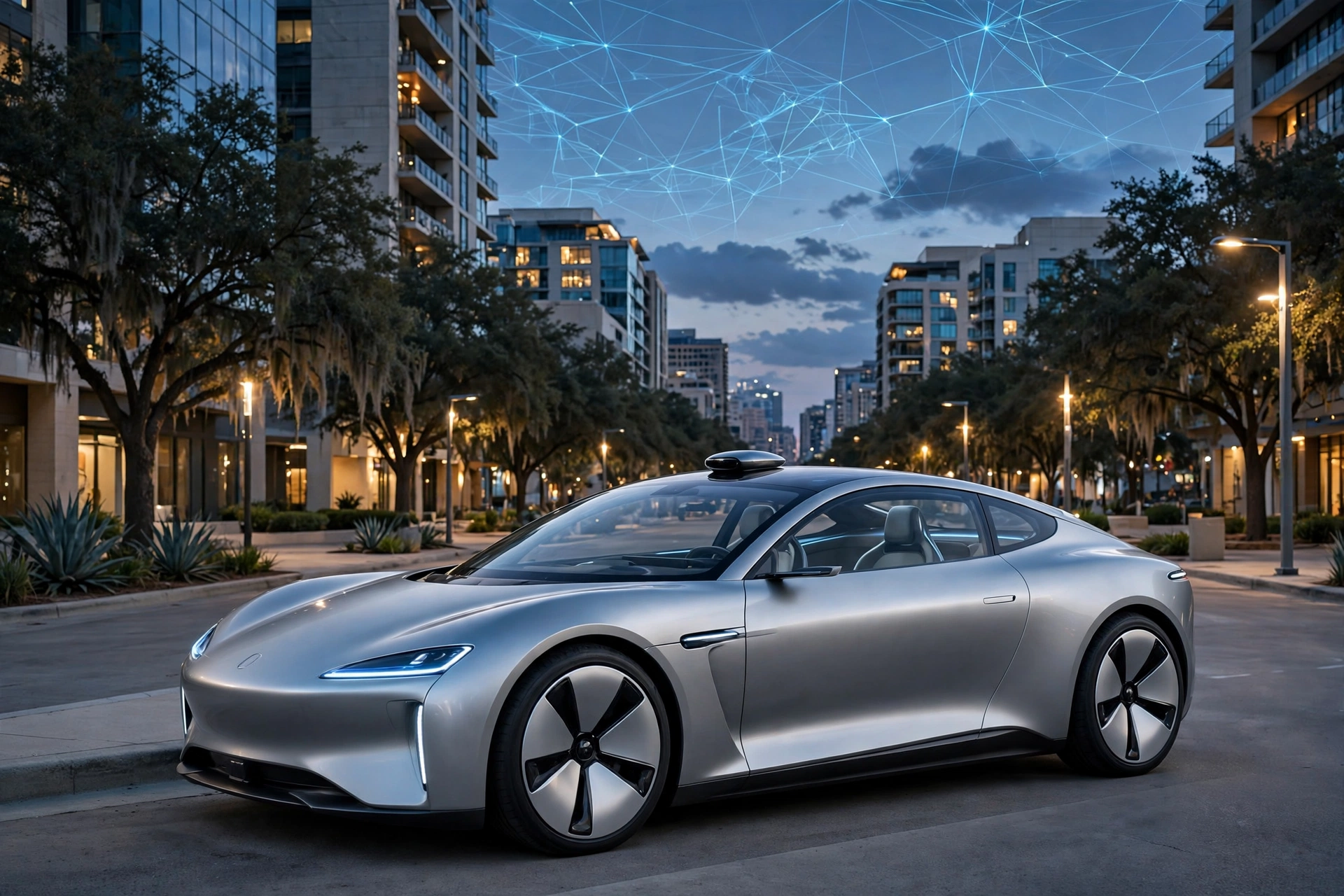
Tesla has started inviting select customers to buy its Cybercab for personal use, opening the first orders for a car with no steering wheel and no pedals — but the $29,990 sticker price is only the start of the bill.
The company’s Robotaxi account announced the invitations on Friday, 13 November, posting screenshots of the order page and the invitation email. The order page lists the two-seat Cybercab at $29,990 before taxes, with an estimated delivery of December 2026 in Austin, Texas. A $1,000 non-refundable deposit secures an order, and each invited buyer can order one vehicle.
The catch is the subscription. A $299-a-month Autonomy Subscription is pre-checked on the order page, with the first month included, and the fine print states that “subscription and regular vehicle maintenance [are] required to operate.” The invitation email is blunter still: “Only available in supported service areas. Subscription required for operation.”
What buyers actually pay
At the listed terms, the Cybercab costs $29,990 before taxes, plus $3,588 a year in subscription fees. Electrek, which reviewed the order page and invitation email, calculated that five years of ownership would come to about $47,600 before insurance, maintenance, taxes and charging — and the subscription price is not locked in, so it could change.
That is a long way from the pitch Tesla made when it unveiled the Cybercab in 2024, when Musk promised a car costing less than $30,000 — a promise kept on the sticker price alone, without mentioning the $3,588 a year it takes to use it.
The two-seat car has a 21-inch centre touchscreen and 20.1 cubic feet of cargo space, and owners manage rides through an app — but only where Tesla allows the car to drive.
There is one more condition that may surprise early buyers. The initial terms are for personal use only: owners cannot put their Cybercabs to work on Tesla’s Robotaxi Network or on third-party ride-hailing, rental or delivery platforms without Tesla’s written authorisation. The vehicle that was sold as a money-making robotaxi cannot, for now, earn its owner a cent.
Where the car can — and cannot — drive
The Cybercab only operates inside Tesla’s Robotaxi service areas: eight cities across Texas and Florida — Austin, Dallas, Houston, Fort Worth and San Antonio in Texas, and Miami, Orlando and Tampa in Florida. Everywhere else, it is a $30,000 car that cannot drive itself anywhere.
Even inside those cities, the usable area is smaller than Tesla advertises. Independent tracker Koby Pierce tested thousands of addresses in the Robotaxi app and found that the areas where Tesla actually accepts pickups and drop-offs are only 59% to 78% of the advertised geofences in the six cities he checked. In Austin, the very city where Tesla is delivering these cars, the figure is about 59%.
Tesla’s plan to wind down Cybertruck production by mid-2027 as the Cybercab takes over shows how much the company is betting on this vehicle — yet the first private owners will be confined to a handful of geofenced zones in two states, with nationwide availability depending on regulatory approval that has not yet been granted.
Musk says the fee is too high
Even Elon Musk has publicly questioned the price. In a post on X on 14 November, he wrote that “the monthly fee is too high” and that it “should match the cost of Tesla FSD and connectivity for other models, which is more like ~$115/month.”
That is a suggestion, not a revised price. The order page still shows $299 a month, and Tesla has not announced any change. Musk also said the car would be available nationwide “as we receive regulatory approval,” presenting that approval as a foregone conclusion rather than a hurdle still to be cleared.
The safety question NHTSA has not answered
There is also a regulatory cloud over the launch. The National Highway Traffic Safety Administration has ordered Tesla to prove under oath that a car with no brake pedal meets federal safety standards that require one. Tesla answered on 30 October and asked that the entire response be kept confidential. NHTSA has not ruled — and Tesla is now selling the car to consumers anyway.
That scrutiny is not happening in isolation. Regulators are paying closer attention to driverless vehicles generally: the NHTSA recently opened a probe after reports of Waymo robotaxis passing stopped school buses, a reminder that the safety bar for removing the human driver entirely is still being set.
What this means for Tesla’s robotaxi bet
The Cybercab launch matters because it is the first time Tesla has tried to sell a fully driverless car to private individuals rather than operate it as a fleet vehicle. If invited buyers take delivery in December and the cars work reliably inside their geofences, Tesla will have proof that its unsupervised driving system can be sold as a product. If buyers find the limitations are not worth $299 a month on top of a $30,000 car, the company will have learned an expensive lesson about the gap between a stage unveiling and a driveway reality.
Reported talks of a SpaceX–Tesla merger have put Tesla’s valuation and strategy under fresh scrutiny, and the Cybercab is the centrepiece of Musk’s argument that Tesla is an artificial intelligence and robotics company rather than a carmaker. TechCrunch reported that the pre-order opening is limited to invited customers, with no date given for when regular customers will be able to order.
Frequently asked questions
How much does the Tesla Cybercab cost?
The Cybercab is listed at $29,990 before taxes, with a $1,000 non-refundable deposit. A $299 monthly Autonomy Subscription is also required to operate the car, adding $3,588 a year.
Where can the Cybercab drive?
Only inside Tesla’s Robotaxi service areas in Texas and Florida: Austin, Dallas, Houston, Fort Worth and San Antonio in Texas, and Miami, Orlando and Tampa in Florida. It cannot be driven manually, because it has no steering wheel or pedals.
When will deliveries begin?
Tesla estimates deliveries will begin in December 2026, with Austin, Texas as the first delivery location. That is a forecast, not confirmation that handovers have started, and orders are currently limited to invited customers.