SpaceX and Tesla Could Announce Record Merger as Soon as December, Bloomberg Reports
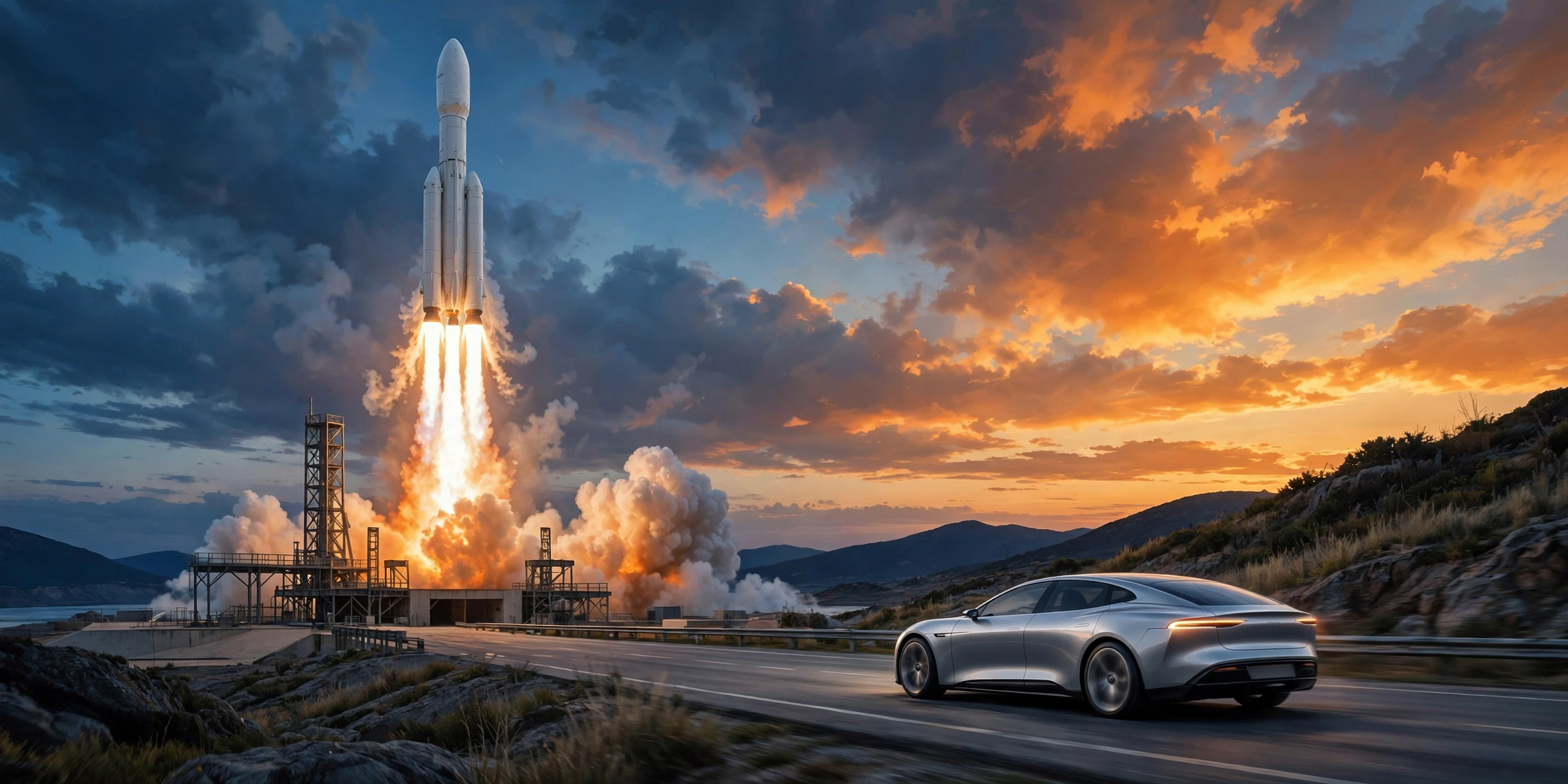
Elon Musk’s two biggest companies, SpaceX and Tesla, could announce a merger as soon as December, Bloomberg reported on Thursday, in a deal that would be the largest merger ever in corporate history.
The report, citing people familiar with the matter, said the boards of both companies and their advisers are now working through the terms of a combination and how the merged group would be run. No agreement has been reached, and neither company commented on the report. An announcement could still slip into early 2027.
At current valuations, the combined group would be worth about $3.4 trillion: SpaceX is valued at more than $1.9 trillion following its June flotation, while Tesla is worth about $1.5 trillion. That would dwarf the standing record for a single deal, Vodafone’s $183 billion takeover of Mannesmann in 2000. It would also be far larger than SpaceX’s roughly $250 billion purchase of xAI earlier this year.
Talks now turn to terms and control
According to Bloomberg, the talks have moved on from whether a deal should happen to the price and control of the combined company. One of the variables under discussion is how many SpaceX shares Tesla investors would receive, with the shape of the deal pointing to SpaceX absorbing Tesla rather than the other way round.
The governance question matters because Musk’s grip on the two companies is very different. He owns about 20 per cent of Tesla, but controlled roughly 85 per cent of SpaceX’s voting power through super-voting shares, according to its stock market filing. Swapping Tesla shares for SpaceX shares would mean trading one-share-one-vote for a company where Musk’s control is effectively locked in.
Both boards formed special committees to explore a combination, Musk confirmed on 20 October. Tesla’s board has formed an independent committee to assess a possible deal, and its filing says any transaction would require the committee’s recommendation and any necessary shareholder approval. Tesla holds its annual shareholder meeting on 3 December, when the same directors who would sign off on a deal are up for re-election.
AI at the centre of the deal
Artificial intelligence is central to the rationale for the talks, according to Bloomberg, with ambitions spanning rockets, driverless cars and humanoid robots. The timing also fits a wider pattern: SpaceX’s $74 billion AI supercomputing push in Texas and Arizona, announced this week, and the wider AI investment boom that has driven record demand for chips and data centres.
Tesla, meanwhile, is reshaping itself around autonomy and robotics. Tesla’s shift from the Cybertruck to the Cybercab, announced last week, underlined how the carmaker is betting its future on driverless vehicles rather than new models.
The China problem
One obstacle remains how to separate Tesla’s large Chinese manufacturing operations from SpaceX’s sensitive US government and defence work. A JPMorgan analyst described the two as “key dynamics that are at odds with each other” for regulators and shareholders.
Giga Shanghai is Tesla’s most productive factory and builds more than half of its cars. It shipped 67,829 vehicles in October alone. Bloomberg has previously reported that the companies want to close a deal before President Donald Trump leaves office, and the new Congress — in which Democrats will hold majorities from January — has said Musk’s companies and political ties will face close scrutiny.
A $2.1 billion bitcoin footnote
A merger would also bring the two companies’ bitcoin holdings under one roof: about 30,220 bitcoin worth roughly $2.1 billion at bitcoin’s price near $69,000 on Friday. SpaceX held 18,712 bitcoin at the end of September and Tesla 11,509, according to their quarterly filings, with both balances unchanged from December 2025.
The coins would amount to only about 0.06 per cent of the combined group’s value, and a merger alone would not require either company to buy more bitcoin.
What happens next
Tesla shares rose as much as 1.9 per cent on the report. But for now, the deal exists only in boardrooms: no terms have been agreed, no exchange ratio has been set, and shareholders of both companies would need to approve any combination. The December window gives the talks a month to turn into a formal announcement — or to slip, as earlier timetables have done before.