Trump to Meet Qatar’s Prime Minister as Iran Diplomacy Hits a Wall
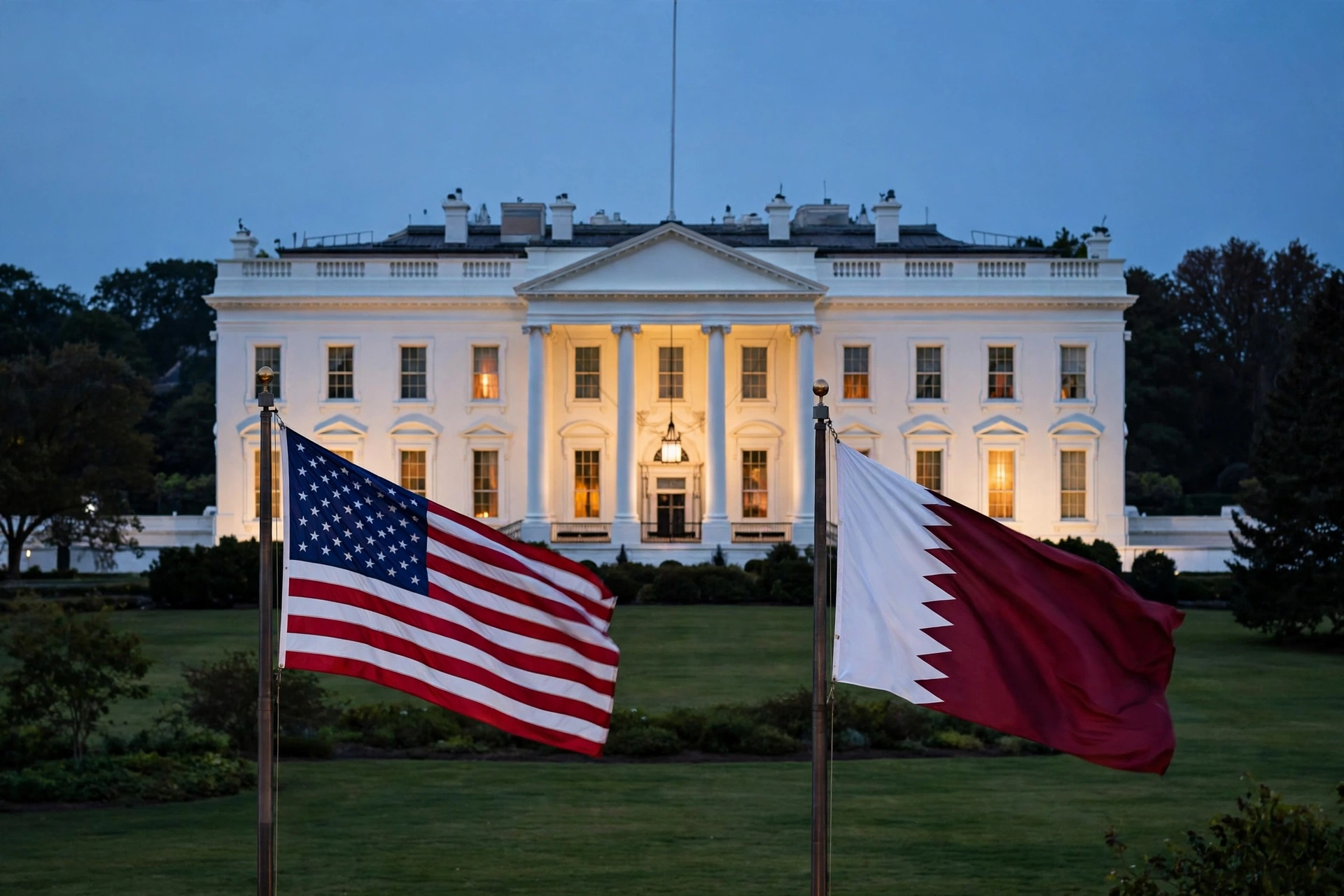
President Donald Trump will meet Qatar’s prime minister at the White House on Monday as efforts to end the eight-month war with Iran intensify, though senior American and Gulf officials have cast doubt on the chances of an imminent deal.
Sheikh Mohammed bin Abdulrahman Al-Thani, who is both prime minister and foreign minister of Qatar, is due to sit down with Trump and Vice President JD Vance later on Monday after visiting Tehran last week. The meeting, scheduled for 12:00 noon Eastern time, will be held behind closed doors. Vance is also expected to hold separate talks with the Qatari leader.
Qatar has acted as the key intermediary between Washington and Tehran since early in the war, carrying messages between the two sides and putting forward ideas meant to close the gap between them. The conflict began on 28 February, when the United States and Israel launched their campaign against Iran, and more than eight months later there is still no victory in sight for either side.
What Tehran is offering
Iran has passed a new proposal to the United States through Qatari mediators. Under the plan, Washington would end its blockade of Iranian ports, lift some sanctions and halt the bombing, while Tehran would end its own blockade of the Strait of Hormuz. Talks on Iran’s nuclear programme and the remaining sanctions would follow, and Iran has said the arrangement could be condensed into a two-day timeframe.
The United States has repeatedly rejected that plan. Secretary of State Marco Rubio said on Sunday that negotiations had made limited progress and that Tehran’s demands were “outrageous and ridiculous and really not realistic”. According to reports by the Associated Press and Reuters, Iran’s demands also include the release of frozen assets, compensation for war damage and a halt to hostilities across the region, including Israeli military operations in Lebanon.
Iran’s Foreign Ministry spokesperson, Esmaeil Baghaei, defended the proposal on Monday as the most reasonable offer on the table. Qatar, for its part, has denied that Washington and Tehran have failed to reach a deal, saying both sides are still working towards an agreement.
Trump plays down new strikes
Trump struck a more conciliatory note on Sunday, telling CNN in a 20-minute phone interview that renewed strikes were “highly unlikely” if talks kept progressing. “It depends on whether or not they sign a very strong agreement,” he said, repeating the phrase “highly unlikely” five times during the call. He also said he would order further strikes if he deemed it necessary, adding: “I would if necessary, but we hit them really hard.”
The president said the United States had identified potential infrastructure targets in Iran, including 38 bridges that he claimed American forces could destroy within an hour. He described Iran as “a failing nation” and argued that months of American and Israeli military operations had left Tehran severely weakened, giving Washington considerable leverage to secure an agreement without another major offensive.
Trump confirmed on Friday that US forces had struck Iranian air defences on Qeshm Island in the Strait of Hormuz, and a third American aircraft carrier strike group has recently arrived in the region. The United States also announced a new campaign, Task Force Iron Gate, aimed at restricting Iran’s movement of advanced weapons and other sanctioned materials across its land borders and through the Caspian Sea.
The gap between the two sides
Rubio’s blunt assessment on Sunday stood in contrast to Trump’s optimism. Speaking to reporters in Florida before departing for a meeting of Group of Seven foreign ministers in Paris, the secretary of state warned that a deal was nowhere near, with diplomacy advancing in public while the military pressure campaign continues at sea and in the air.
Iran’s Foreign Minister, Abbas Araghchi, said on Sunday that peace talks had been put on hold while the political consequences of last week’s midterm elections were being evaluated. Vance, who led the negotiations that produced a short-lived truce in June, has spent the past two weeks personally involved in indirect talks aimed at reaching a new ceasefire and resuming nuclear negotiations.
Monday’s meeting is therefore less a moment of breakthrough than a test of whether the mediator both sides trust can find a formula that neither has yet accepted. Trump has played down the likelihood of major warfare restarting soon, but he remains unwilling to accept the existing Iranian truce plan — and Rubio’s warning suggests the distance between the two sides is still wide.
For now, the war grinds on, the Strait of Hormuz remains a flashpoint for global energy markets, and the closed-door session at the White House will show whether Qatar’s latest shuttle diplomacy can move the talks any closer to an end.