Hubble and Webb Find 27 Icy Worlds Beyond Neptune
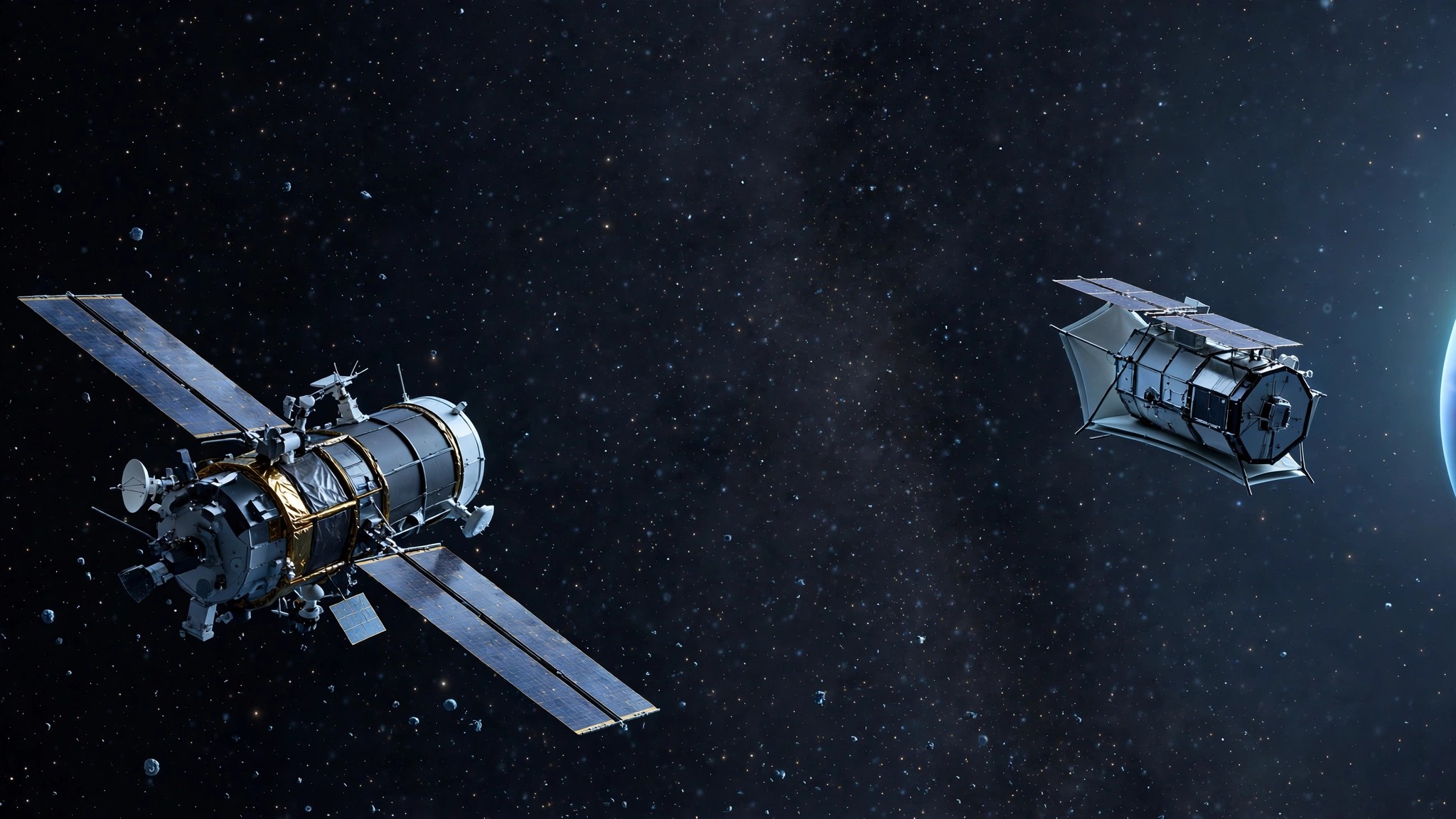
Two of NASA’s most powerful space telescopes have teamed up to find 27 previously unknown icy worlds far beyond Neptune, giving astronomers their deepest look yet at the frozen leftovers from the birth of the solar system.
The discovery, reported in two companion papers in The Astronomical Journal on September 8, 2026, comes from the first joint survey of trans-Neptunian objects — small, icy bodies that orbit the Sun beyond Neptune — using the Hubble Space Telescope and the James Webb Space Telescope together. Hubble observed the objects in visible light while Webb captured them in infrared, allowing researchers to measure their colours, sizes and orbits in a way neither telescope could achieve alone.
Most of the newly found objects are more than 100 million times dimmer than anything visible to the naked eye. The smallest is only about 5 kilometres across — roughly 3 miles — about five times smaller than the faintest object detectable by the most sensitive telescopes on Earth. One object is so faint that spotting it has been compared to seeing a small swarm of fireflies on the Moon from Earth.
Why objects beyond Neptune matter
Trans-Neptunian objects, often shortened to TNOs, are prized by planetary scientists because they are survivors from the solar system’s earliest chapter. More than 4 billion years ago, a disk of dust and pebbles orbited the young Sun and gradually clumped together into city-sized bodies called planetesimals, the building blocks of planets.
Closer to the Sun, those building blocks merged into full-sized worlds. Beyond Neptune, many never did. Instead, they stayed frozen in the dark outer reaches, including the Kuiper Belt, largely unchanged since the planets were forming. Studying them is therefore the closest astronomers can come to examining the raw material from which Earth and its neighbours were made.
“These objects offer the best view into an early stage of planet-building,” researchers behind the work explained, noting that the new survey is the deepest study of this population ever carried out.
How Hubble and Webb worked together
The two teams, led by doctoral candidates from the University of Victoria in Canada and Northern Arizona University in Flagstaff, examined the same small patch of sky with both telescopes. Webb scanned just 0.05 square degrees of sky — a tiny window — across three epochs between January 24 and February 4, 2023, using its NIRCam instrument, and discovered the 27 new objects.
Hubble then recovered 13 of Webb’s discoveries in its own images, adding visible-light measurements to Webb’s infrared data. Combined, the observations spanned wavelengths from 0.35 to 3.2 micrometres, giving the teams a colour profile for each object that reveals clues about its surface composition.
Ground-based searches can typically detect objects only down to about 50 kilometres across, and the deepest previous Hubble search reached about 30 kilometres. The new joint survey pushed that limit down to about 5 kilometres — a leap that opens a whole population of tiny worlds to study for the first time.
The surprise: tiny objects ‘remember’ how they were made
The most unexpected finding concerns the objects’ surface colours. Astronomers had expected the smallest TNOs to look different from larger ones. Over billions of years, collisions should have battered the small bodies, fragmenting them and exposing fresh material that would change their surface colours.
Instead, the smallest objects showed similar colour patterns to their larger counterparts, suggesting their original surfaces have survived remarkably undisturbed.
“You could imagine a scenario where getting knocked around and fragmented would change the surface composition, and then you would see a different surface colour for tiny TNOs compared to their larger siblings,” said Anastasia Morgan of Northern Arizona University, who led the study examining the objects’ colours and composition. “So it’s really fascinating to see that the smallest objects are somehow ‘remembering’ and preserving the history of how they were made.”
The finding challenges assumptions about how violently the outer solar system has churned over its history, and suggests that even very small bodies can preserve a record of the conditions in which they formed.
Hot and cold populations tell a shared story
The research also examined two broad families of trans-Neptunian objects. Dynamically “cold” TNOs remain in relatively circular orbits close to the plane of the solar system, near where they are thought to have formed. “Hot” TNOs are believed to have formed closer to the giant planets before being pushed into more distant, elongated orbits as Uranus and Neptune migrated outward early in solar system history.
Despite their different origins and orbital histories, the second study found that the hot and cold populations have surprisingly similar size distributions. That similarity is itself a clue: it suggests the processes that set the sizes of these bodies operated in a broadly similar way across different regions of the early solar system.
The teams also found fewer very small objects than some planet-formation models had predicted. That shortfall will force theorists to revisit how planetesimals grew — and how many tiny bodies were lost, destroyed or never formed in the first place.
Frequently Asked Questions
What are trans-Neptunian objects?
Trans-Neptunian objects, or TNOs, are small, icy bodies that orbit the Sun beyond Neptune. They include objects in the Kuiper Belt and are considered leftover building blocks from planet formation.
How many new objects did Hubble and Webb find?
The telescopes identified 27 previously unknown trans-Neptunian objects in the deepest survey of this population to date, with the smallest measuring about 5 kilometres across.
Why did astronomers use two telescopes?
Hubble observed the objects in visible light and Webb in infrared light. Combining the two gave researchers colours spanning 0.35 to 3.2 micrometres, revealing surface composition, size and orbital details neither telescope could measure alone.
Where were the findings published?
The results appeared in two companion papers in The Astronomical Journal on September 8, 2026: “The Luminosity Function of Ultrafaint Trans-Neptunian Objects Detected by JWST,” led by Marielle Eduardo, and “Combined JWST and HST Deep Imaging to Characterize the Smallest Known Trans-Neptunian Objects,” led by Anastasia Morgan.
Why do these tiny objects matter?
Because they never merged into planets, TNOs preserve material from the solar system’s infancy. Their colours and sizes help scientists reconstruct how planets formed more than 4 billion years ago.
Sources
NASA: Hubble, Webb Find Far-out Solar System Objects ‘Remember’ Past
ThePrint: NASA’s Hubble and Webb telescopes spot 27 icy relics from solar system’s infancy
Times of India: Hubble and Webb find 27 tiny worlds beyond Neptune