House, Senate Reach Aviation Safety Deal After DCA Crash
WASHINGTON — Key House and Senate lawmakers have reached a deal in principle on aviation safety provisions stalled for nearly a year, in response to the deadliest American aviation disaster in more than two decades.
Senators Ted Cruz and Maria Cantwell said on Tuesday that negotiators had agreed on aviation tracking requirements for civilian airplanes and on helicopter safety requirements, but had not yet settled the rules for military aircraft. The announcement, reported by Reuters, follows months of deadlock between the two chambers over how far the legislation should go.
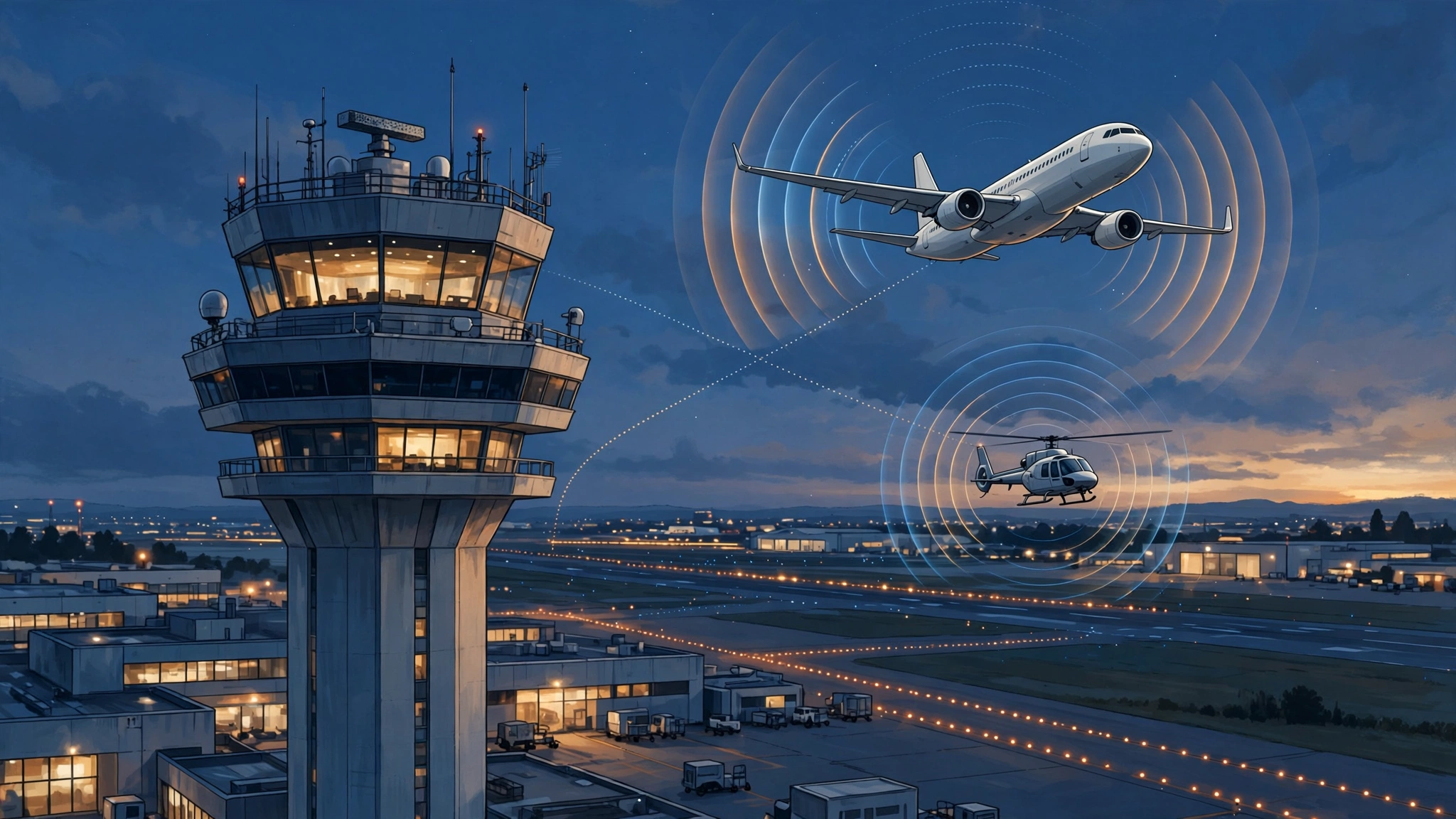
The deal centres on Automatic Dependent Surveillance-Broadcast, or ADS-B, a system that broadcasts an aircraft’s position so other pilots and air traffic controllers can see it. Safety investigators have argued for years that wider use of the technology could have prevented the January 2025 collision near Ronald Reagan Washington National Airport.
What the deal covers
Under the Senate’s version of the legislation, aircraft operators would be required to equip their fleets with ADS-B technology by the end of 2031. The Senate passed its bill unanimously in December, sweeping in dozens of recommendations issued after the 2025 crash.
The House passed its own aviation safety bill in April, described as a more comprehensive response to the NTSB’s recommendations, though critics say it would not ensure the broad ADS-B use investigators consider essential.
The bipartisan Senate agreement also closes loopholes that have let some military and government aircraft fly near Reagan National and other busy airports without transmitting their location. It requires safety reviews of operations in the Washington airspace and at major and mid-size airports nationwide, and an Army Inspector General audit of FAA coordination, pilot training and helicopter maintenance.
Why ADS-B is at the centre
The NTSB has called for ADS-B to be mandated for more than 20 years, and its chair, Jennifer Homendy, has said the technology would have prevented the 2025 collision. According to the safety board, ADS-B could have alerted the passenger plane’s pilot 59 seconds before impact and the helicopter crew 48 seconds before.
ADS-B works in two directions: ADS-B Out broadcasts an aircraft’s position, while ADS-B In lets pilots receive the positions of nearby traffic. The Senate agreement would require operators already equipped with ADS-B Out — including commercial, military and general aviation operators — to add ADS-B In by 31 December 2031, according to the Senate Commerce Committee.
It also lays the groundwork for ACAS-X, a next-generation collision avoidance system.
The crash that drove the bill
On 29 January 2025, an American Airlines regional jet and a US Army Black Hawk helicopter collided near Reagan National Airport, killing all 67 people aboard the two aircraft. It was the deadliest US aviation disaster in more than two decades.
In January this year, the NTSB found that a series of systemic failures by the FAA had led to the collision. The board highlighted the Black Hawk not transmitting ADS-B, unsafe route design for mixed traffic near the airport, and poor coordination and information sharing between the FAA and the Department of Defense.
The Senate agreement draws on Senator Cantwell’s Safe Operation of Shared Airspace Act, introduced in June to address those failures. It is co-sponsored by Senators Tammy Duckworth, Amy Klobuchar, Raphael Warnock, Tim Kaine, Mark Warner and Ed Markey.
What remains unresolved
The sticking point is the treatment of military aircraft. Cantwell said the negotiators had not reached agreement on military protections.
“We do not have an agreement on the military protections. We must have strong military accountability in the national airspace,” Cantwell said.
The legislation would require the military to use ADS-B on routine training flights, but not on sensitive missions — a distinction lawmakers remain divided over.
The disagreement comes at a sensitive moment for American aviation. The FAA ordered a nationwide ground stop last week after a communications failure, and has named two sites in its ground-stop probe. United Airlines resolved a system outage on 16 November that delayed hundreds of flights. Democratic lawmakers have also urged the FAA to pause deployment of additional Juniper routers pending further testing after the ground stop led to more than 18,000 flight cancellations.
What happens next
The deal in principle still needs to be turned into final legislative text and passed by both chambers, and key questions remain undecided. The Senate bill’s earlier history shows the path is not straightforward: the House fell one vote short of the two-thirds majority needed to pass the Senate version under fast-track rules in March.
For the families of the 67 people killed near Reagan National, the agreement is a step toward safety changes the NTSB has sought for decades. Whether Congress closes the remaining gap on military aircraft will decide if the deal becomes law.