US Intelligence Says Iran Still Holds Up to 2,500 Missiles Despite Strikes
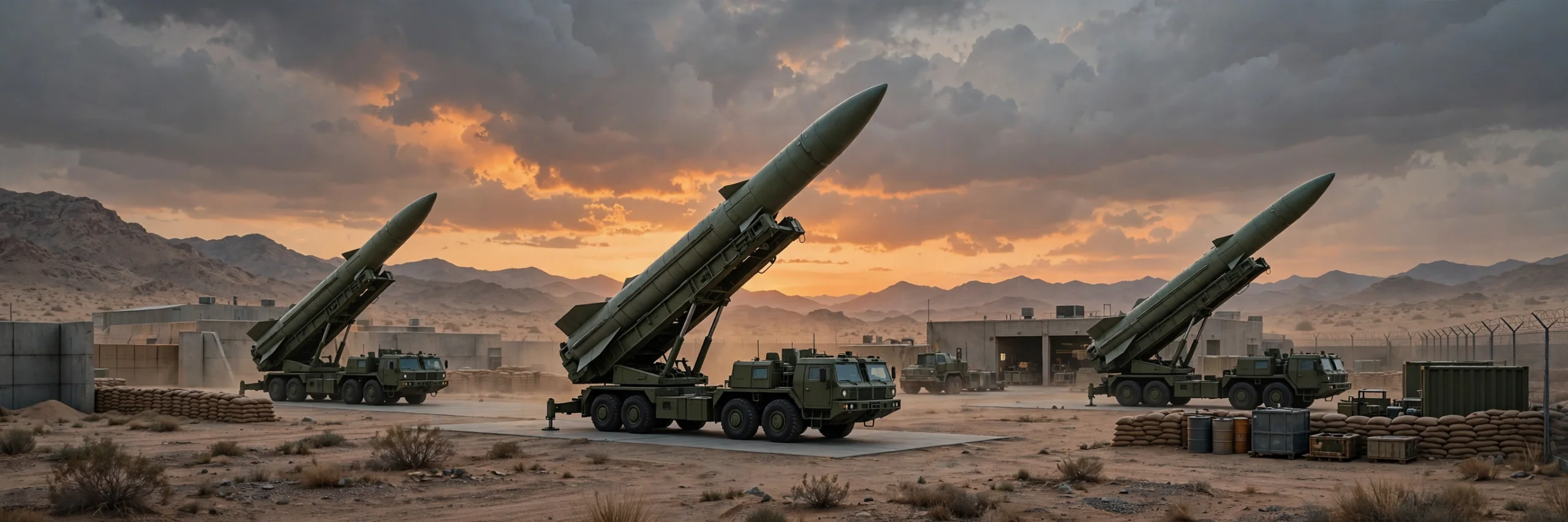
Iran still holds between 1,500 and 2,500 missiles despite months of American and Israeli strikes on its military infrastructure, according to a United States intelligence assessment cited by The Wall Street Journal. The stockpile, the assessment says, remains large enough to threaten American and allied targets if fighting resumes.
United States officials told the newspaper that the estimate carries a low level of confidence, because it is difficult to establish how many of the missiles are ready to launch and how many sit in storage. Israeli military officials have separately put Iran’s ballistic missile stockpile at more than 1,500, although assessments across the region differ.
A sharp contrast with White House claims
The assessment sits uneasily with claims from the Trump administration that the campaign against Iran had destroyed its missile capability. The White House said in April that more than 85 per cent of Iran’s defence-industrial base had been destroyed during Operation Epic Fury and that its missile arsenal and production capacity had been “razed”.
Simone Ledeen, a former deputy assistant secretary of defence for the Middle East during President Donald Trump’s first term, told the Journal that even the lower estimate would mean Iran had rebuilt more than half of its pre-war stockpile. She said Tehran had fully replenished its arsenal between the 12-day war of June 2025 and the start of the current conflict in February.
A separate Western intelligence estimate cited by Bloomberg earlier in the week put Iran’s output at about 50 ballistic missiles a month, roughly half its pre-war rate, and its arsenal at no fewer than 1,700 ballistic missiles.
Why the numbers are so uncertain
Iran’s military secrecy and its network of missile manufacturers make a precise count all but impossible, and it is unclear how many missiles can be assembled from components stored underground. Jim Lamson, a visiting research fellow at King’s College London and a former CIA analyst specialising in Iran, told the Journal: “Having done this work for the government, I know it can be extremely low confidence even with all the classified information.”
United States officials said Tehran was rebuilding its stockpile using components stored before the war, although production remains slower than it was before the fighting. Iran also retains a substantial supply of drones and short-range missiles.
An Israeli military official acknowledged that Iran was recovering, saying: “They are rebuilding, rearming.” The official added that Tehran was preparing for another major round of fighting. Bilal Saab, senior managing director of the Washington-based geopolitical risk firm Trends US, told the Journal: “It’s not just the size of that arsenal. It’s how Iran uses it, and its commanders have learned a few tricks to be more effective.”
Strikes on Gulf targets continue
Tehran has continued targeting United States military installations, radar systems and early-warning infrastructure across the Gulf. The attacks have damaged American military assets, leading to the relocation of some equipment to Israel, which United States and Israeli officials consider safer.
Iran has also made unverified claims that tankers were hit by mines near the Strait of Hormuz, and earlier this month it lifted its self-imposed 2,000-kilometre limit on missile range.
Trump weighs his next move
The report comes as President Donald Trump weighs whether to order fresh strikes. He has reportedly told advisers he may hold off on fresh strikes provided Iran and the Iran-backed Houthis in Yemen do not provoke the United States.
According to Reuters, Gulf allies including Saudi Arabia and Turkey have urged Mr Trump against restarting a full-scale war, arguing that sanctions and the United States naval blockade are already hurting Iran’s economy. Mr Trump said on Thursday: “I could end it immediately, but at the request of the nations that I am looking to protect, we are doing it a little bit longer way, a bit more civilly.”
For now, the intelligence picture points in two directions at once: a campaign that did heavy damage, and an arsenal that survived it. Whether the assessment hardens Washington’s stance or stays it will shape the next phase of a conflict that has already redrawn the Gulf’s security map.