IBM Unveils Nighthawk r3 and Plans a 1,040-Qubit Quantum System for 2027
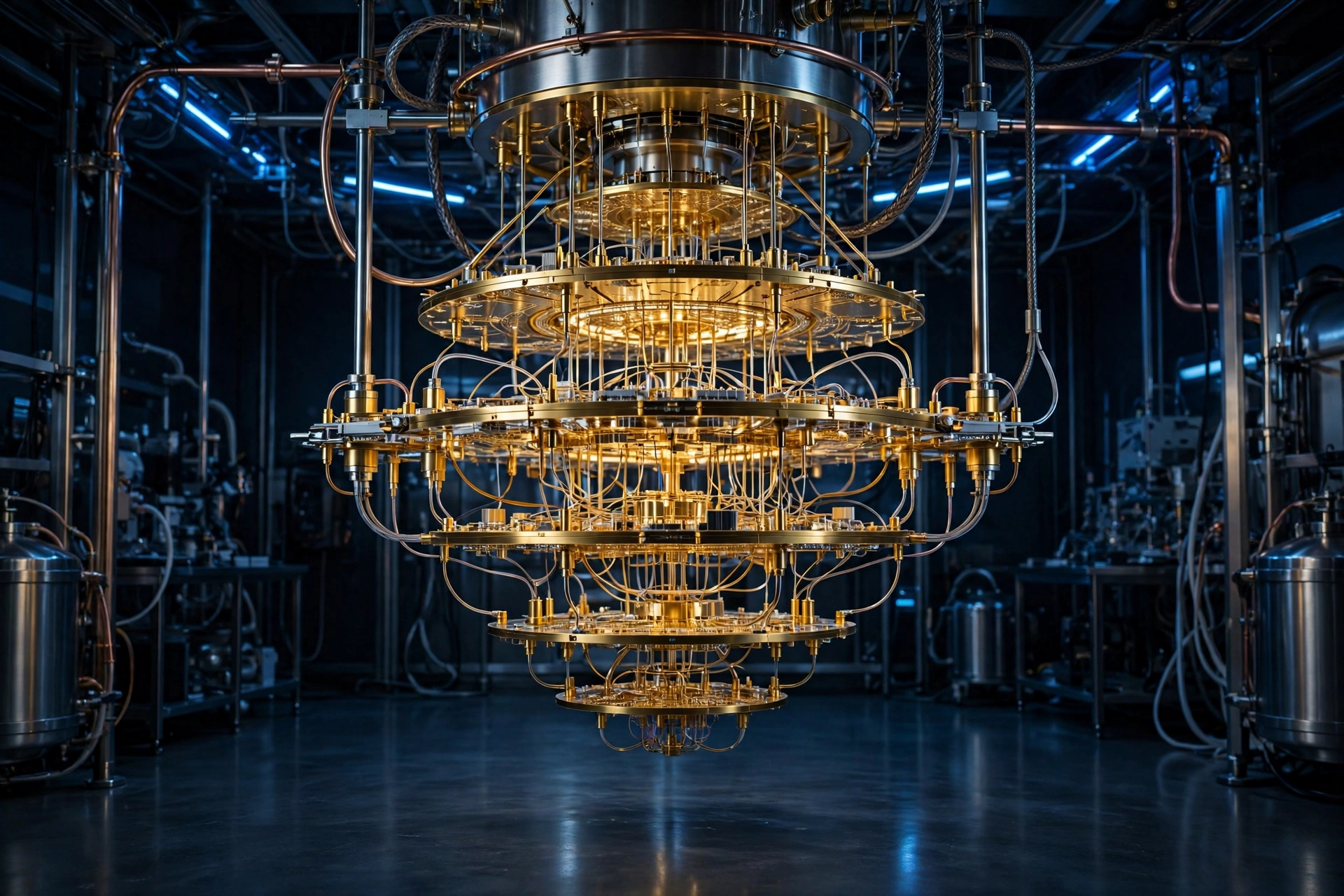
IBM has unveiled its next quantum processor and set out its plan to build a machine with more than 1,000 qubits. IBM announced on Wednesday 11 November, at its Quantum Developer Conference in Yorktown Heights, New York, that its Nighthawk r3 processor is being built to execute 10,000 quantum operations across 520 programmable qubits. In 2027, the company plans to link two of the chips into a single system with 1,040 qubits — its first machine past the 1,000-qubit mark and a staging post on the road to fault-tolerant quantum computing.
What Nighthawk r3 is designed to do
The new processor is designed to support 10,000 quantum operations on 520 programmable qubits, with 2,034 total physical qubits. It keeps its predecessor’s square-lattice connectivity and fast operation speeds, and adds 10 chip-to-chip interconnects, called l-couplers, for joining processors into larger systems.
The step up from the current machine is large. Nighthawk r2, introduced in September 2026, supports more than 7,500 quantum operations on 120 qubits and delivers up to 100,000 samples per second. The r3 design would offer more than four times as many programmable qubits per chip, and two linked chips would deliver nearly nine times r2’s count.
The modular bet: joining chips together
Building one ever-larger chip gets harder as qubit counts rise, so IBM’s answer is modular: join processors together. The 2027 system is the first real test of that approach at scale.
This year, IBM connected Nighthawk r1 processors using four l-couplers, achieving 99.3 percent quantum state transfer fidelity against a 99.9 percent target. It also linked two cryogenic modules into a single system for the first time, reaching operating temperature in under five days and cooling below 15 millikelvin — colder than outer space.
What the current machine is already doing
Clients and partners including E.ON, Algorithmiq and Q-CTRL have run more than 34 billion circuits on Nighthawk r2, reporting performance improvements of up to 19 times over previous IBM quantum processors.
E.ON reported a 15 times speedup in quantum machine learning for energy grid optimisation, and IBM recorded a 12 times speedup with Oak Ridge National Laboratory simulating magnetic materials. An experiment with Algorithmiq ran circuits eight times faster than the original on IBM’s earlier Heron processor.
“Useful quantum computing hinges on whether results can be delivered with accuracy and speed, both are fundamental,” said Jay Gambetta, director of IBM Research and an IBM Fellow. “Nighthawk is already showing us what that looks like today.”
Quantum working alongside classical computers
IBM’s Quantum Platform now brings high-performance classical computing and quantum computing together in one managed environment. IBM and RIKEN scientists ran a sample-based quantum diagonalisation workflow roughly five times faster while doing 100 times more computations. Cleveland Clinic and RIKEN processed 608 million samples 33 times faster than without workflow automation.
IBM also launched a co-design platform for quantum error correction with Oak Ridge National Laboratory and AMD, pairing Nighthawk with ORNL’s Umbra supercomputer and AMD Instinct MI355X GPUs.
The announcement lands as demand for advanced chips keeps foundries at full tilt; Google has also unveiled new TPU AI chips for data-centre workloads.
What it is not — yet
The r3 figures are design targets, not measured results from finished hardware. IBM has not given an availability date for Nighthawk r3, and it is not claiming quantum advantage for the chip. Independent coverage has stressed the same caveat.
The 520 figure is programmable qubits — the ones available for computation. The chip carries 2,034 physical qubits in total. Neither is a count of logical qubits, the error-corrected qubits a fault-tolerant machine would rely on; that is the longer-term goal of IBM’s planned Starling system, targeted for 2029.
The 1,040-qubit system planned for 2027 depends on joining two processors together. The date is a plan, not a delivery, and the link between the chips will be its first real test outside the lab.
What is a qubit?
A qubit is the basic unit of quantum information, the quantum counterpart of a classical bit. Unlike a bit, which is either 0 or 1, a qubit can exist in a combination of states.
When will the 1,040-qubit system arrive?
IBM plans to link two Nighthawk r3 processors into one 1,040-qubit system in 2027. It has not given a more precise date, and the system has not been built yet.
Is Nighthawk r3 available now?
No. The current machine is Nighthawk r2, introduced in September 2026. Nighthawk r3 was announced on 11 November 2026 as a design, with its figures quoted as targets rather than measured performance.


[…] Microsoft 365 went down worldwide on Thursday, leaving workers unable to open their email, join meetings or reach shared files as one of the world’s most widely used office suites suffered a major failure. […]