Drone Attack Kills Three Soldiers at Colombian Army Base
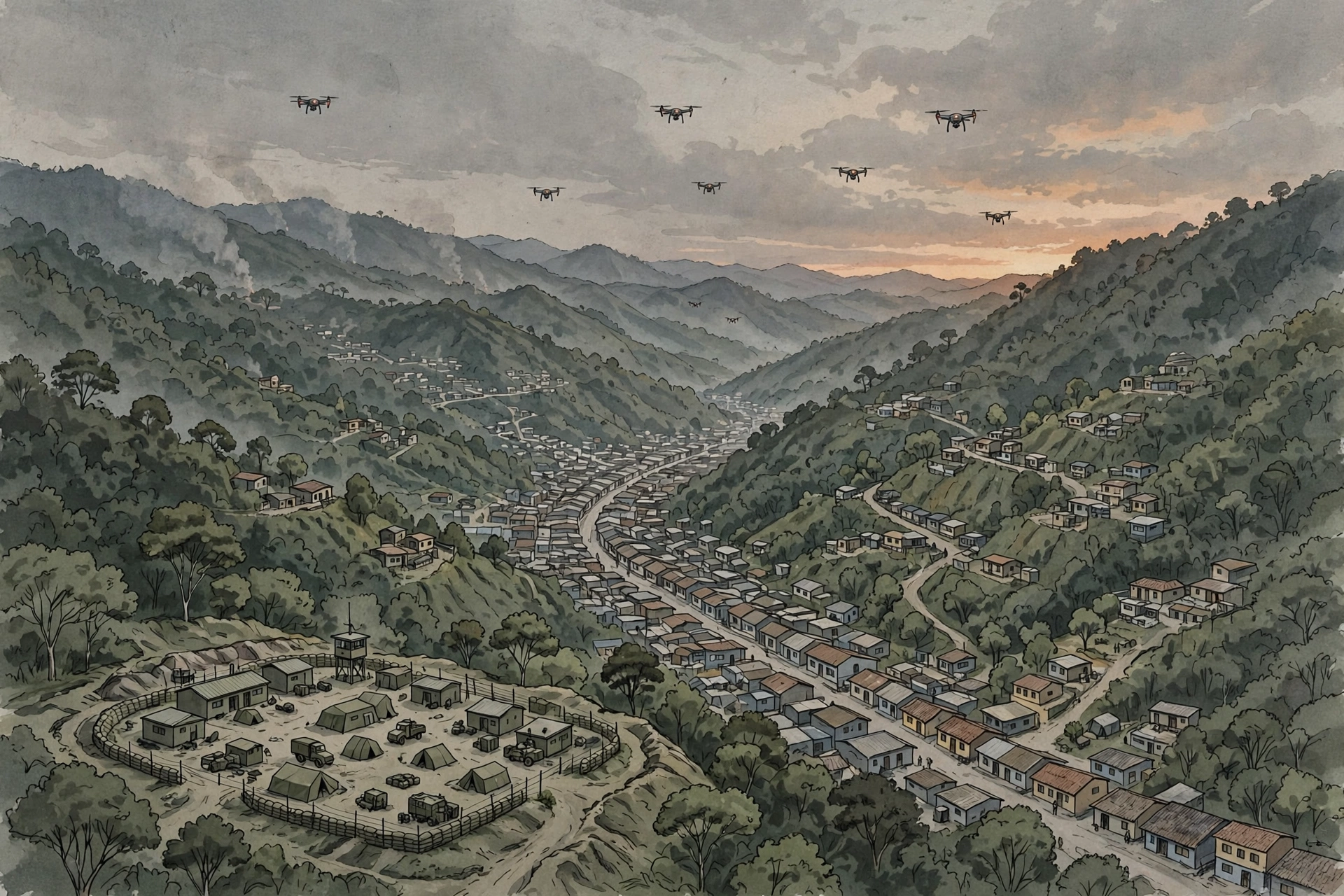
Explosive-laden drones struck a Colombian army base on Saturday, killing three soldiers and wounding at least 16 others, in the latest attack on the country’s security forces as armed groups step up their use of cheap unmanned aircraft.
The strike hit the Cantón Militar in Santa Rosa del Sur, a gold-mining town in the foothills of the San Lucas mountain range in Bolívar department, which is home to the army’s 48th Jungle Battalion. Colombia’s army said the drones had been modified to carry explosive devices, and it described the assault as a serious violation of international humanitarian law.
Midday strike on the mess hall
The attack came around midday on Saturday, 7 November, when soldiers were gathered for lunch. The munitions struck the base’s troop mess hall, and footage shared on social media — which has not been independently verified — showed three explosions, smoke rising over the compound and soldiers taking cover in shelters made of sandbags.
The army’s First Division said three service members were killed and eight were seriously wounded in its first account. The Associated Press reported at least 16 wounded, while the local mayor, Milton Olaya, said as many as 35 people were affected. The death toll of three is consistent across reports, but the full breakdown of the wounded has yet to be confirmed, and the army had not released the names of the dead soldiers at the time of reporting.
The First Division said it had launched an air-supported operation to find those responsible.
No group has claimed the attack
No organisation has publicly claimed responsibility, and the army has not named any suspects. The area around Santa Rosa del Sur is rich in gold mines and has long been disputed by armed groups, including the Gulf Clan, the National Liberation Army (ELN) and smaller factions linked to former members of the Revolutionary Armed Forces of Colombia (FARC).
Defence Minister Jorge Eduardo Mora López said one of the main hypotheses under investigation is retaliation by the ELN for the recent capture of a commander known as Carrito, according to Colombian media reports.
President Abelardo de la Espriella, a conservative who took office in August and has pressed a hardline offensive against armed groups, condemned the strike and vowed a forceful response. “Those who were behind this attack… will have nowhere to hide,” he wrote on X.
Drones are now a near-daily threat
The attack underlines how quickly weaponised drones have spread through Colombia’s conflict. The Ideas for Peace Foundation recorded at least 351 drone attacks in Colombia between January and 2 November this year — an average of one every 21 hours — against 277 in all of 2025.
The Armed Conflict Location and Event Data project, which tracks political violence, counted 34 attacks with bombs or explosives carried out by state forces and illegal armed groups in the four weeks to 16 October, a 9 per cent increase on last year’s four-week average.
Colombia is Washington’s closest security partner in South America, and the spread of explosive drones is complicating the fight against the armed groups that control drug routes, illegal gold mining and large areas of the countryside. The attack is the latest in a series of strikes on military installations as violence rises across rural parts of the country.
A funding row follows the attack
The strike has also revived a political dispute over whether troops have the equipment to defend themselves. Former president Gustavo Petro said in a public message that his government had left money for anti-drone purchases this year and that no purchase had been carried out, leaving troops exposed.
Defence Minister Mora rejected the claim, saying no funds had been appropriated for anti-drone equipment for 2026 and no contract had been awarded or cancelled. Military justice authorities and prosecutors are investigating who carried out the attack and how the base responded to the drones.
What happens next
The army’s search operation is under way, but officials have given no timetable for identifying the attackers, and no arrests have been announced. Casualty figures may still change as the wounded are sorted and the damage is assessed.
Elsewhere in the region, El Salvador has sent troops to Haiti to fight gangs, while Paraguay’s ousted former president was jailed pending trial. Western allies have been coordinating their response to security crises at talks in Paris. For Colombia, the Santa Rosa del Sur attack is a reminder that the groups its new government has vowed to confront can now strike a guarded base from the sky — and that the defences against them are still catching up.