Nvidia H200 Buyer Had an Empty Office, NYT Investigation Finds
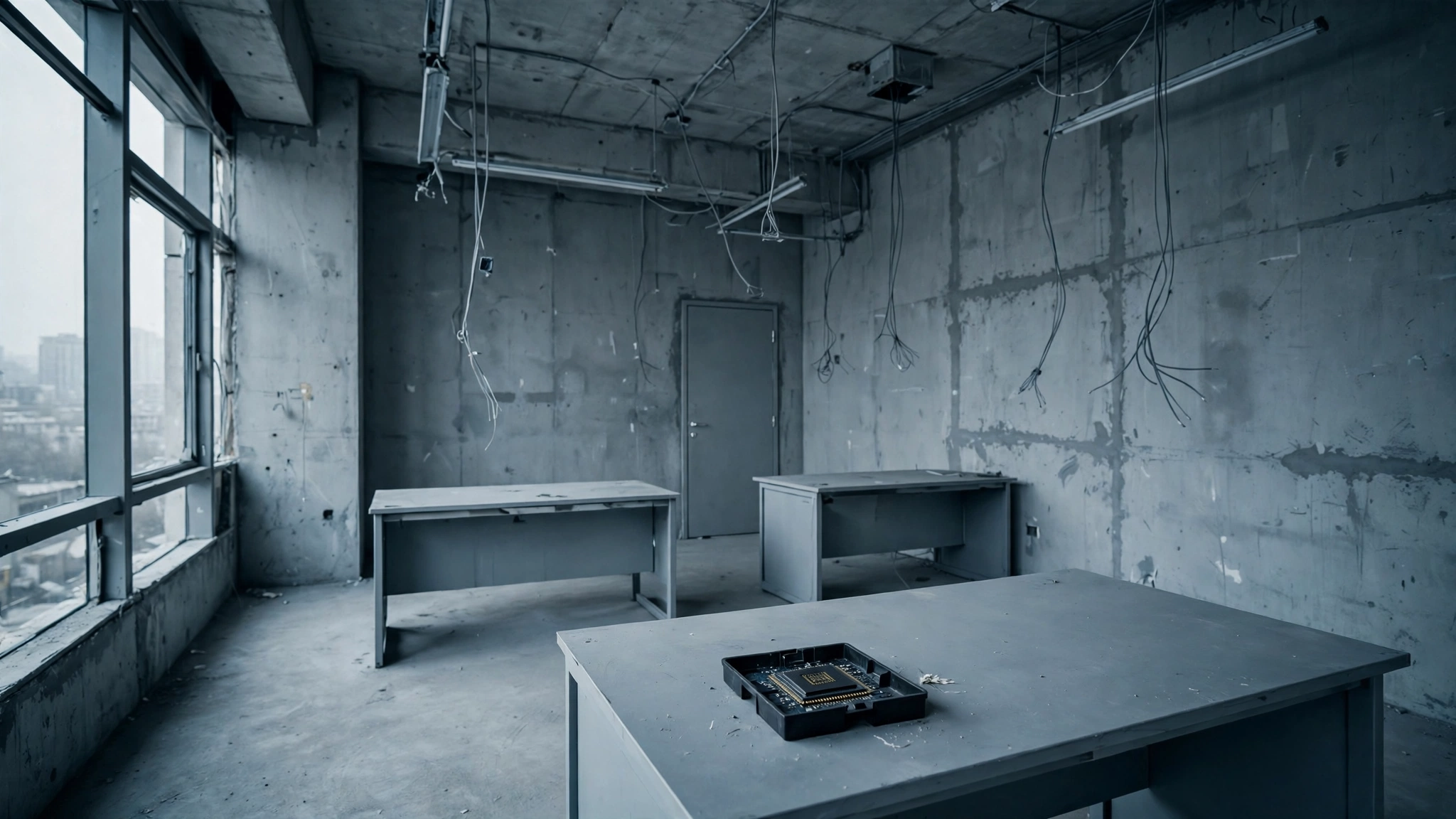
A New York Times investigation published on Saturday, 7 November, has raised serious questions about how the United States vets the Chinese companies allowed to handle its most advanced artificial intelligence chips. The paper reported that the Commerce Department approved about two dozen Chinese firms to buy or handle Nvidia’s H200 processors — and that one of them, a company called New Matrix, lists a Beijing address that turned out to be an empty office.
The H200 is among the most powerful AI chips Nvidia may sell into China, and every approval is meant to check who the buyer is.
What reporters found at the New Matrix address
New Matrix was created only 17 months ago, according to the reporting, and was approved this year to assemble H200 chips into the AI servers that power data centres. When Times reporters visited the address the company lists in a newly built industrial park on the north-west fringe of Beijing, they found no sign of it.
The Times described the space as “a hollow gray shell with wires dangling from the ceiling where lights should be.” The building directory did not list the company, and staff at the industrial park’s property management agency said they had no record of it.
Chinese corporate records showed that New Matrix’s owners had ties to Wise Road Capital, a fund the US placed on its trade blacklist in December 2024 for allegedly helping Beijing acquire companies with sensitive semiconductor manufacturing capability. Two analysts who reviewed the records told the Times they believed New Matrix could be a front for companies associated with the fund.
Not the only empty office
New Matrix was not the only approved firm whose premises raised questions. Maginfra, another relatively new company, also had a registered office that appeared deserted when visited by Times reporters in September — a small locked room with a few chairs and empty desks. Maginfra was approved to assemble H200 chips for other customers, and analysts cited by the paper believed it was associated with Inspur, a Chinese technology company placed on the US Entity List in 2023 for its involvement in China’s military modernisation.
The investigation identified other approved companies with links to Chinese military contractors, including Zhejiang Yindun Cloud Technology and Shanghai Jiatang, which originated from state-owned Datang Telecom, a supplier of technology to China’s military.
The approved list also includes Baidu, BYD and Tesla Shanghai; Reuters previously reported Alibaba, Tencent, ByteDance and ZTE Kangxun Telecom had also received authorisation. Each company was permitted to buy tens of thousands of H200 chips, although none had reached those limits.
How the sales were approved
The Trump administration authorised Nvidia to sell H200 processors to China in December 2025, reversing elements of earlier restrictions. Under the arrangement, chips manufactured in Taiwan must pass through the United States before reaching China, allowing Washington to collect a 25% tariff on their value.
Commerce’s January 2026 rule then moved H200 licence reviews from a presumption of denial to a case-by-case process. Applicants must confirm that no party to the transaction is subject to the Entity List, and must list the customer-screening and physical security measures adopted by the ultimate customer.
What Commerce and Nvidia say
The Commerce Department’s Bureau of Industry and Security defended its licensing process, saying it carefully reviews applications for national security risks, and pointed to $324 million in penalties for export violations in 2025.
Nvidia spokesman John Rizzo said “it makes no sense for the Chinese military to depend on American technology.” He said Beijing had restricted H200 imports to promote domestic chipmakers.
Others are less reassured. Liza Tobin, a former China director on the White House National Security Council, told the Times: “I have a ton of concerns that neither the Commerce Department nor Nvidia is doing the due diligence needed to ensure that the licensing terms are being followed.”
The stakes for Nvidia itself remain modest: H200 shipments to China-based customers were less than 1% of its data centre revenue in the quarter that ended in July, and its forecast assumes no data centre revenue from China. Nvidia shares have had a turbulent autumn, closing at $186.64 on 6 November. Demand for AI chips remains strong across the industry, with rival AMD recently raising its outlook on the same trend.
What the investigation does not prove
The findings are serious, but their limits matter. The Times did not establish that any approved processors had been diverted to China’s military, and nothing in the reporting says H200 chips were actually delivered to New Matrix. An empty listed office is not proof of wrongdoing.
Commerce has not publicly explained how it vetted these applicants. The questions are now for Commerce to answer: who reviewed these applicants, what checks were run, and whether any licence will be revoked.

