Vance Leads US–Iran Backchannel Talks to Revive Ceasefire and Nuclear Negotiations
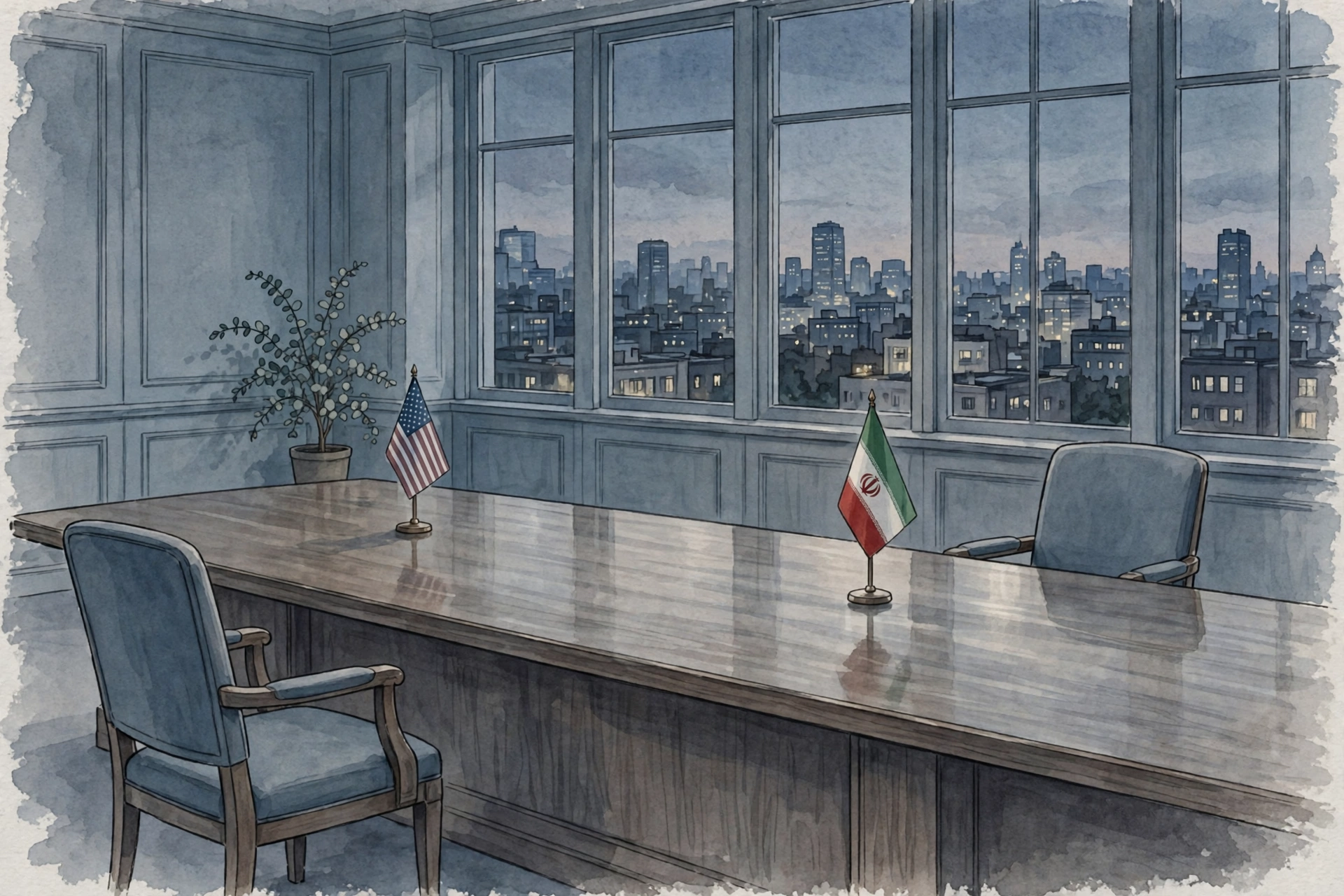
United States Vice-President JD Vance has spent the past fortnight directly engaged in indirect negotiations with Iran, working to broker a new ceasefire and resume stalled nuclear discussions, Axios reported on Friday, citing two sources with knowledge of the matter.
The vice-president’s direct involvement lifts the quiet diplomatic track to the highest levels of the administration. It also places Vance — who has openly blamed the war for the Republican Party’s heavy midterm defeats this week — at the centre of the effort to end a conflict he opposed from the start.
According to US officials and regional sources cited by Axios, President Donald Trump currently remains willing to let the diplomatic effort proceed to test whether an agreement can be forged. “We’re talking to them,” Trump told reporters on Friday when asked about his message to Iran.
Daily talks with Doha and Islamabad
Behind closed doors, Vance has held near-daily discussions with Qatari Prime Minister Sheikh Mohammed bin Abdulrahman Al-Thani, Pakistan’s Army Chief Asim Munir and other mediators, Axios reported.
White House special envoy Steve Witkoff and presidential adviser and son-in-law Jared Kushner are also engaged in the diplomatic track, according to the report.
Those involved in the mediation have also discussed setting up a working-level technical meeting between American and Iranian delegates in the coming days, although no such meeting has yet taken place. Participants involved in the mediation have described progress as being made, but the overall pace as extremely slow, according to the report. The office of the vice-president chose not to comment on the ongoing talks.
The diplomatic push comes as the military track remains live. Trump has said he will soon decide whether to resume all-out war with Iran, and insiders have cautioned that should he change course and order renewed military action, US forces stand fully prepared to launch strikes on an expedited schedule.
A fortnight of quiet diplomacy
The current diplomatic momentum began gathering pace a fortnight ago, when Vance dispatched a formal letter to Mohsen Rezaei, secretary of Iran’s Supreme National Security Council and a close confidant of Iranian Supreme Leader Mojtaba Khamenei, proposing the resumption of direct talks.
Iranian representatives signalled that Vance’s communication had generated favourable momentum towards reviving negotiations. On Wednesday, Vance reasserted that the conflict was the primary driver behind voters’ rejection of the Republican Party in Tuesday’s midterms.
Diplomatic engagement persisted on Friday morning, when Trump conferred with Qatari Emir Sheikh Tamim bin Hamad Al-Thani about Doha’s efforts to bridge the gaps dividing Washington and Tehran. In an official release from his secretariat, Sheikh Tamim underscored the imperative to “continue dialogue and pursue diplomatic means to resolve differences, spare the region further escalation, and ensure freedom of maritime navigation and the security of energy supplies.”
Vance’s long record as the sceptic
Vance emerged as the most doubtful voice among Trump’s inner circle before the war’s outbreak in late February, persistently pushing for a diplomatic resolution. He previously headed the US negotiating team during an April summit focused on Iran held in Islamabad and played a central role in securing the bilateral memorandum of understanding last June.
He later led the American delegation for direct talks hosted in Switzerland, which led Tehran to pledge that UN inspectors would be welcomed back to nuclear facilities. The resulting agreement collapsed shortly afterwards, when units of Iran’s Islamic Revolutionary Guard Corps resumed attacks on commercial shipping.
The stakes of the current effort are visible across the region. The United States has been enforcing a maritime blockade of Iran, and American aircraft recently fired on a cargo ship attempting to break it in the Gulf of Oman. Tehran, for its part, has lifted its self-imposed 2,000-kilometre limit on missile range, a move its Revolutionary Guard announced this week.
For now, the two tracks — diplomacy led by the vice-president and military readiness ordered by the president — are running in parallel. Whether Vance’s backchannel can produce a deal before Trump is forced to choose between the two remains the open question in Washington.