Iran Lifts Self-Imposed 2,000km Limit on Missile Range, Revolutionary Guard Says
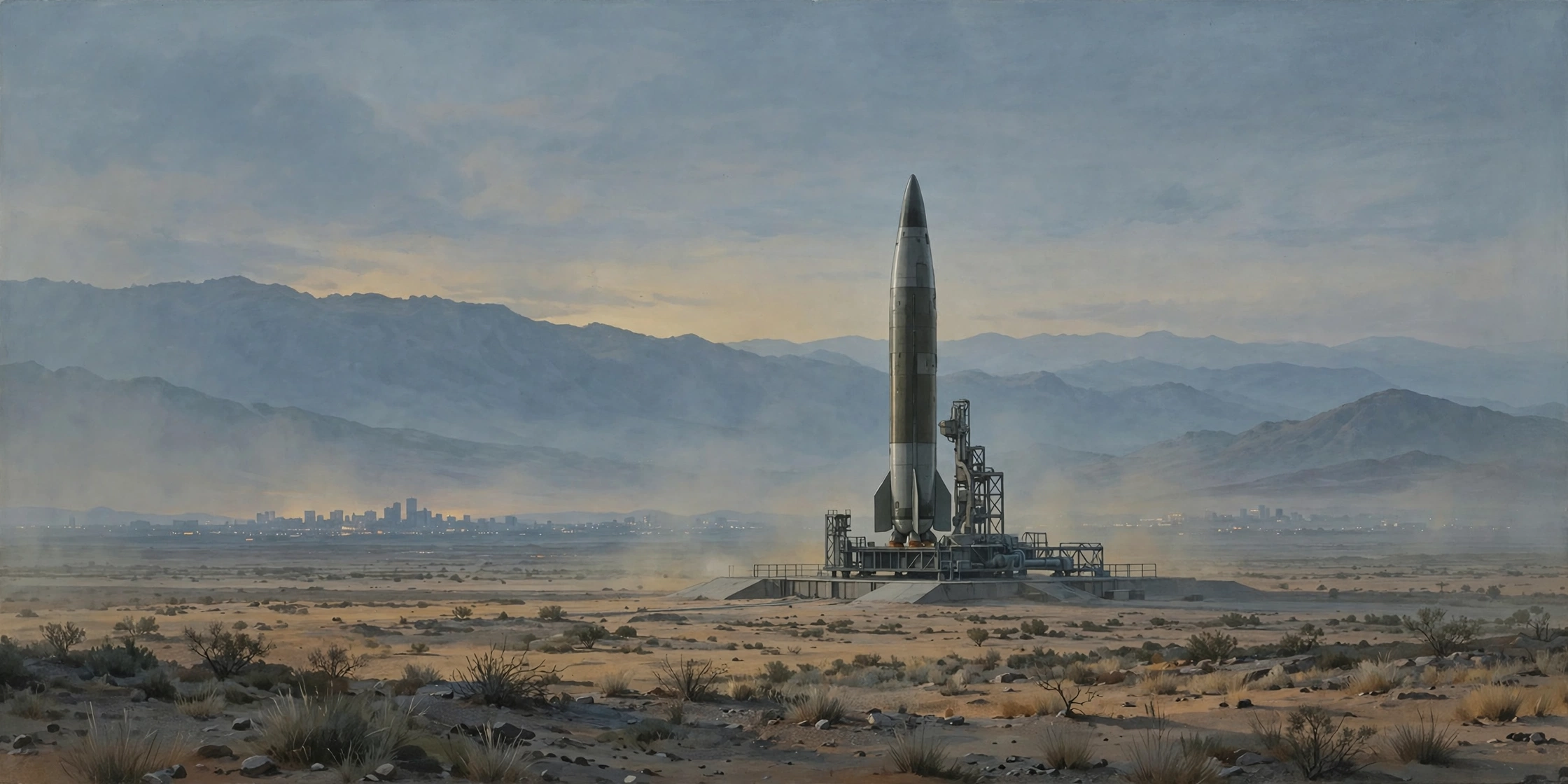
Iran’s Revolutionary Guard said on Saturday that Tehran has lifted its self-imposed limit of 2,000 kilometres (about 1,200 miles) on the range of its ballistic missiles, a move that could open the way to weapons able to reach more distant targets as fears of renewed all-out war in the region rise.
The announcement was made by Brigadier General Hossein Mohebbi, a spokesman for the Islamic Revolutionary Guard Corps (IRGC), at a press conference in Tehran marking the force’s Aerospace Week. Asked whether the limit still stood, he answered: “This restriction has been lifted for us,” according to Iran’s Tasnim news agency, as the Associated Press reported on Saturday.
What the Guard said — and what it did not show
The 2,000-kilometre ceiling was a restriction Iran said it had imposed on itself, rather than a treaty limit agreed with other countries. It had been in place since the mid-2010s under the former supreme leader, Ali Khamenei, and was described by Foreign Minister Abbas Araghchi as a deliberate ceiling.
Mohebbi was careful to add that capability must be demonstrated in practice rather than merely claimed. “Our duty is to show our capabilities on the battlefield,” he said, adding that it would be inappropriate to make claims before putting them into practice. He also said work on extending range never stops: “We are constantly improving the range of our missiles, and there is no pause in this work.”
No evidence has emerged that Iran has tested or fielded a missile able to fly beyond the old limit. Iran is not known to have operational ballistic missiles with a range exceeding 2,000 kilometres, and its longest declared systems are led by the Khorramshahr-4, unveiled in 2023. US officials have said technology from Iran’s space programme can be repurposed to build intercontinental ballistic missiles.
Why the timing matters
The comments came days after Supreme Leader Ayatollah Mojtaba Khamenei warned that “any kind and level of threat” from the US or Israel would face a response without geographic limits.
The announcement came a day after the United States confirmed fresh strikes on an Iranian air-defence site on Qeshm Island, and Iranian state media reported further explosions on Qeshm Island and in the port of Jask on Saturday evening, though it was not immediately clear what caused them.
The comments also followed Iranian claims of tanker fires in the Strait of Hormuz.
US Central Command said late on Saturday it had disabled a St. Kitts-flagged ship in the Gulf of Oman after it ignored multiple warnings and tried to leave the region after visiting an Iranian port. The US has enforced a naval blockade on Iran for months around the Strait of Hormuz, and the US says the blockade redirected 144 commercial vessels through the end of October. Reuters reported the US military is setting up a new task force to tighten restrictions on Iran’s movement of advanced weapons and sanctioned material across its land borders and the Caspian Sea.
What a longer range would put within reach
At 2,000 kilometres, Iranian missiles could already reach parts of Greece and the Balkans, the entire Arabian Peninsula, the Levant and most of Egypt, according to the Times of Israel. Removing the ceiling would, in principle, bring deeper parts of Europe within range — if Tehran can build and prove a missile that flies that far.
Mohebbi also said the Guards’ aerospace division had moved missile and drone production underground. Iran International also reported that a BBC investigation published on Friday, examining satellite imagery, found excavation or construction at two Iranian missile sites and signs of repair at at least 12 other military installations.
In Israel, meanwhile, President Isaac Herzog gave opposition candidate Gadi Eisenkot the first opportunity to form a government after elections on 27 October left neither his bloc nor Prime Minister Benjamin Netanyahu’s with a majority in parliament.
Washington’s response and the road ahead
In Washington, Democrats who will take control of Congress in January say ending US participation in the war with Iran will be a top priority, using the appropriations process to block funding. The Pentagon puts the cost of the war at more than $37 billion.
Washington has also offered a $20 million reward for information on Iran’s nuclear programme.
For now, what is confirmed is narrow and specific: a named spokesman, at a named press conference, said a long-stated range limit no longer applies. Whether Iran can actually build, test and field a missile that flies farther remains unproven — and Mohebbi himself drew that line at the same press conference.